About
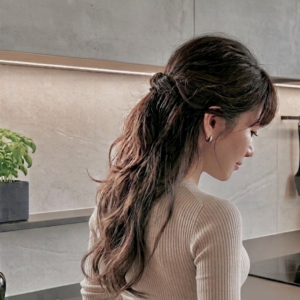
Hi, I’m Nao
I live in Yokohama, Japan. Most of what I cook is nothing fancy, and much of it you could make at home, wherever you are.
For years, my grandmother would often talk to me about the seasons. She’d tell me how to prepare the vegetables she grew and sent me, which tools to use, which seasonal sweets to look out for (like kashiwa mochi in May), and what we needed to do for Obon in summer. To be honest, I didn’t have the time or the headspace to take an interest, and sometimes it felt like a lot.
That changed after I met my husband, who is French. As I got to know his culture, I came to love it, and I wanted to share mine with him too. When we moved in together, I wanted to use the seasonal food my grandmother sent to cook him things like chestnut rice, so I began calling her to ask how. Work was still busy, and it wasn’t always easy, but somehow I found the time.
Looking back, I think I’m the kind of person who gets going once there’s someone to share with. I’d tell him things like, “This is a Japanese tradition,” or “This is what this time of year is like here,” and at some point I realized we were enjoying these things together, season after season. That’s when I began to see how much my grandmother knows about the seasons and the old ways, and how much she cares about them. Now she even sends chocolate for him.
In her time, housework could fill an entire day. My days look different. I work, and I don’t have what my grandmother has at her place: a barn, a big field, and a place to keep specialized machines and tools. So sometimes I try her way first, then find a version I can keep up. Often it comes down to one good tool, a little preparation, or one small step I can manage on a busy day. That’s what “minimal” means to me: a small way to keep a tradition in my days, so everyday life feels much richer.
The knife I use every day was a gift from my late grandfather, who picked out a double-bevel one that’s easy for a left-hander like me to use. I sharpen it on a whetstone my grandmother gave me. Through things like these, the people around me have been passing Japanese traditions down to me all along, without my noticing. These days, I think fewer people my age have things like this in their lives, especially in the city. Some things are best learned from my grandmother herself, and I want to learn them while she’s still well.
Coming from two different cultures, we’ve both learned that a country can look different from far away than it does up close. So I’d like to share what everyday life here looks like, from inside one ordinary home.
On this blog, I write about what we eat, the tools I’ve used for years, and the things I do as the seasons change. Some of it is quick, like udon I made in 19 minutes, and some of it takes a little more time, like peeling chestnuts for chestnut rice.
I don’t sell or ship anything. I write about the things I use at home, and I try to mention where you might find them, or something similar, outside Japan. Some of those links are affiliate links, so I may earn a small commission if you buy through them.
English isn’t my first language. I write with the help of translation tools and someone at home who checks my English, so a phrase may still come out a little unusual now and then. If something reads oddly, I’d be glad to hear about it.