At about noon, my husband told me he had to leave around 1 p.m. I did a few other things first, so I didn’t start making lunch until 12:32 p.m. I was in a real hurry.
This is another everyday meal from my kitchen in Japan, low-effort and easy to copy. I think the prep took about 5 minutes, and the rest was just letting it cook. It’s udon in a clear broth, made with one seasoning and a few things I keep in the freezer. (If you’d like to see the first one in this series, here’s a weekday lunch I made without a knife.)
This post contains affiliate links (see my disclosure for details). As an Amazon Associate I earn from qualifying purchases.
Today’s lunch
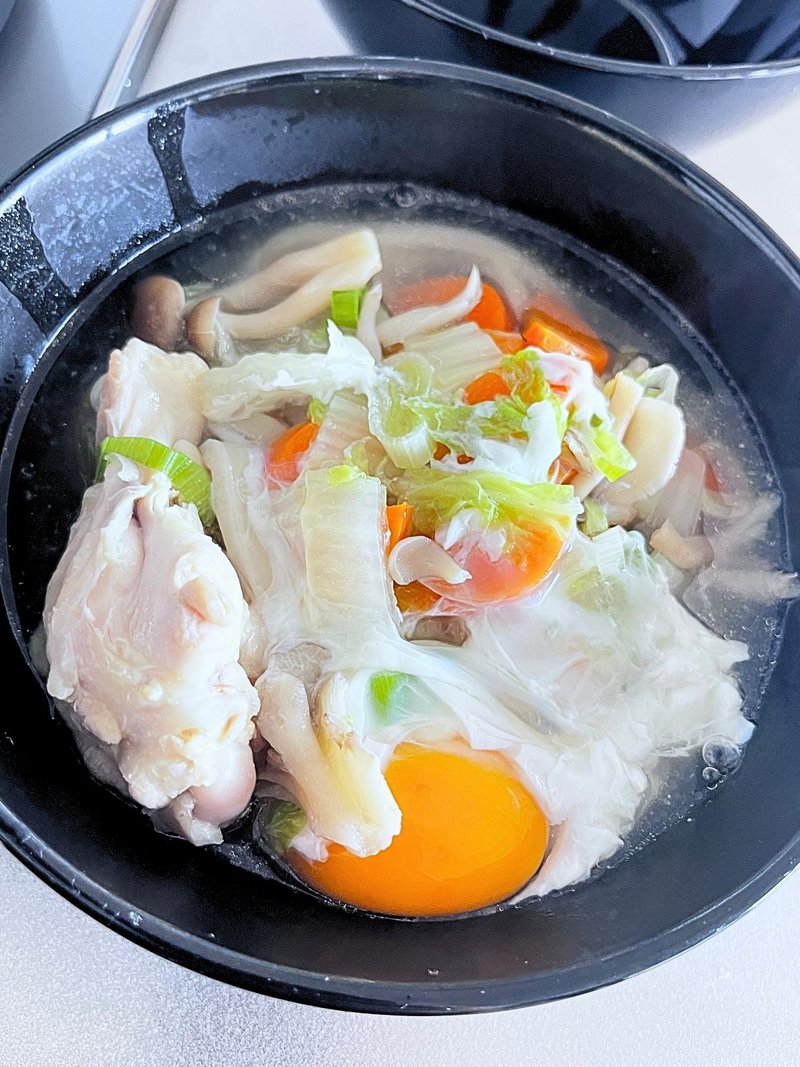
Udon (thick, chewy Japanese wheat noodles) in a clear broth, with chicken drumettes, napa cabbage, carrot, green onion and mushrooms, and an egg on top.
What I used
Ingredients
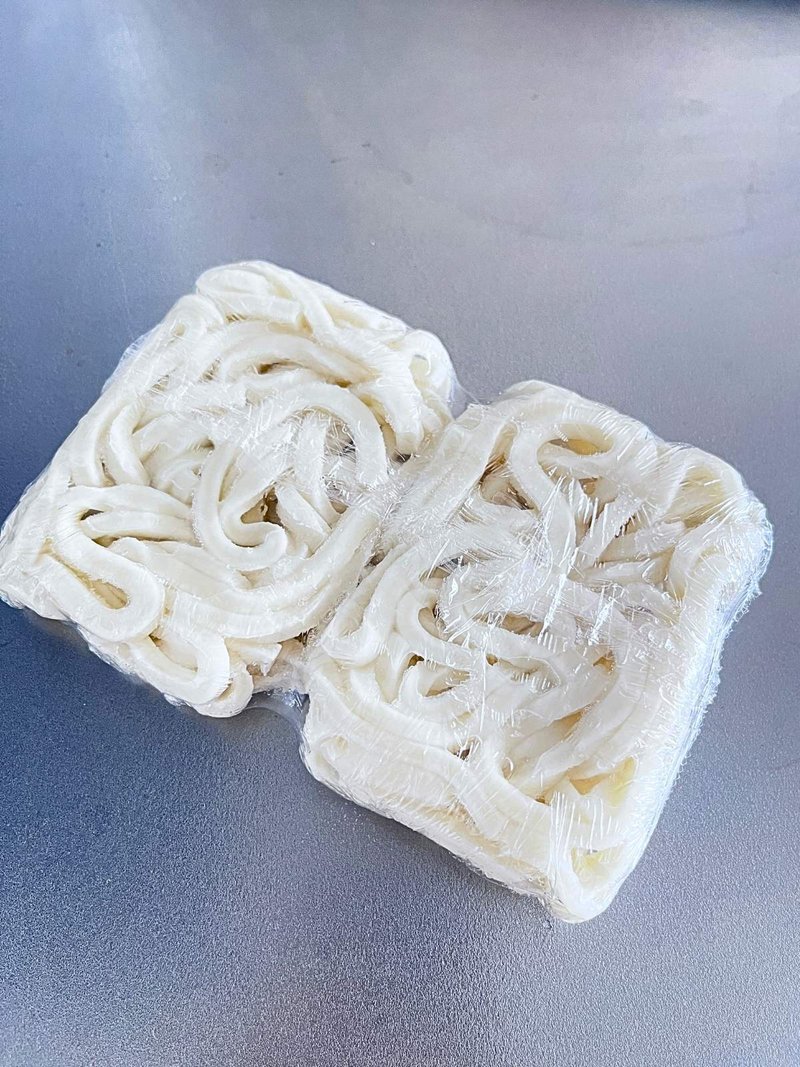
- 2 portions of frozen udon. You can often find it in the freezer section of Asian grocery stores in the US.
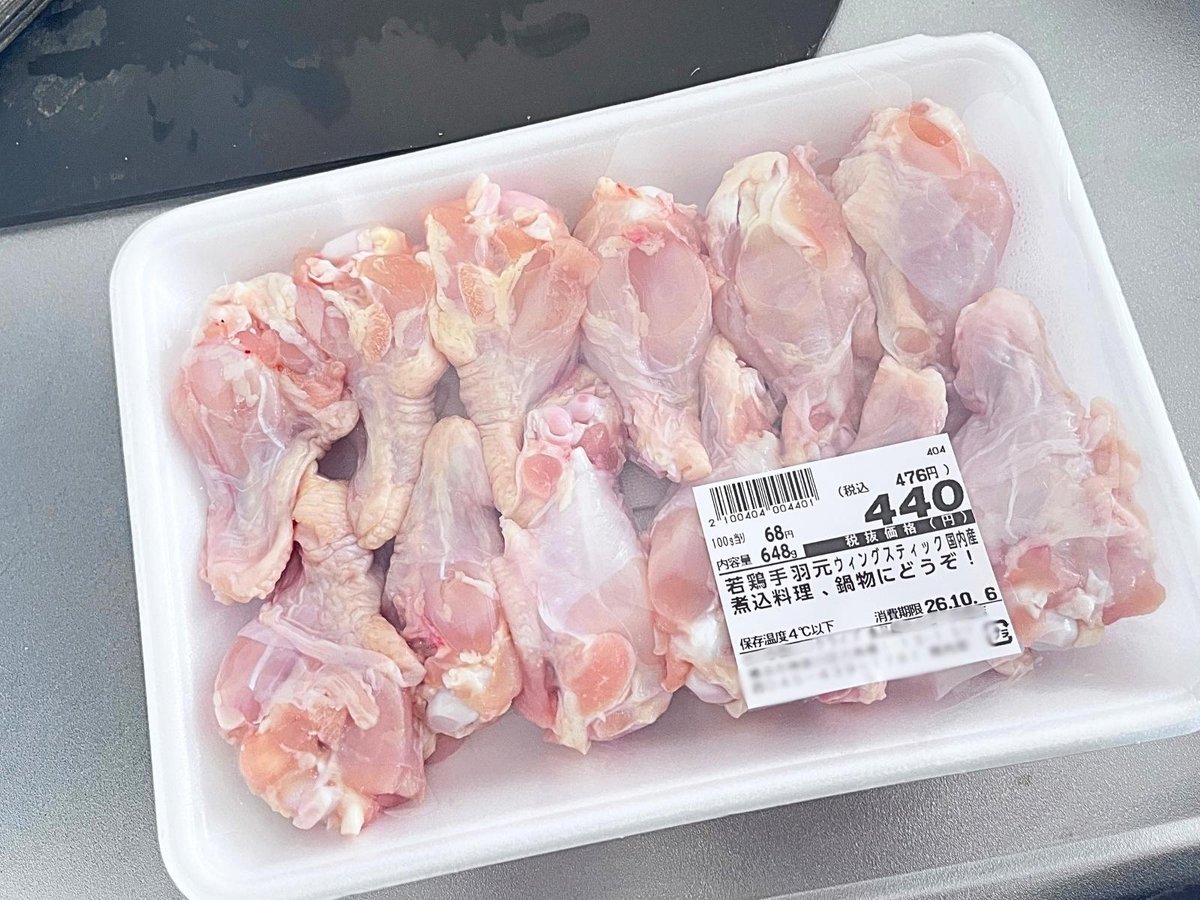
- Chicken drumettes (the part of the wing closest to the body, bone in). I had picked them up for something else, but they were the closest thing at hand. Any chicken cut into bite-sized pieces works too.
- Napa cabbage, carrot and Japanese long green onion. Regular green onions work too.
- Mushrooms from my freezer (how I make them is below)
- Eggs, one per person
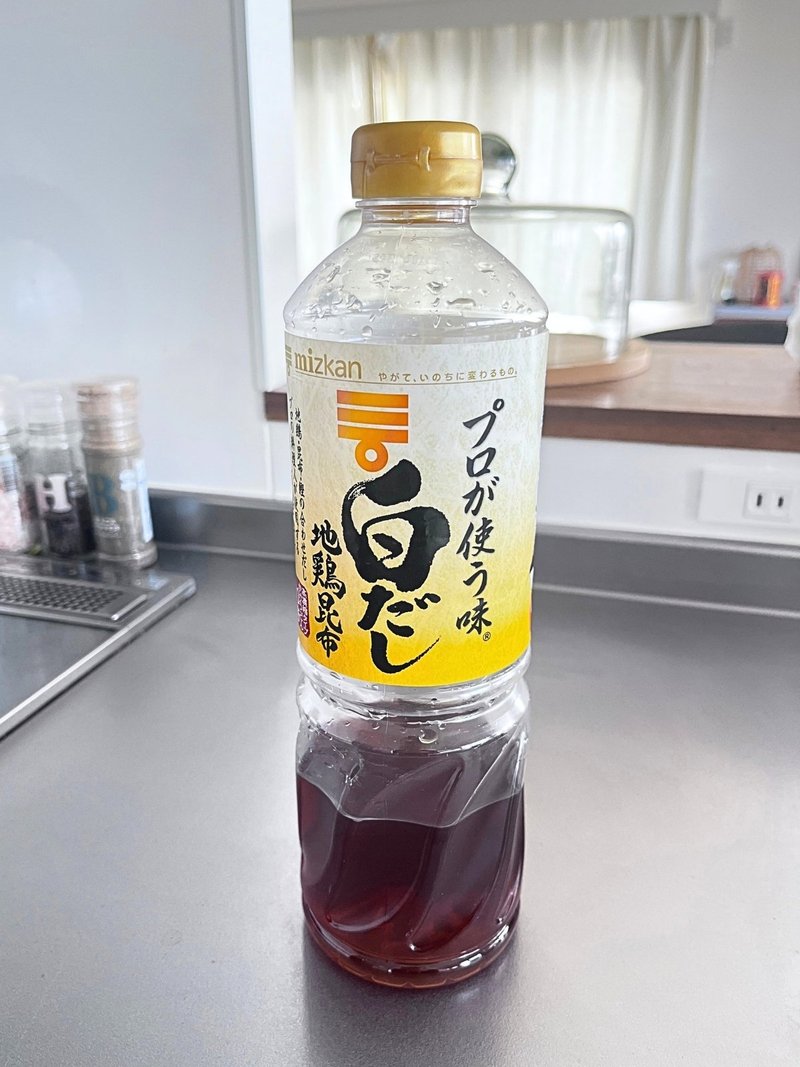
- Shiro dashi, the only seasoning I used
Shiro dashi is a light-colored, concentrated soup base made from dashi (a Japanese stock made with kombu, a type of kelp, and dried bonito flakes), seasoned with soy sauce and salt. It’s usually savory and on the salty side, with a strong dashi flavor and just a little sweetness. Mine is Mizkan’s, which uses a kombu and bonito stock with chicken stock added for richness, according to Mizkan. If you can’t find it, another brand of shiro dashi works, and Ninben’s is on Amazon.com.
With shiro dashi, the broth is just the bottle and water.
Ninben Shiro Dashi
Tools
- T-fal Ingenio Neo saucepans, 16cm (6.5in) and 20cm (8in), which share one detachable handle
I don’t have the whole set. I didn’t need the two frying pans that come in it, so I bought just the two saucepans, new, one by one on Mercari, a marketplace app in Japan. T-fal’s lineup can differ from country to country, and I couldn’t find these pans sold one by one in the US. The closest option I found is the Ingenio Expertise 10-piece set on Amazon.com. It has a detachable handle like mine and a 3qt saucepan, which is close in size to my 20cm pan. You don’t need it for this recipe, though. Any medium saucepan works. If you’d rather buy single pieces, you might find them on Mercari or other marketplace apps in the US.
T-fal Ingenio Expertise 10-Piece Set
How I made it
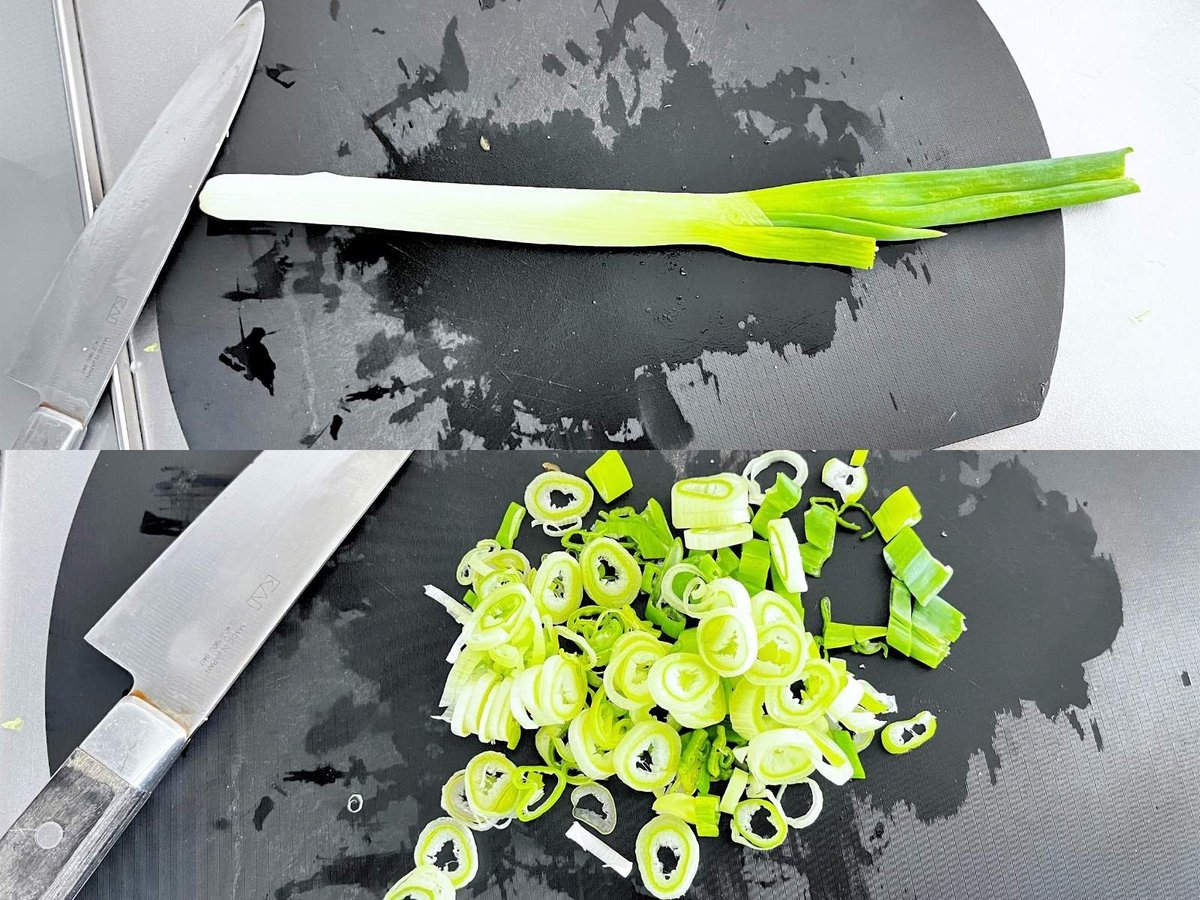
- I cut the napa cabbage, carrot and green onion.
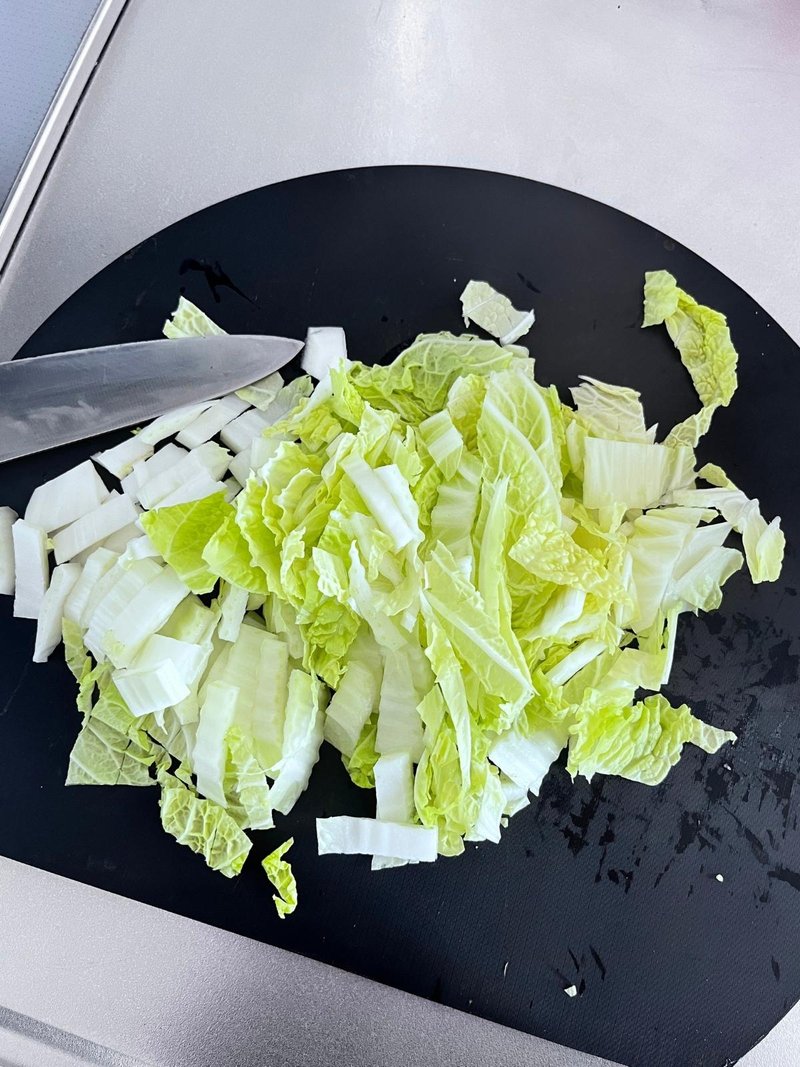
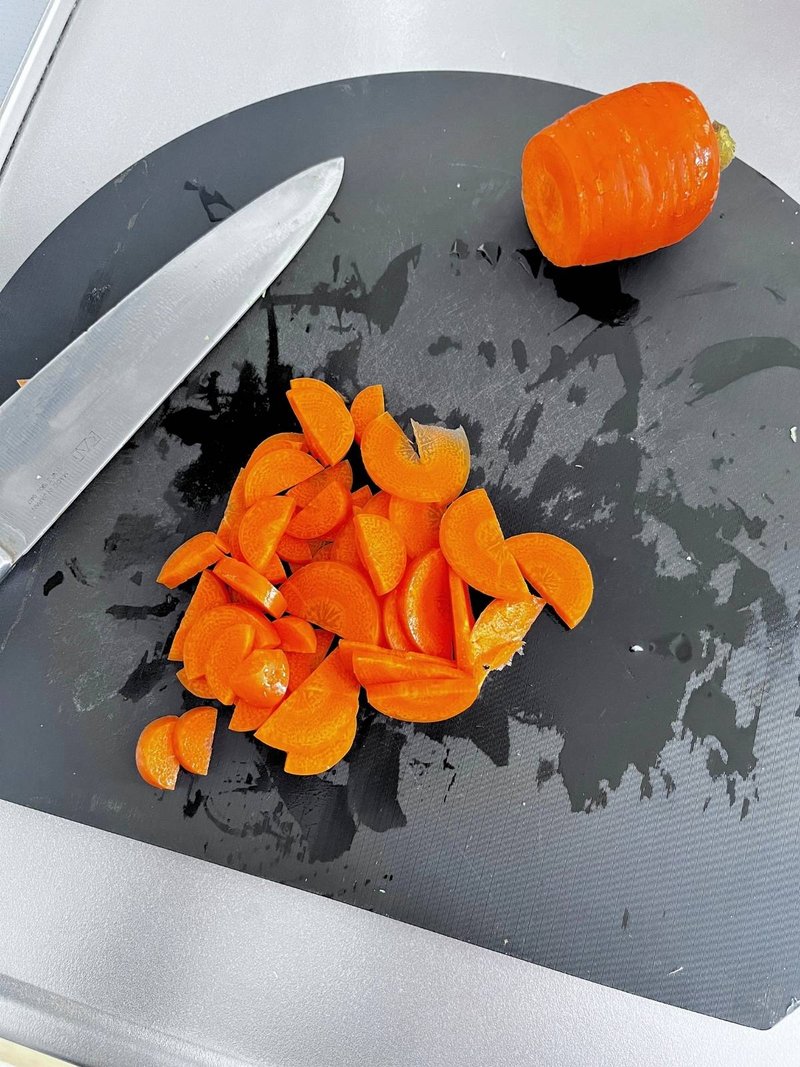
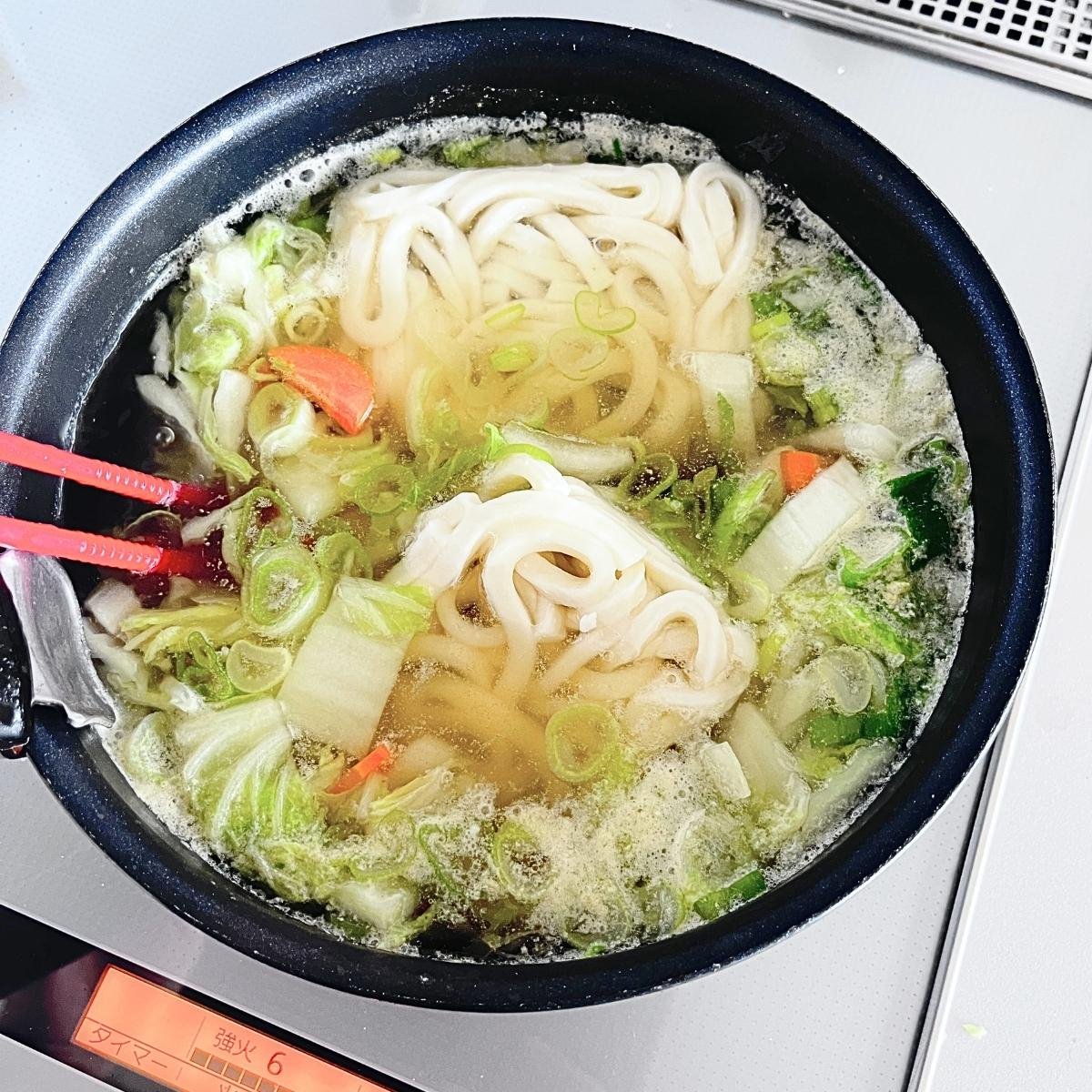
- I started in the 16cm pan, but while I was adding the vegetables, I realized they weren’t all going to fit.
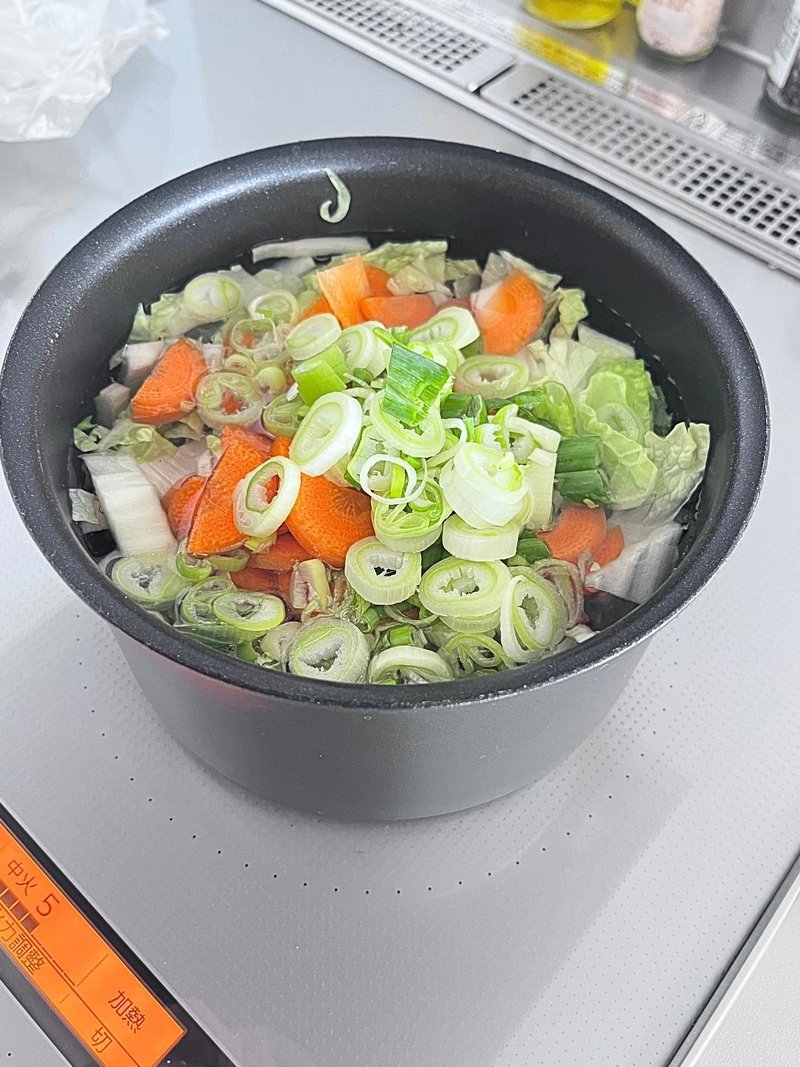
- Both pans take the same handle, so I clipped it onto the 16cm pan, lifted it and poured everything into the 20cm pan.
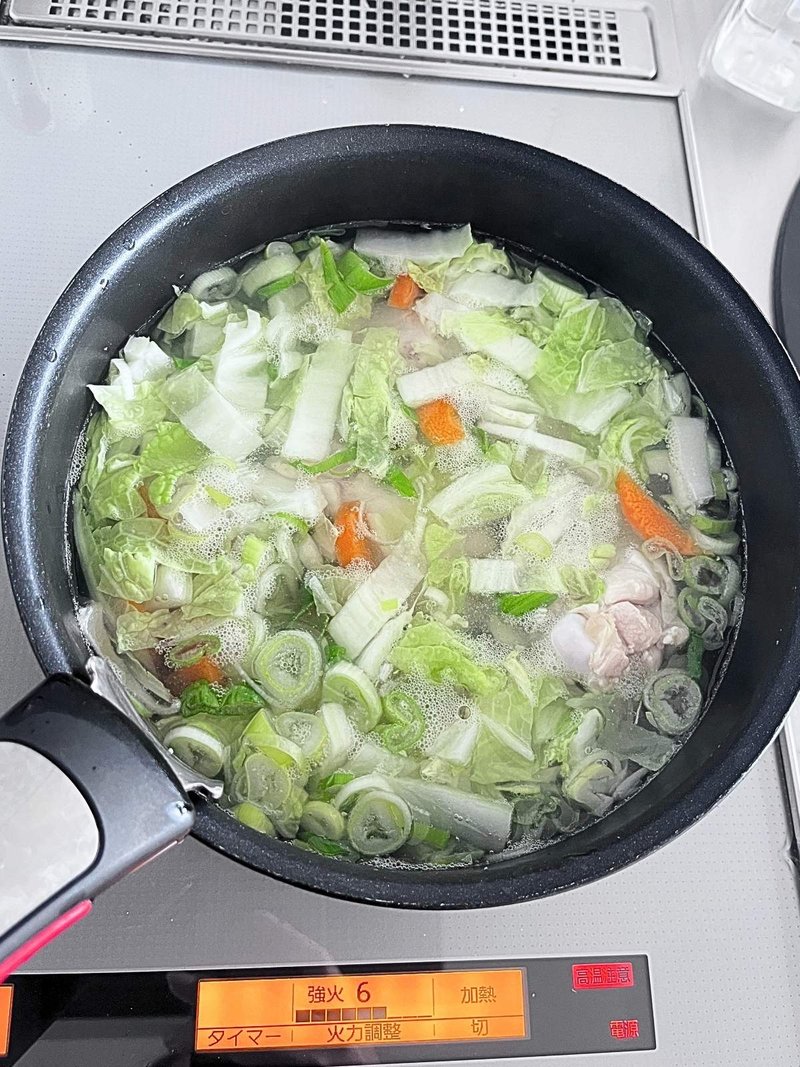
- After the vegetables, I felt like I needed some protein, so I added the chicken drumettes. If you make this, put the chicken in first. It’ll save time. Either way, keep it simmering until the chicken is cooked through.
- I usually just eyeball the shiro dashi and adjust as I taste, but this time I measured it so I could tell you how much I used: 200ml (about 7 fl oz).
- I didn’t measure the water, and in my rush I added way too much, so I ended up with a big batch.
- Then the frozen udon.
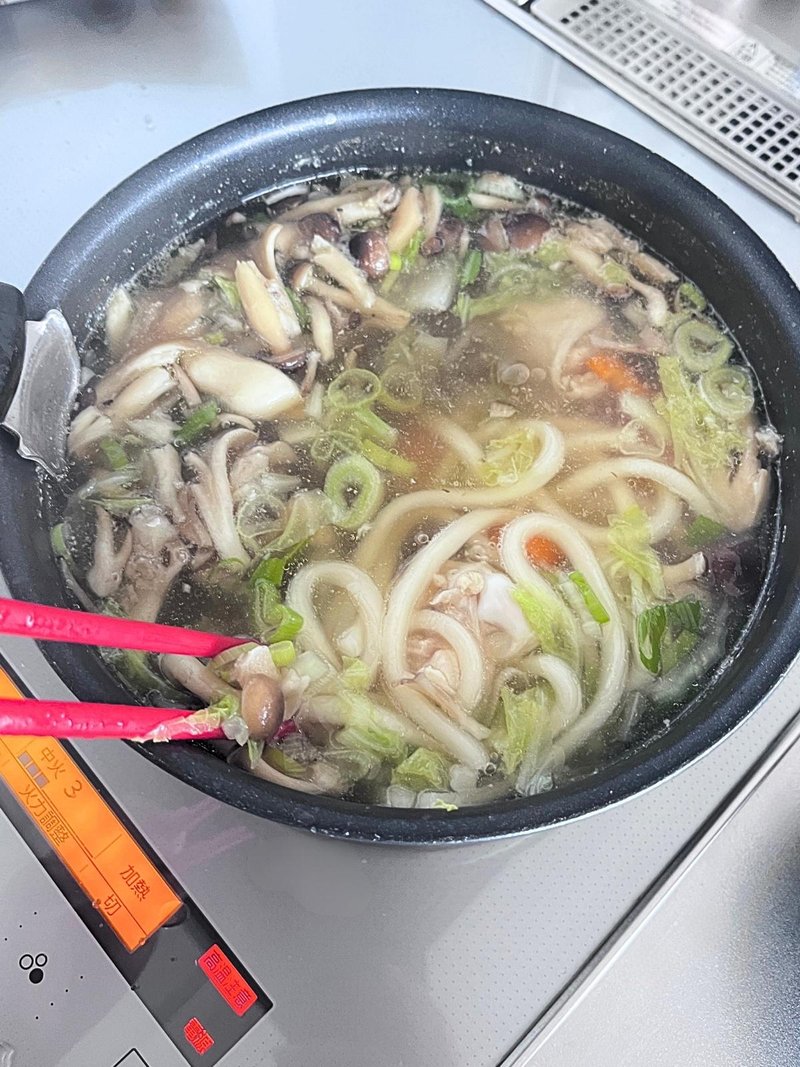
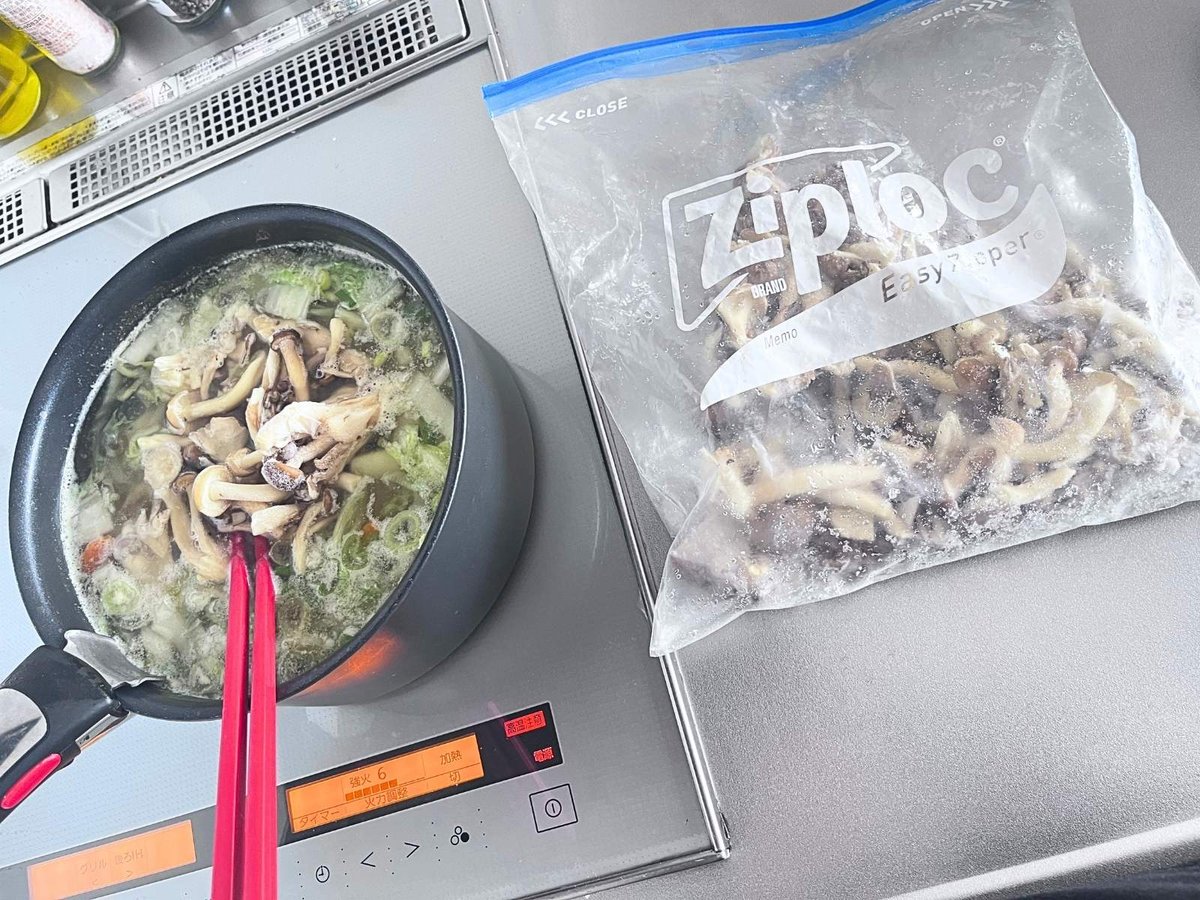
- The frozen mushrooms went in straight from the bag.
- I cracked in the eggs, one per person, and left them alone. I don’t remember exactly, but maybe about 3 minutes. If you like firmer yolks, give them another minute or two.
- When I served, I fished the eggs out with a ladle and set one on top of each bowl.
- Lunch was ready at 12:51 p.m., 19 minutes after I started.
How much shiro dashi to use
For udon, my bottle says 2 tbsp (30ml) of shiro dashi to 270ml (about 9 fl oz) of water per serving, so for two bowls, that’s 4 tbsp (60ml) to 540ml (about 18 fl oz). The 200ml I used went into the big batch I ended up with, so for two bowls, please use the amounts above as your guide. Other brands may use a different ratio, so check your bottle. Then taste it. If it’s too mild, add a little more shiro dashi, and if it’s too salty, add some water.
My freezer mushrooms
When I buy mushrooms (shimeji, maitake, shiitake, whatever I picked up), I take off the base with the sawdust on it and slice the shiitake with a knife. (Shimeji and maitake are two Japanese mushrooms that grow in clusters.) Then I put them all raw into a zipper bag, punch the bag from the top to break them up, and freeze it. On a day like this, they go straight from the bag into the pot. They work in just about anything: omelets, miso soup, mushroom rice, stir-fries, or microwaved and put on top of a salad.
Leftovers
Because I added too much water, there was a lot left over. I was planning to add more ingredients and some Japanese curry roux (solid blocks of curry sauce base) to turn it into Japanese-style curry rice. But before I got the chance, my husband finished it the next day.
My easy recipe
Makes 2 bowls.
- 2 portions of frozen udon
- Chicken drumettes (or any chicken cut into bite-sized pieces), napa cabbage, carrot, green onion and frozen mushrooms, as much as you like
- 2 eggs
- Shiro dashi: 4 tbsp (60ml) with 540ml (about 18 fl oz) of water, if your bottle has the same ratio as mine. Check yours, then taste.
- Cut the napa cabbage, carrot and green onion.
- Put the chicken in the pot first, then the vegetables. Add the shiro dashi and water, and bring it to a simmer.
- Keep it simmering until the chicken is cooked through.
- Add the frozen udon, then the frozen mushrooms straight from the bag. Cook the udon following the package.
- Crack in the eggs and leave them alone for about 3 minutes. Give them another minute or two for firmer yolks.
- Ladle into bowls and set an egg on top of each.
Where to find them
T-fal Ingenio Expertise 10-Piece Set
Ninben Shiro Dashi
In the end
My husband left at 1:10 p.m. He’s the type who leaves with time to spare, so it turned out fine. Looking back, he’d said “around 1,” not “at 1.” Honestly, it was a bit of an anticlimax for me too.
This is what lunch at my house in Japan can look like on a rushed day: quick, simple and easy to copy.
If you have a go-to meal for rushed days, or something you’d like to see from my kitchen, I’d love to hear about it at hello@minimalfromjapan.com.