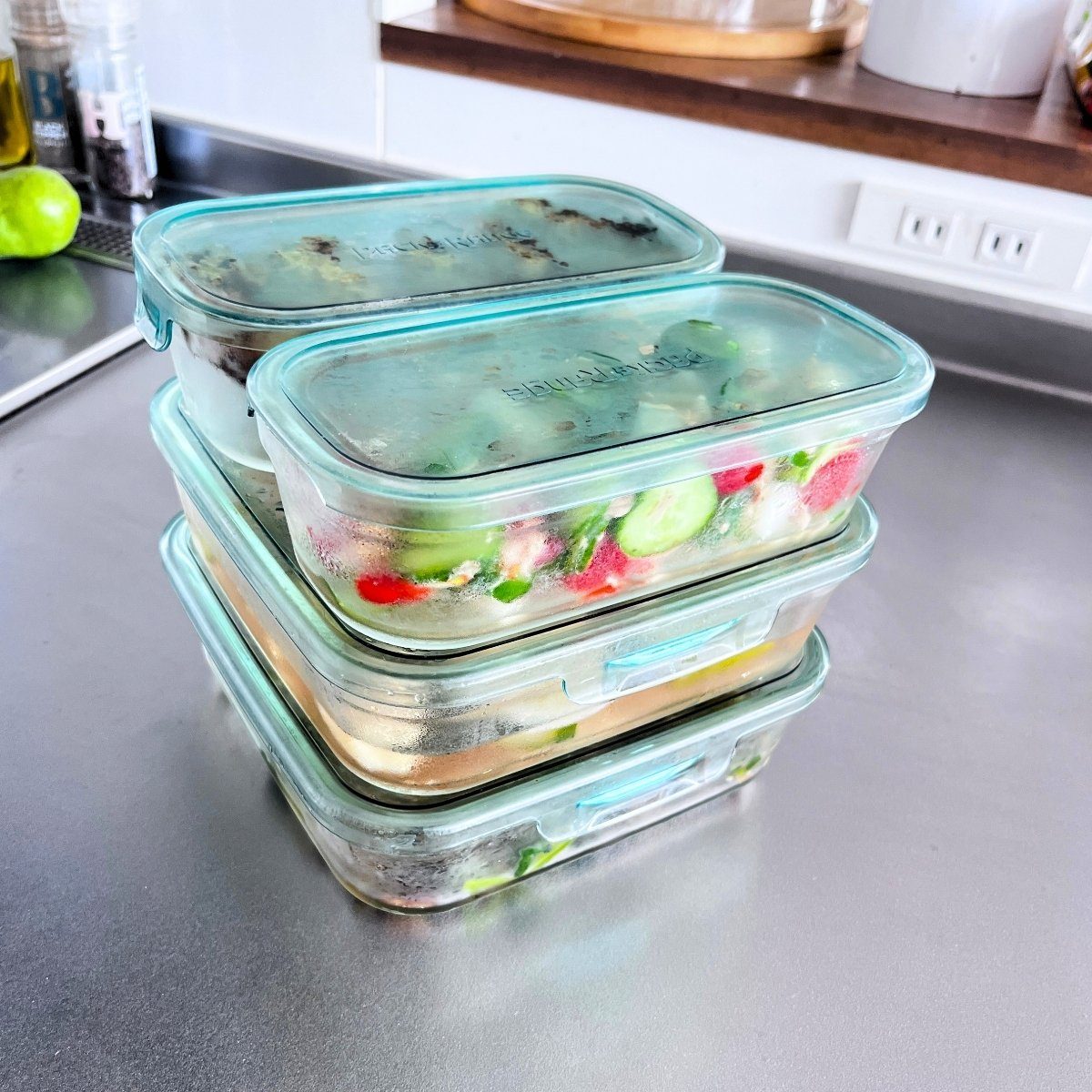
I bought a set of glass food containers about eight years ago, and I still use them every day. In those eight years, one of them has broken, and that was the day I dropped it.
Getting there took a while, because for a stretch before that I owned no food containers at all.
This post contains affiliate links (see my disclosure for details). As an Amazon Associate I earn from qualifying purchases.
The years I didn’t buy any containers
When I first lived on my own, I used plastic containers. Curry left both the color and the smell behind, and washing didn’t bring them back.
Curry wasn’t the only part of it. Some containers couldn’t go in the microwave at all, and with others the container could but the lid couldn’t. The ones that came to me as gifts didn’t always say either way. Once they were mixed in with what I already had, I lost track of which ones could be reheated, with the lid or without it, and where each had come from.
So I decided I wouldn’t buy more until I found something I actually wanted to use.
That decision had a cost. Without somewhere to keep dishes with a lot of liquid in them, the range of things I cooked narrowed. I’d make a simmered dish and then have no plan for the leftovers. So I kept looking. What I was looking for was heat-resistant glass that also looked good enough to leave on the table. Those were my two conditions.
I came across iwaki (the brand writes its name in lowercase), a Japanese maker of heat-resistant glassware, when a set of their containers went around on social media.
What I own
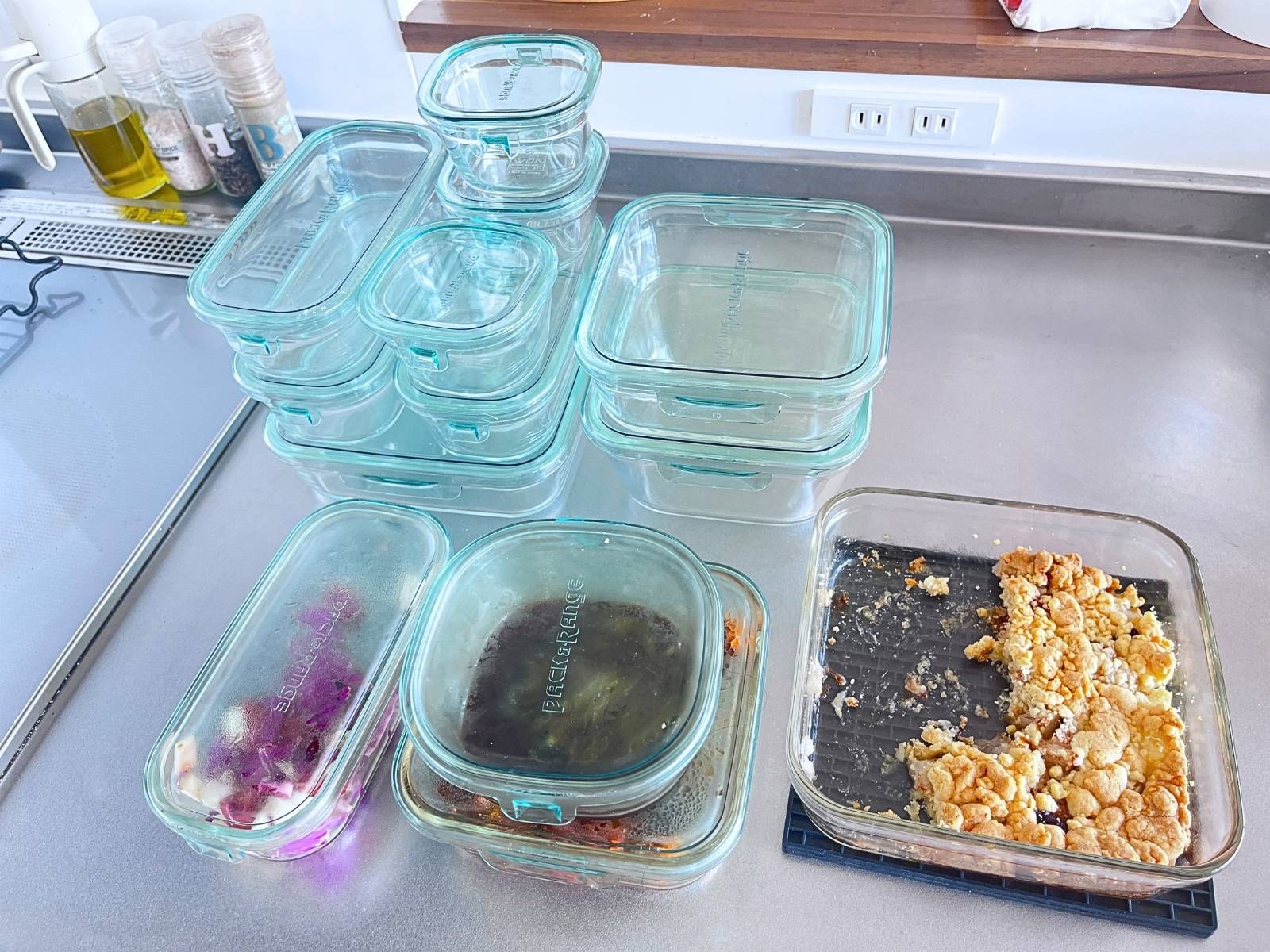
I started with a Pack & Range set of seven containers with green lids. The series has been sold for more than 30 years, and the “range” in its name comes from denshi renji, the Japanese word for a microwave:
- 200ml (just under 1 cup) x 4 — 9.3 x 9.2 x 5.4cm (3.5 x 3.5 x 2in)
- 500ml (about 2 cups) x 2 — 18.6 x 9.3 x 5.5cm (7.5 x 3.5 x 2in)
- 1.2L (about 5 cups) x 1 — 18.5 x 18.5 x 5.5cm (7.5 x 7.5 x 2in)
Later I added three more square ones: a 450ml (just under 2 cups), 13 x 12.8 x 5.5cm (5 x 5 x 2in); an 800ml (about 3⅓ cups), 15.6 x 15.6 x 5.5cm (6 x 6 x 2in); and the deep 1L (about 4 cups), 15.6 x 15.6 x 8cm (6 x 6 x 3in).
I also added a round one, 1.3L (about 5½ cups), 16.7cm across and 8cm tall (6.5 x 3in). That’s the one I dropped. I haven’t replaced it.
In Japan, the seven-piece set is listed at ¥9,350 (about US$60, depending on the exchange rate) and the deep 1L at ¥1,980 (about US$13). (Yen prices from iwaki’s online shop, checked in September 2026.)
How I use each size
200ml. Small side dishes made ahead. Moving something into a smaller container once we’ve eaten part of it. I also use these as molds for dessert, chocolate mousse for example.
450ml. Side dishes, as long as there isn’t too much of them. Meatballs, soy-marinated eggs (soft- or hard-boiled, depending on my mood), almost anything. I’ve also kept shiso leaves (a Japanese herb in the mint family) pickled in soy sauce in it.
500ml. Smaller simmered dishes. Vegetable sides cut fine enough that they don’t take up much room.
800ml. I used this one for the sesame miso cucumber in my side dish post.
1.2L. This one covers the most ground. Leftover pasta, salad, simmered dishes, stir-fried vegetables, anything I’ve made a larger batch of. Sometimes I put chicken wings and vegetables in it and move it straight to the oven, and the same container bakes a fruit crumble for dessert.
Deep 1L. Anything with liquid. Simmered dishes like nikujaga (meat and potatoes simmered in a sweet soy broth) or beef stew, and leftover soup. A lot of home cooking here has broth in it, so the extra depth gets used.
If you asked me which size I reach for most, I’d have trouble answering. All of them get used somewhere in the week.
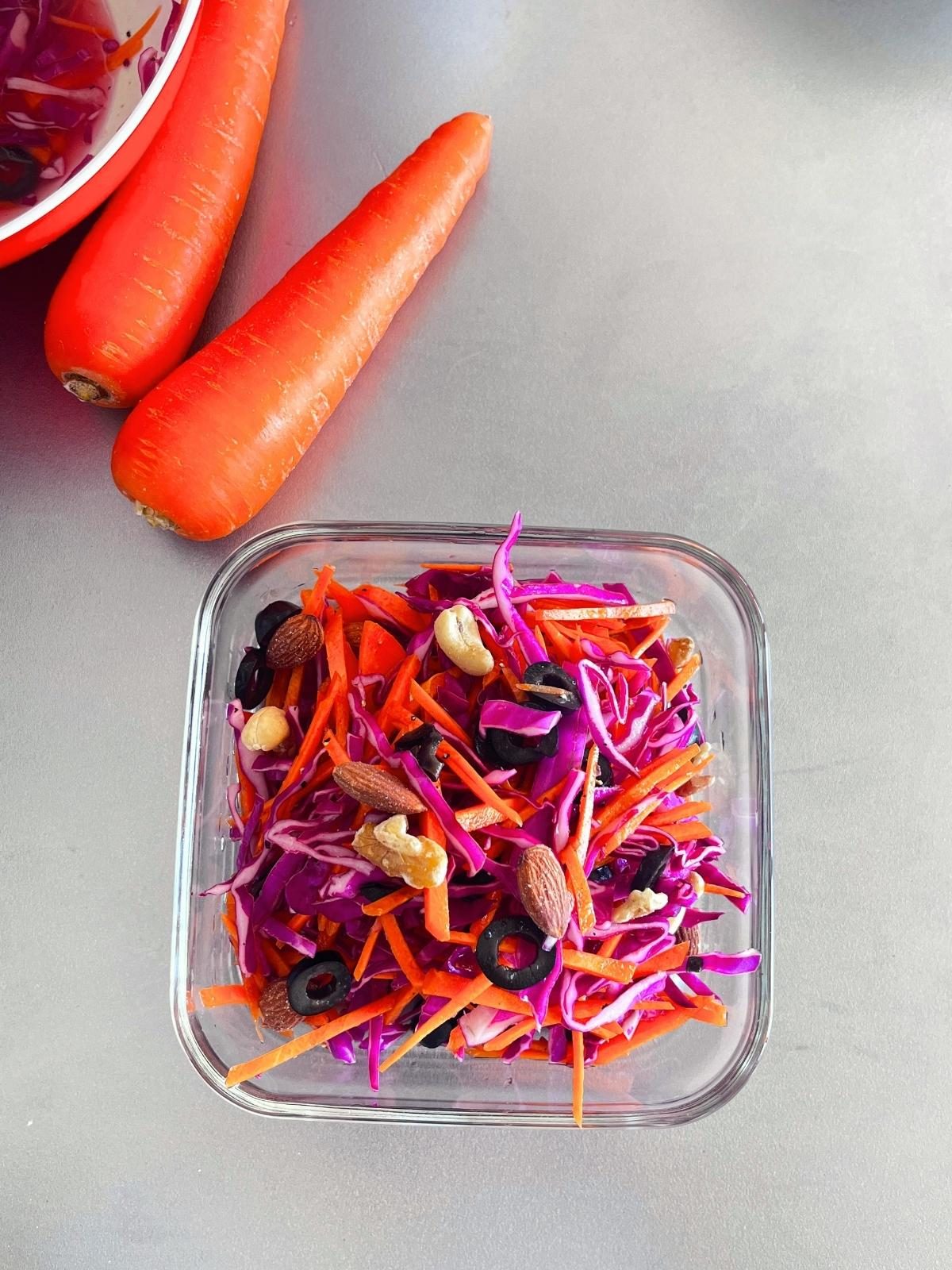
One container, from the fridge to the oven to the table
This is the part I like most. Food goes in, the container goes in the fridge, it gets reheated the next day, and it comes to the table as it is. Nothing has to be moved into a second dish along the way.
The maker’s instructions are worth knowing here. The containers can go in the microwave with the lid on. For the oven, the lid comes off and only the glass body goes in. They aren’t for direct flame. The round shape isn’t rated for the oven at all, though the square ones are once the lid is off. iwaki says its oven-safe glass is fine in a home oven, which runs up to around 300–350°C (570–660°F).
The maker also lists a few things to avoid with hot glass: touching it with a wet cloth, setting it on a wet surface, and putting frozen glass or frozen food into a preheated oven. Thaw it first.
When I roast chicken wings and vegetables, or bake a crumble, I take the lid off first, and the dish comes out of the oven ready to put on the table.
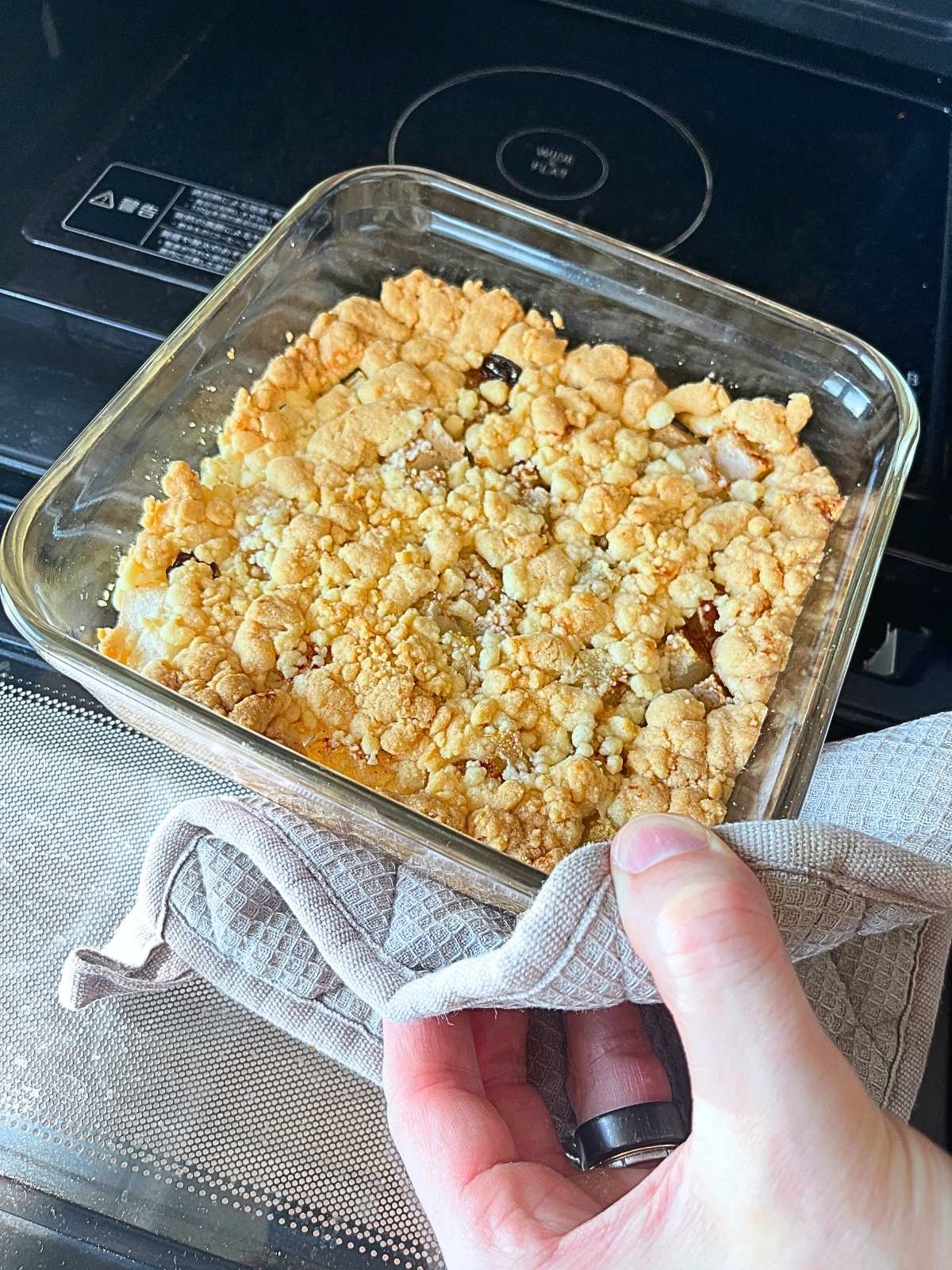
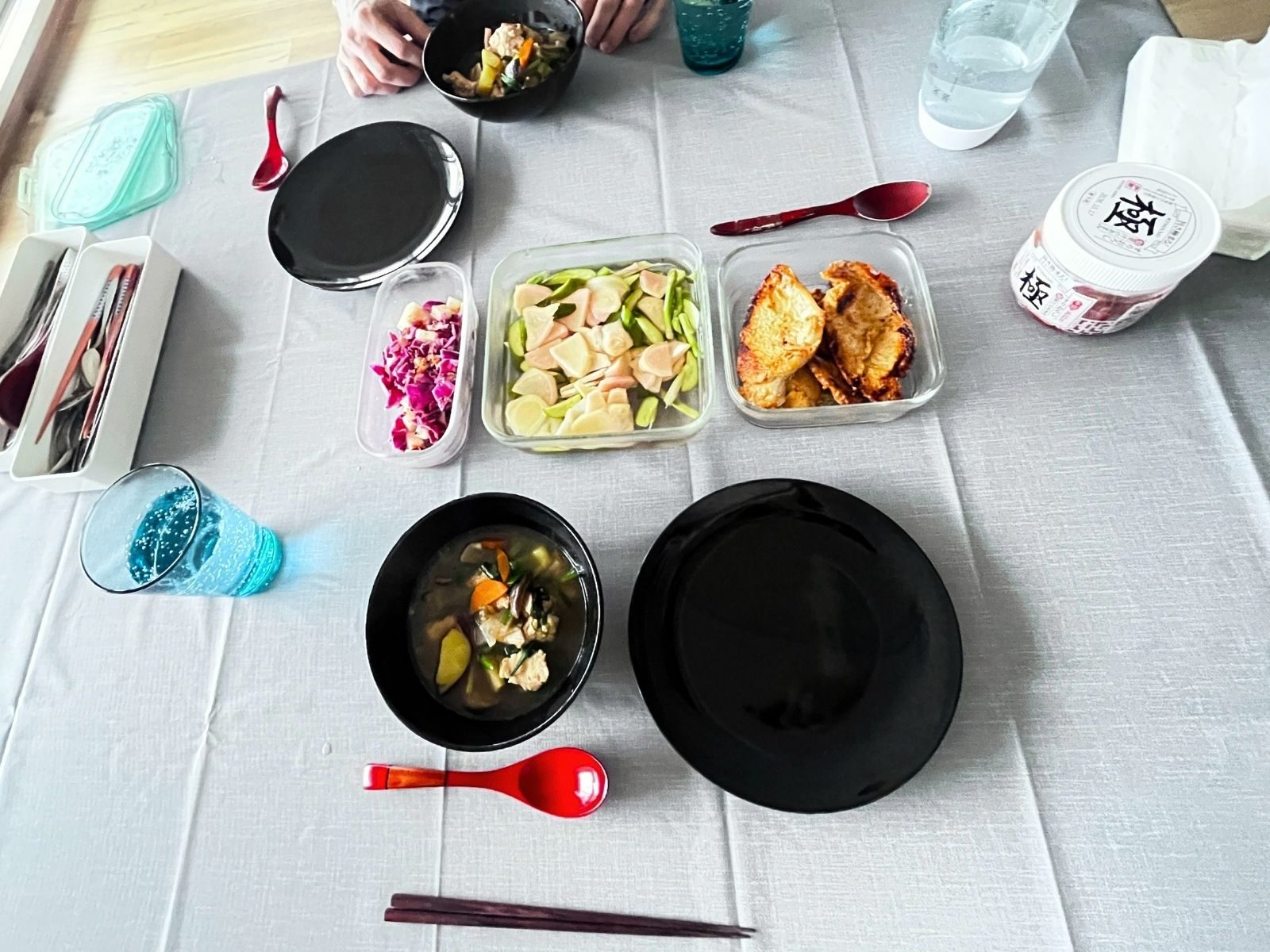
What eight years have shown
One breakage. The round 1.3L, after I dropped it. Everything from the original seven-piece set is still here.
No smell, no staining. Curry goes in, and the container washes back to clear. That was my problem with plastic, so for me this is the difference that matters most.
The lid grooves are wide. Narrow grooves tend to hold onto residue. These are wide enough that in eight years I haven’t found myself bothered by the state of the lids.
The weight registered at first. Glass is heavier than plastic, and I noticed it early on. I don’t notice it now.
They stack cleanly in the fridge. Buying different sizes from one series means the corners line up, and things stay where I expect them.
Hot food goes straight in. The glass is heat-resistant, so I fill them while what I’ve cooked is still hot.
One caution from the maker: heat-resistant glass is made to handle heat, not impact, and it isn’t tempered glass. Dropped, it breaks. Mine did.
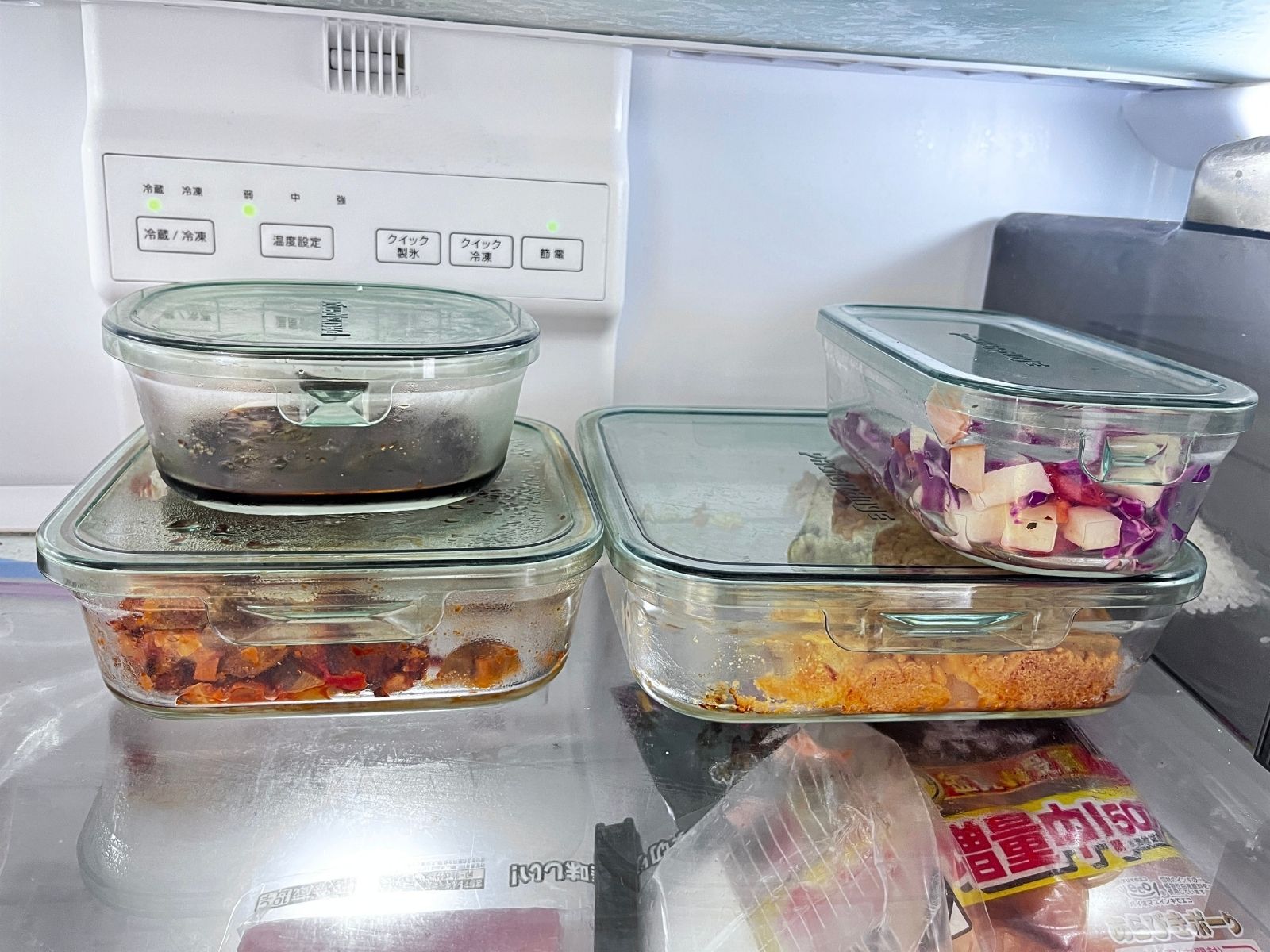
What I don’t use them for
Freezing. The lids on this series don’t seal airtight, so freezing isn’t what I use them for. My husband does use them that way for short stretches; I don’t.
The maker does allow freezing, with a limit worth reading: foods with a lot of water in them, and liquids, can crack the glass as they expand while freezing, so those aren’t recommended. For rice, the instructions suggest using a larger container, putting the lid on, shaking it so the rice spreads out, and leaving space before it goes in the freezer.
When I bought the set, I remember thinking, oh, these don’t seal. Then I thought about when I’d actually need a seal: only when food leaves the house, as a packed lunch or as food I’m sharing with someone. For a packed lunch, glass is too heavy for me to carry, so I’d use a lunch box made for that instead. When I share food, I give the container away with it, so a cheap plastic one does the job. So I decided I didn’t need one, and eight years of using them has borne that out.
If you do want a seal, iwaki makes an airtight version, with a gasket built into the lid, and their site says it can go in the microwave with the lid on. A three-piece set of this airtight version, with white lids, is sold on Amazon.com.
iwaki Airtight Pack & Range 3-Piece Set (White)
The dishwasher. We don’t have one.
According to the Cabinet Office’s Consumer Confidence Survey, 36.6% of Japanese households of two or more people had a dishwasher as of March 2026. We used to have a countertop model, the kind that needs no plumbing work and gets filled with water by hand. The interior was small and filling it each time added a step, so it stopped getting used and we passed it on.
Lid colors, and buying a lid on its own
This part matters if you’re choosing a color.
The lid decides whether it can go in the dishwasher. On Pack & Range, the pink, green, gray and olive green lids are polycarbonate and aren’t dishwasher safe, though they are fine in the microwave. iwaki’s NEW Pack & Range, which has aqua blue lids, and the translucent white lids sold on iwaki’s Japanese online store are polypropylene (heat-resistant to 140°C (284°F)) and can go in the dishwasher. The sealed version’s lid is made of another plastic and is dishwasher safe too. The glass bodies are dishwasher safe in every version. Polycarbonate is a plastic made with BPA, and I couldn’t find anything about BPA on iwaki’s site. If you’d rather avoid it, look for the polypropylene lids. On Amazon.com, there’s a NEW Pack & Range seven-piece set with aqua blue lids, in the same sizes as my green one. It ships from Japan with shipping charged on top, so check the total before you order. If you wash everything in the dishwasher, the blue set is the one that fits.
iwaki NEW Pack & Range 7-Piece Set (Blue)
When I bought mine, green and pink were the only options, so I chose green. There are more colors now, and more than one lid material, which I like: you can pick the lid color you want. My guess is that the range grew because some people wanted to run the lids through a dishwasher and some wanted more colors to choose from, though that’s my reading rather than anything the maker has said. If I were choosing today, I think I’d pick the gray, simply because I like the color. Its lid is polycarbonate too, so it isn’t for the dishwasher either. The gray set is on Amazon.com too.
iwaki Pack & Range 7-Piece Set (Cool Gray)
Lids are sold separately. In eight years of daily use, I’ve chipped just two of mine, which I think is a pretty good record, and I’m still using them as they are. Nothing about them has stopped working, so replacing them hasn’t felt urgent. With the number of colors available now, I may end up swapping all of my lids at once at some point, or I may not. On iwaki’s Japanese store, as of September 2026, a replacement lid runs ¥440 (about US$2.8) for the 200ml, ¥550 (about US$3.5) for the 450ml, ¥605 (about US$3.9) for the 500ml, ¥660 (about US$4.3) for the 800ml and 1L, and ¥770 (about US$5) for the 1.2L, tax included, with the dollar figures shifting with the exchange rate.
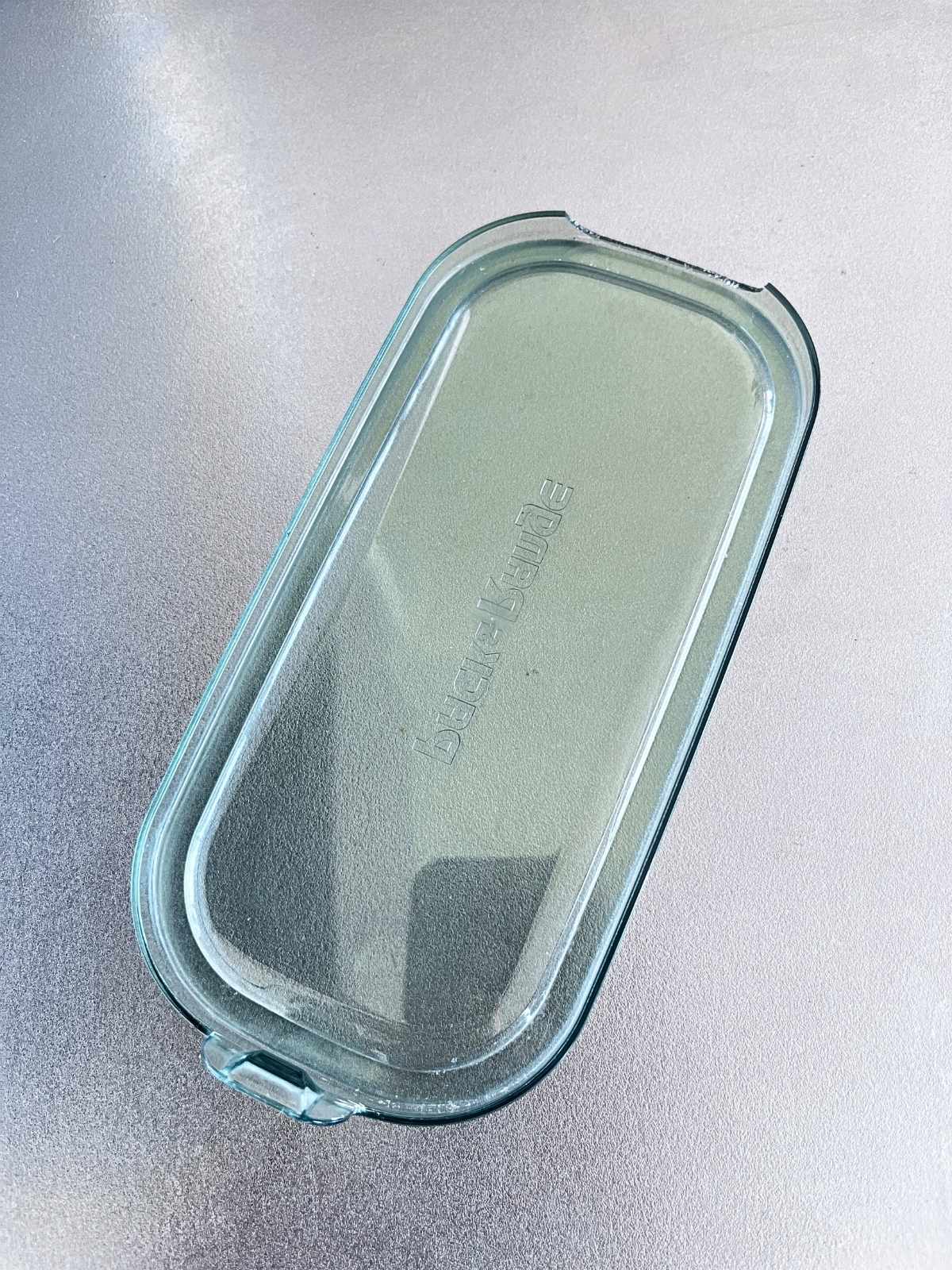
Buying them in the US, and one alternative
iwaki’s kitchenware doesn’t have a US store of its own. On Amazon.com, several pieces are listed by sellers based in Japan. The same green seven-piece set I own is one of them. It ships straight from Japan, and the delivery date shows on the listing before you check out. Check the current price on Amazon.
iwaki Pack & Range 7-Piece Set (Green)
If waiting for a package from Japan doesn’t suit you, Rubbermaid’s Brilliance glass set is sold and shipped by Amazon in the US. The nine-piece set comes in a mix of sizes, from 1.3 cups to 8 cups. According to Rubbermaid, the lids latch on both sides, so they’re airtight and leakproof, and they’re BPA-free. They go in the microwave with the lid on and the latches open, using a vent in the lid. The glass base can go in the oven up to 232°C (450°F), and the containers can go in the freezer and on the top rack of the dishwasher. Rubbermaid also says the glass resists stains and odors. Looking into it, I found myself thinking that if I ever live somewhere with a dishwasher, I’d want a set too. For now, with everything washed by hand, my iwaki containers still do everything I need.
Rubbermaid Brilliance Glass Food Storage Containers, Set of 9
Where to find them
iwaki Pack & Range 7-Piece Set (Green)
iwaki Pack & Range 7-Piece Set (Cool Gray)
iwaki NEW Pack & Range 7-Piece Set (Blue)
iwaki Airtight Pack & Range 3-Piece Set (White)
Rubbermaid Brilliance Glass Food Storage Containers, Set of 9
A last note
This is a story about using something for eight years, but it’s also a story about not buying anything for a while. The waiting was inconvenient. Still, because I’d decided what I was looking for before I started, I haven’t second-guessed the purchase since.
If you’re working on kitchen storage, I’ve also written about the shelf I built in my kitchen and where I keep dry goods.