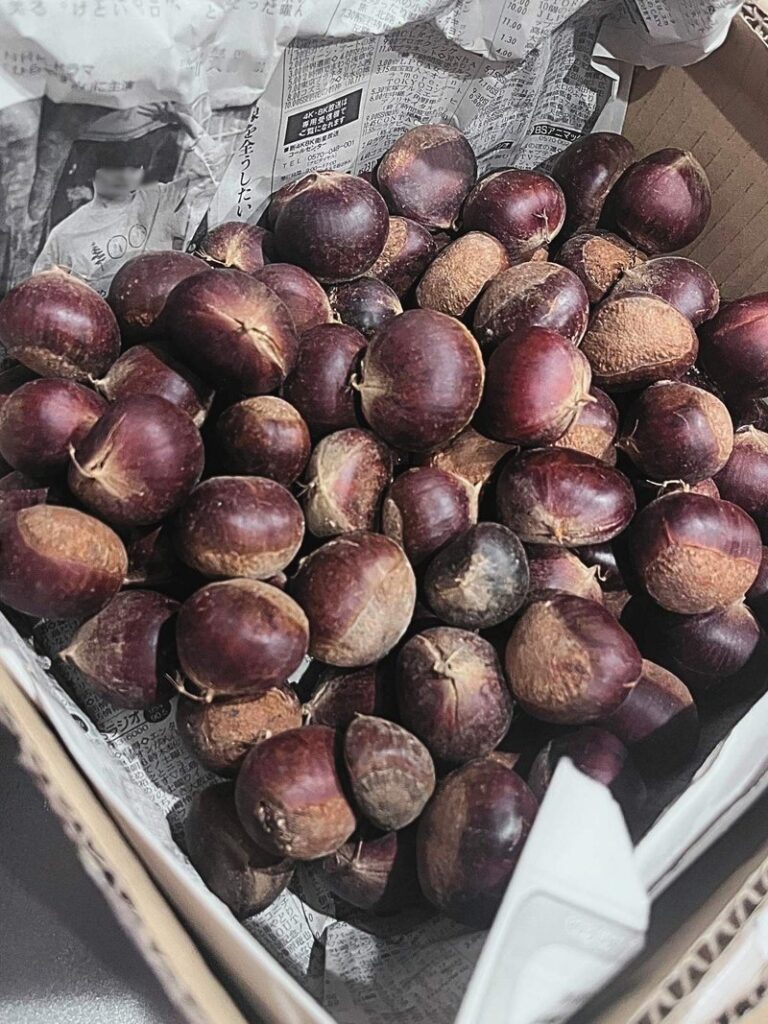
My grandmother has a big chestnut tree on her land. Every fall, I go chestnut picking with her or she gives me some, and this year she sent me a box of them.
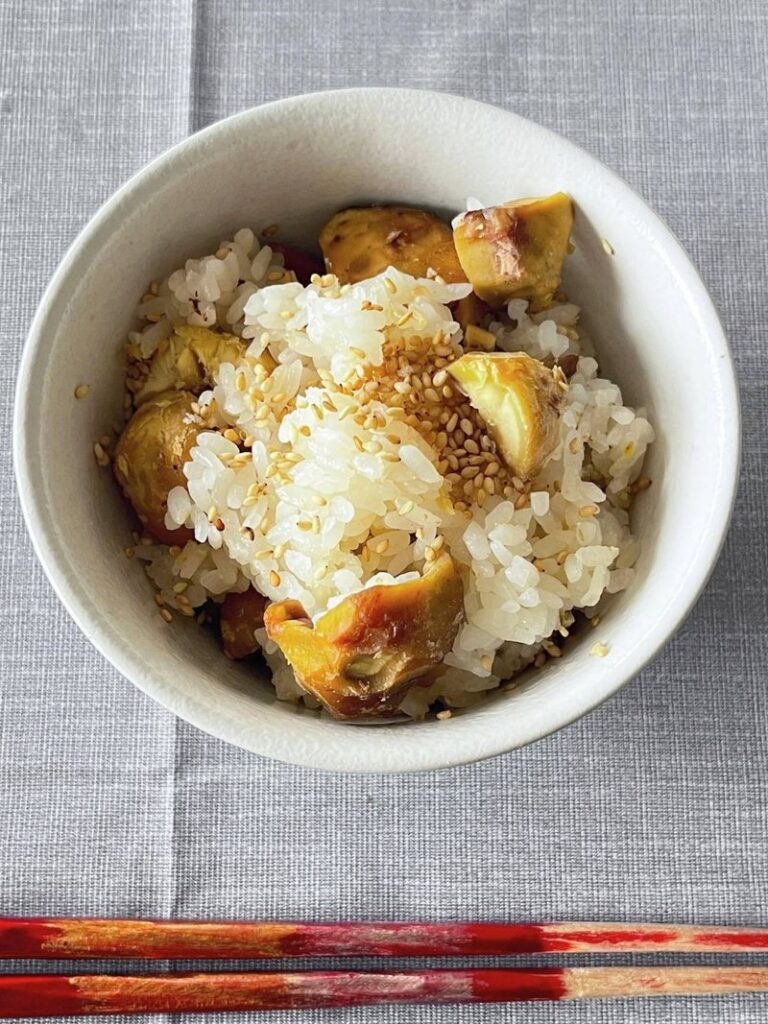
To me, chestnuts mean kuri gohan (kuri means chestnut, and gohan means rice): rice cooked with chestnuts. In Japan, it’s one of the dishes that tells you fall has arrived, and I make it every year when the season comes around. Once the chestnuts are peeled, it’s simple home cooking: everything goes into the rice cooker together. The hard part is the peeling, so this is how I make that part easier, with a pair of chestnut shears I’ve used for years.
This post contains affiliate links (see my disclosure for details). As an Amazon Associate I earn from qualifying purchases.
Why I start from fresh chestnuts
It started because my grandmother sends them. On my own, I had never bought fresh chestnuts, peeled them, and cooked them. To be honest, back when I was busy with work, I sometimes found it a little bothersome when she sent me seasonal food like this.
But after I started living with my husband, I wanted to cook him dishes made with the seasonal Japanese foods my grandmother sends. Each time I asked her how to prepare something, I learned a little more about traditional ways of cooking, the thinking behind them, and the foods that change with each season. Along the way, I realized that preparing them is itself a lovely way to feel the season. It’s a bit like Christmas: getting ready takes a lot of work, but the time you spend preparing is part of what makes it feel like Christmas.
I also know that these traditional ways are something I can only learn from my grandmother while she’s still well. I like to keep things easy, so I can’t always do things exactly the way she taught me. I try her way once, then shape it into a way that fits me, and I’ve come to feel that passing that on to someone else is a lovely thing too.
So when chestnuts arrive from my grandmother, I make chestnut rice. I think, for me, it’s a taste full of memories with her.
How I used to prep them, and what I do now
I used to do what my grandmother taught me: dry the chestnuts in the sun for a day, then soak them in water overnight to soften the shells. After that, I peeled them raw. But raw chestnuts are hard, and peeling them was a real struggle. When I called my grandmother about it, she said they’re much easier to peel after boiling.
These days, to save time, I give them a quick rinse and boil them right away. I was a little worried that cooking the rice with boiled chestnuts would change the taste, but to me, it seemed no different.
Boiling them
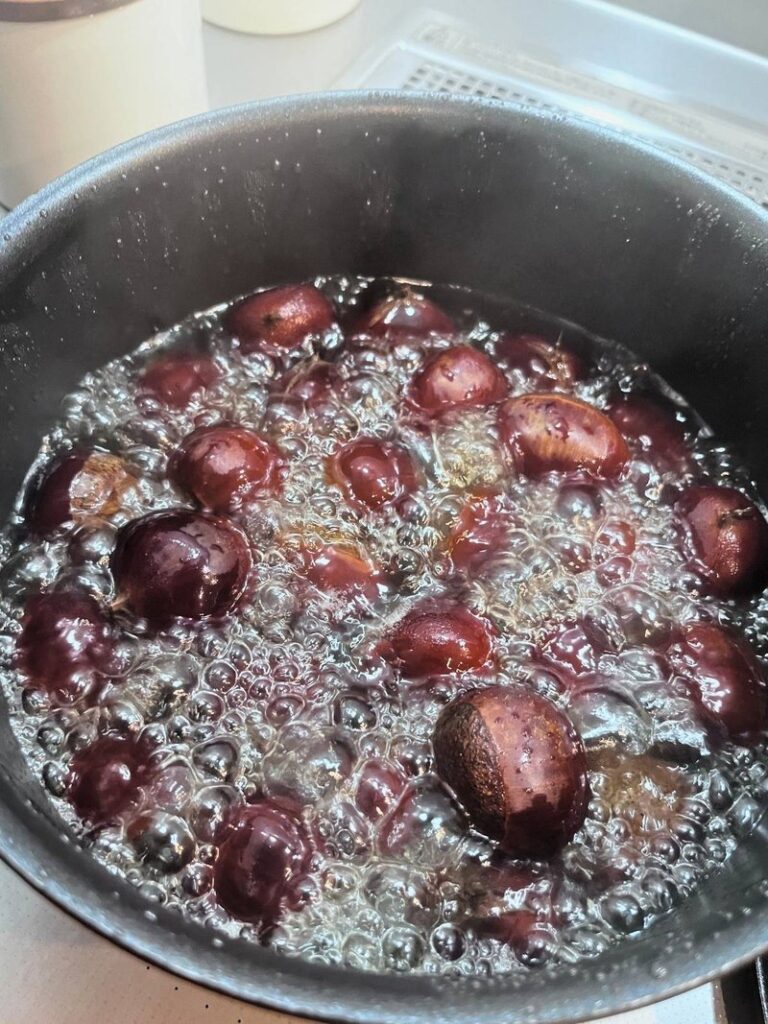
I put the chestnuts in a pot, add enough water to cover them, put the lid on, and turn on the heat. Once the water comes to a boil, I let them cook over medium heat for roughly 40 minutes. Please don’t copy this part, but my induction cooktop has a safety feature that shuts it off if the pot boils dry, so I just leave them while they cook. If your stove doesn’t have a feature like that, set a timer for about 40 minutes, check on the pot now and then, and add water if it gets low.
They’re far too hot to peel right away, so I let them cool first.
Peeling them with chestnut shears
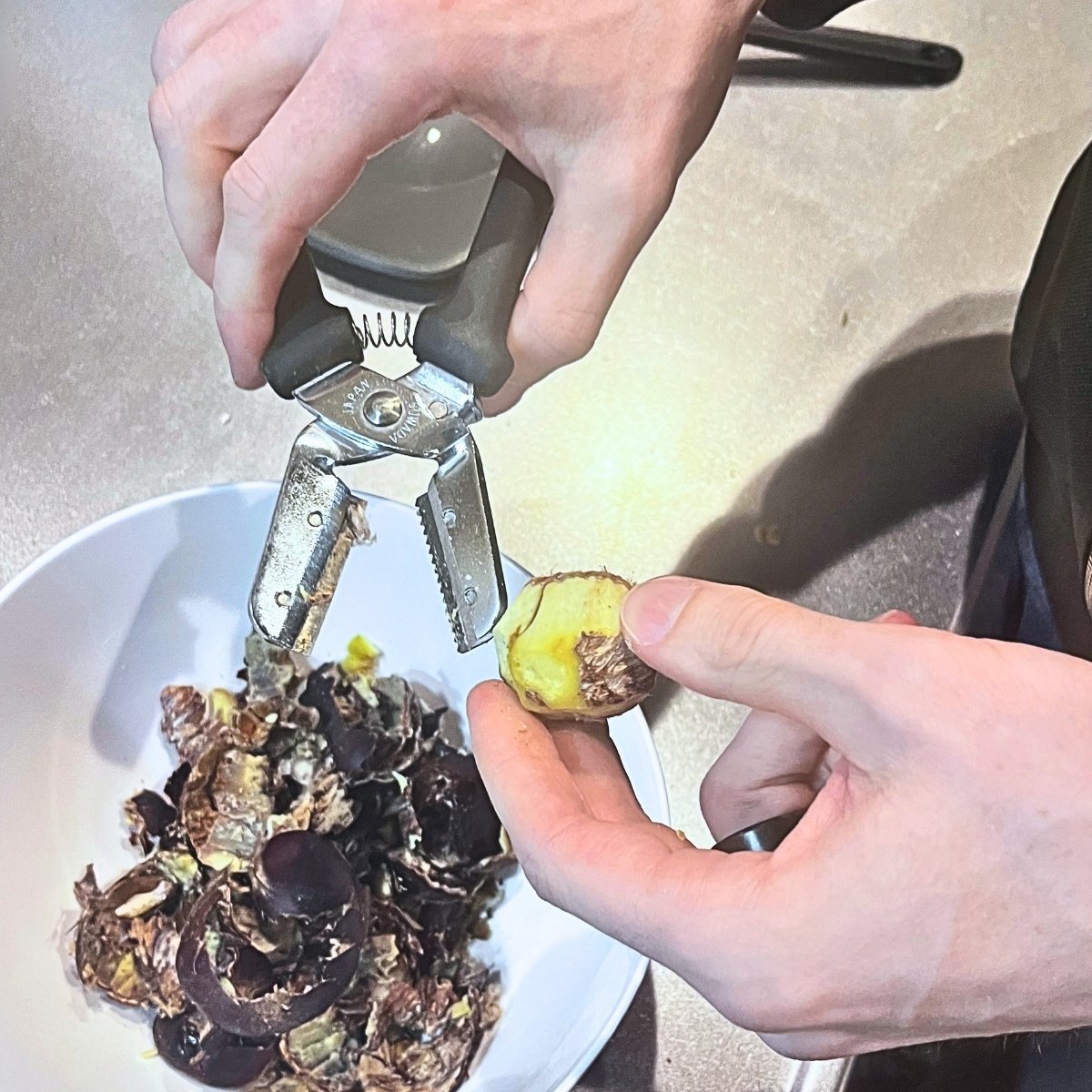
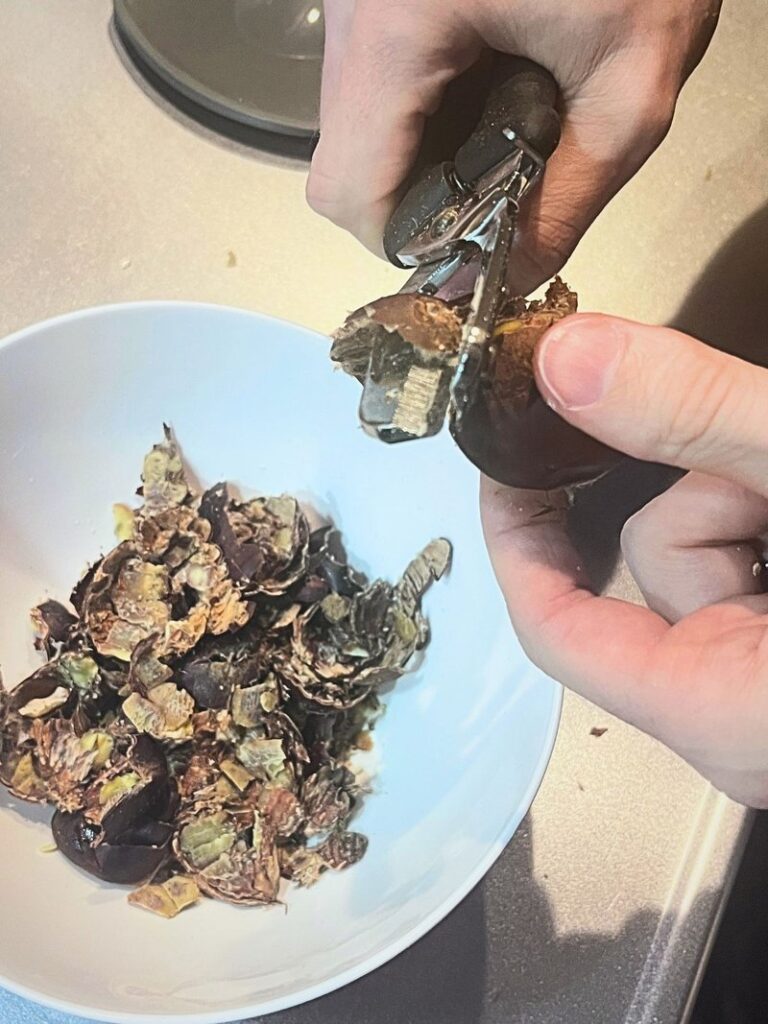
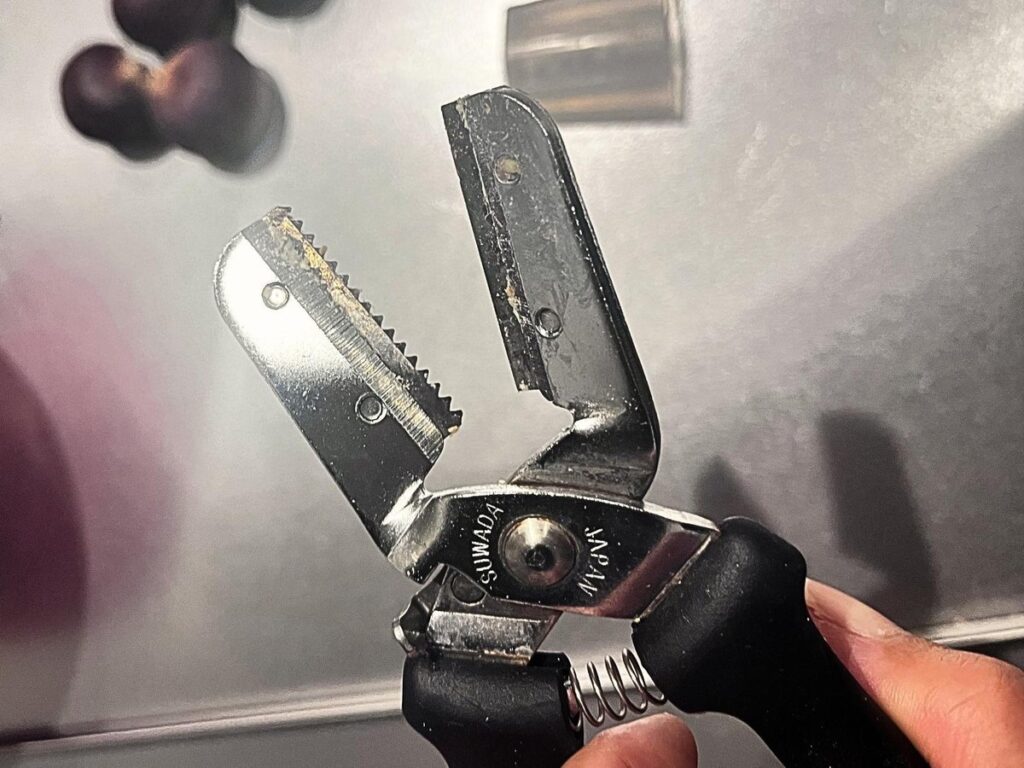
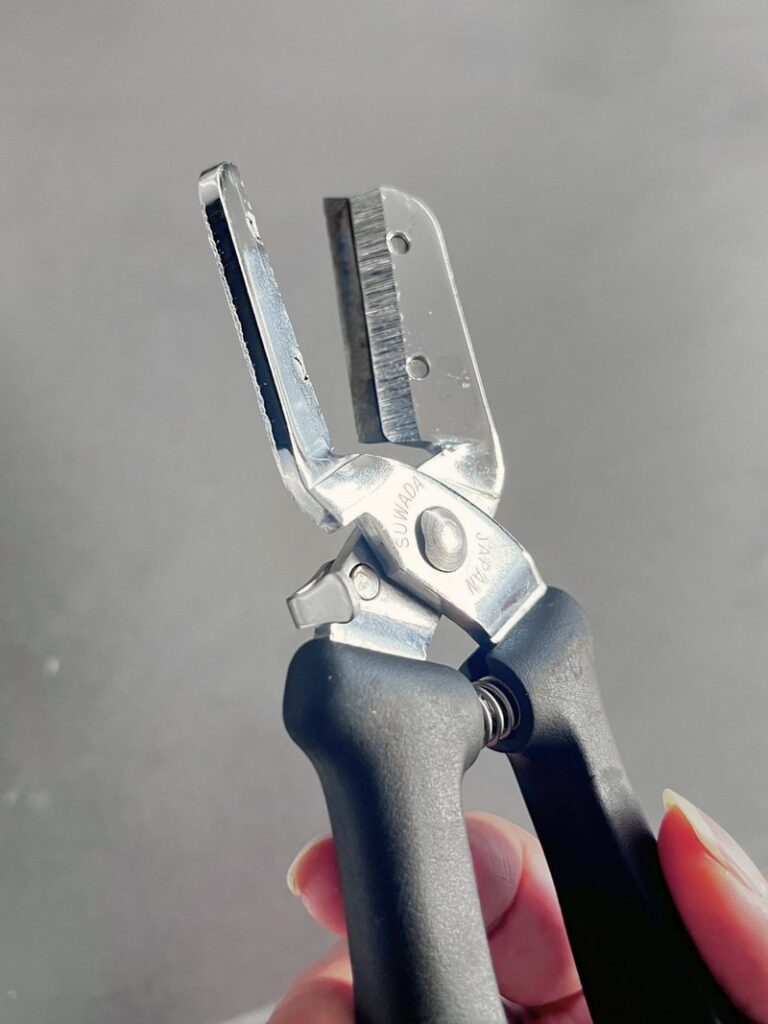
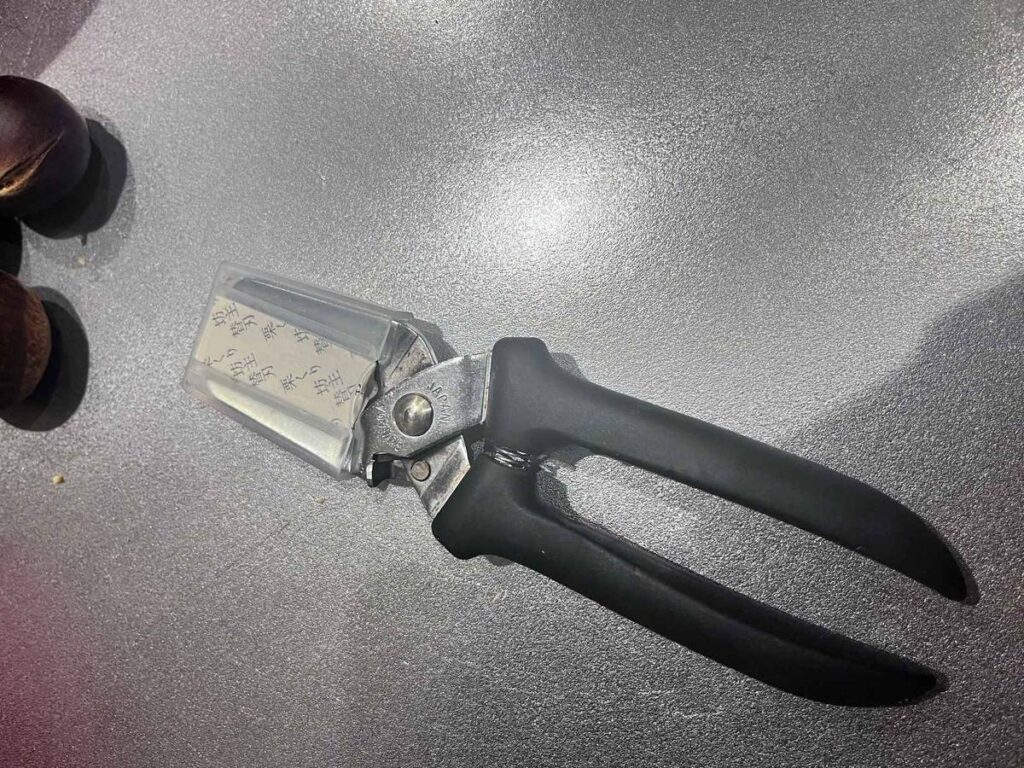
To peel them, I use the New Kurikuri Bozu. It’s a chestnut peeler from Suwada, a company in Niigata that has made cutting tools since 1926 and is known for its nail clippers. You hold the chestnut with the serrated blade and squeeze, and the other blade takes off the hard outer shell and the thin inner skin together. You work your way around the chestnut a little at a time.
Before I had these, I peeled raw chestnuts with a knife. I had to concentrate so I wouldn’t cut myself, and each one took about 5 minutes. A pot of chestnut rice needs at least 25 to 30 chestnuts, so that’s two hours or more, and my grandmother always sends more than that. It felt endless, my hands hurt, and I even got blisters once. With these shears, on boiled chestnuts, it’s about a minute per chestnut. And since they work like scissors, I don’t have to stare at my hands the way I did with a knife. I can even watch videos while I peel.
What I like about it is that I can snip away as if I’m using scissors, and it feels safe in my hand. The blades open in a V shape, so it’s easy to get at small bits of skin. I’m left-handed, and I use it just as it came, with no trouble. According to Suwada, you can also switch the blades around for left-handed use.
I’ve had mine since around 2018. One year, my grandmother sent more chestnuts than I could eat or peel, so I shared them with friends and people I worked with, and, as I remember it, sent a few pairs of these shears along with them.
They also seem to be a fall favorite in Japan. When I checked Rakuten, one of Japan’s biggest online shopping sites, in mid-October 2026, they were No. 2 in its peeler category, and the replacement blades were No. 3.
We have two pairs at home, so my husband and I usually peel together. This time, he peeled almost all of them. Some of them broke as we peeled them, but that doesn’t matter once they’re in the rice.
Suwada New Kurikuri Bozu Chestnut Peeler
Caring for the shears, and where I keep them
Peeling leaves dark stains from the chestnut skins on the blades (you can see them in my photos), so it’s a good idea to wipe them off well when you’re done. Suwada recommends wiping the blades with a well-wrung cloth instead of washing them in water, since they’re steel, and letting them dry fully before putting them away. I only learned this while researching this post. For years, I’d been washing mine with regular dish soap, wiping them, and letting them air-dry, and they haven’t rusted. That’s just my experience, though, so if you’d like to be on the safe side, Suwada’s way is the one to go with.
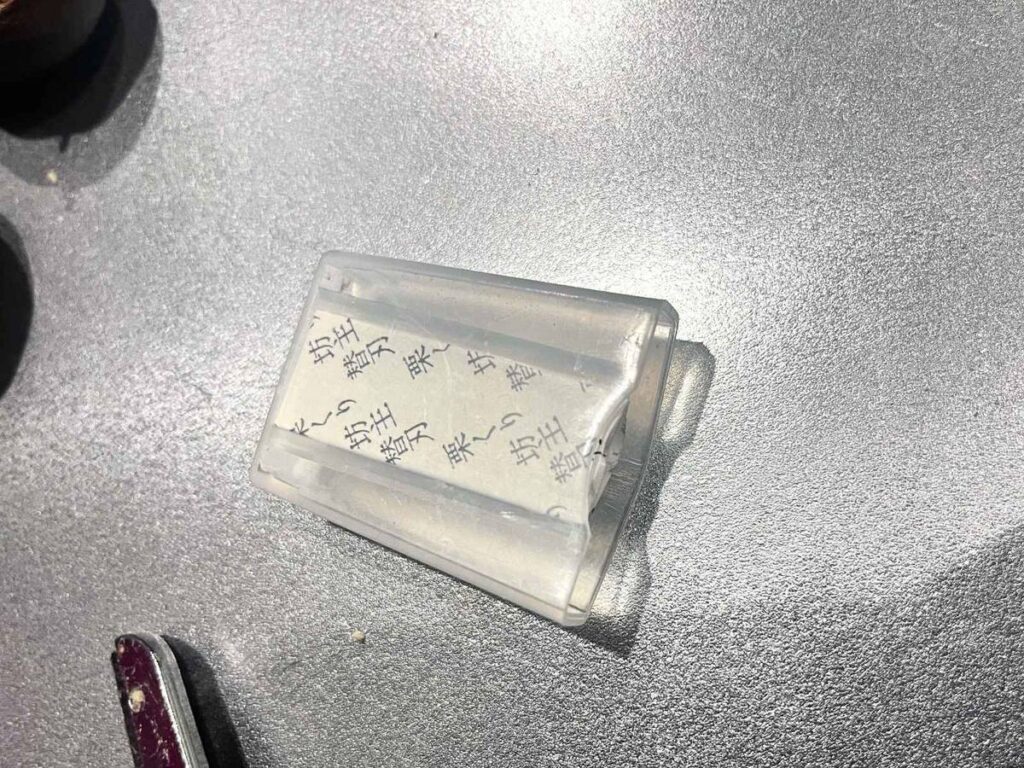
Once they’re dry, I lock the blades and put the cap on. The cap holds a spare for the straight blade, the one that does the cutting, wrapped in paper, so I don’t lose it. I’ve used mine for years and haven’t needed the spare yet.
I used to keep them with my spatulas and ladles. But I only use them once a year and they took up room, so now they live in a box at the end of my pantry, with other kitchen tools I rarely use.
Cooking the rice
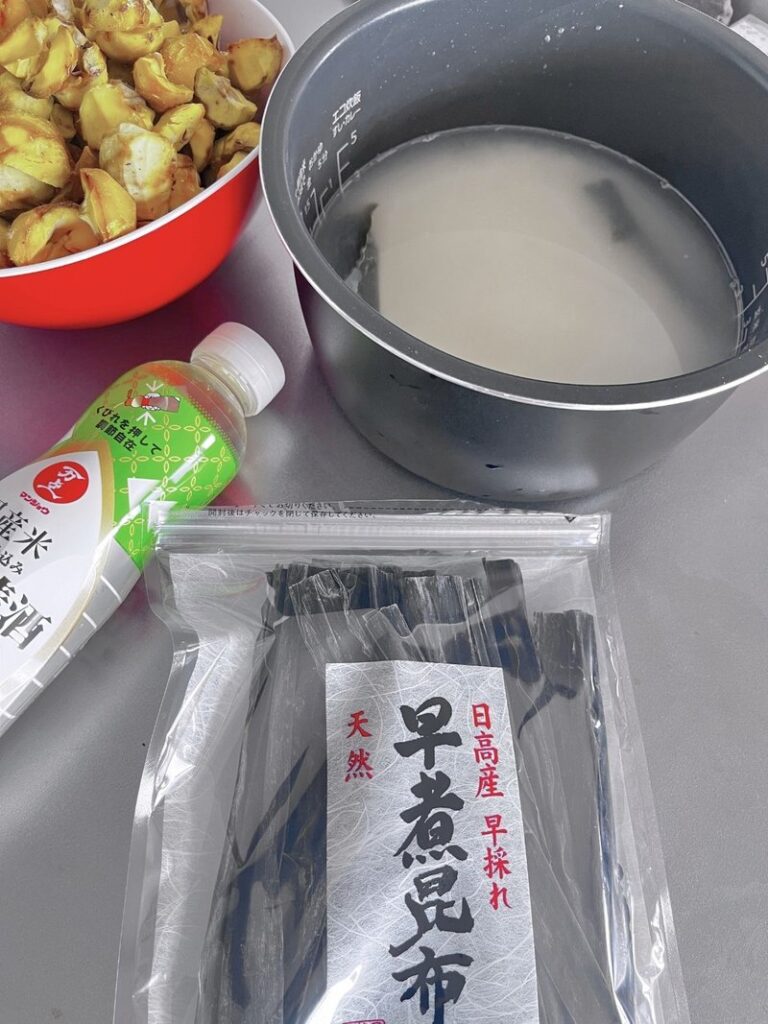
I made 3 go of rice. Go is a Japanese rice measure of about 180ml (about ¾ cup), so 3 go is about 540ml (about 2¼ cups). If your rice cooker came with its own measuring cup, that’s usually 1 go. I usually make 5 go, but this time there were so many chestnuts that I made 3 go instead. I didn’t think 5 go of rice and all those chestnuts would fit in the rice cooker. I usually use regular Japanese white rice. In the US, short- or medium-grain rice, often sold as “sushi rice,” is the closest kind. I just give it a light rinse once or twice (some days I skip even that), and I don’t soak it before cooking.
I add water up to the 3 line in the rice cooker first. Then I add fine salt, a splash of cooking sake, poured in a circle around the inner pot about three times (that came to about 2 tbsp when I measured it; if you don’t have any, it’s fine to leave it out), and one piece of kombu. For the salt, about 2 tsp is enough for the whole pot of rice, and 3 go makes about 6 to 7 rice bowls. I add the salt to bring out the sweetness of the chestnuts and the flavor of the rice. I don’t think it tastes salty; if anything, it’s on the plain side, so I sprinkle gomashio on top when I eat it.
Kombu is a dried seaweed that adds a gentle, savory flavor. You can usually find it at Asian grocery stores, and any plain dried kombu works. I just put in one piece and take it out once the rice is cooked.
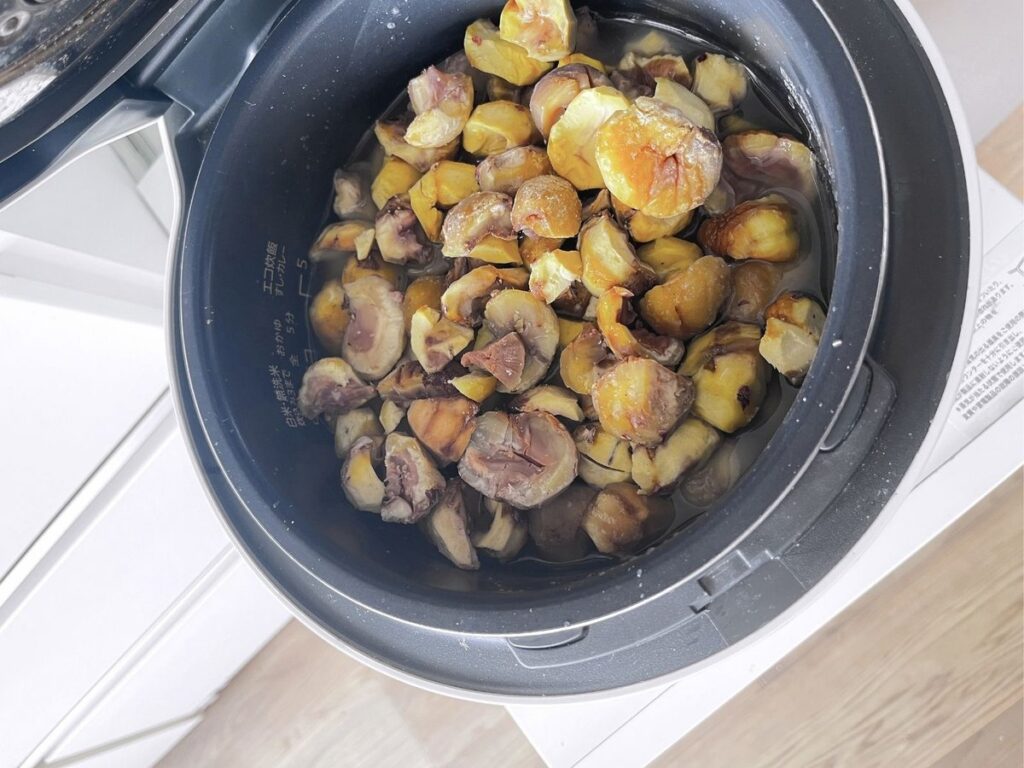
Then I set the peeled chestnuts on top of the rice and cook it as usual.
Eating it
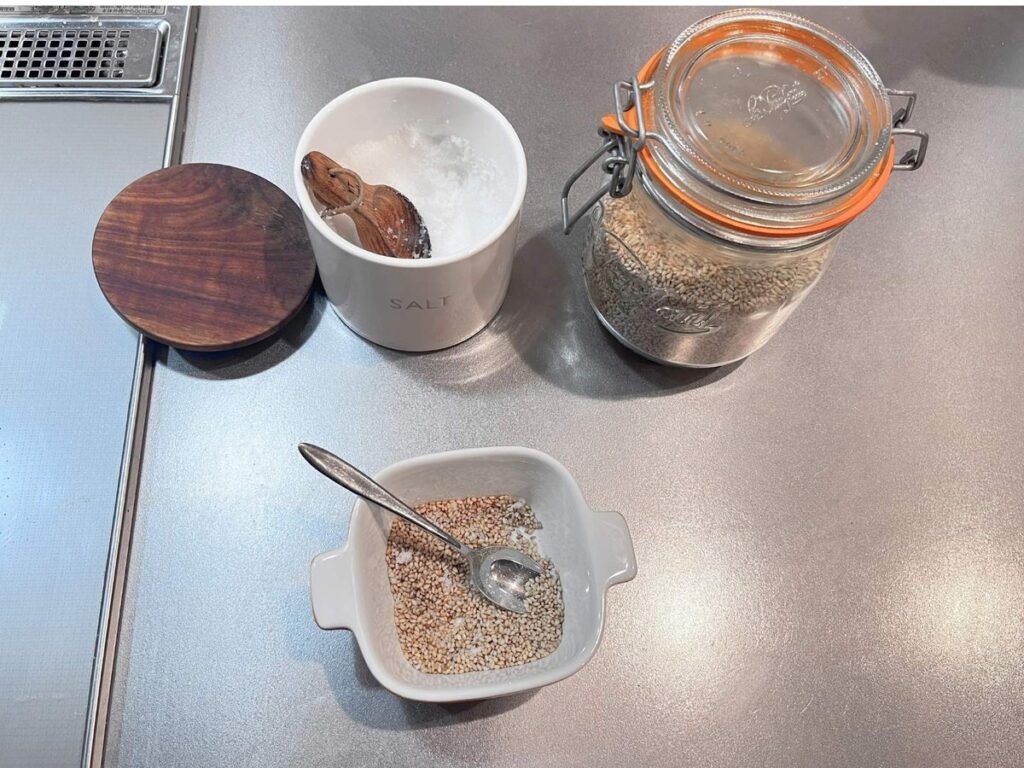
I eat mine with gomashio. Gomashio is a mix of toasted sesame seeds and salt that often goes on rice in Japan. Mine is homemade. I keep toasted white sesame seeds in a Le Parfait jar (a French glass storage jar) and just mix them with fine salt, so I can make it as salty as I like. (I wrote about my jar shelf in my post on dry goods storage.)
Freezing the rest
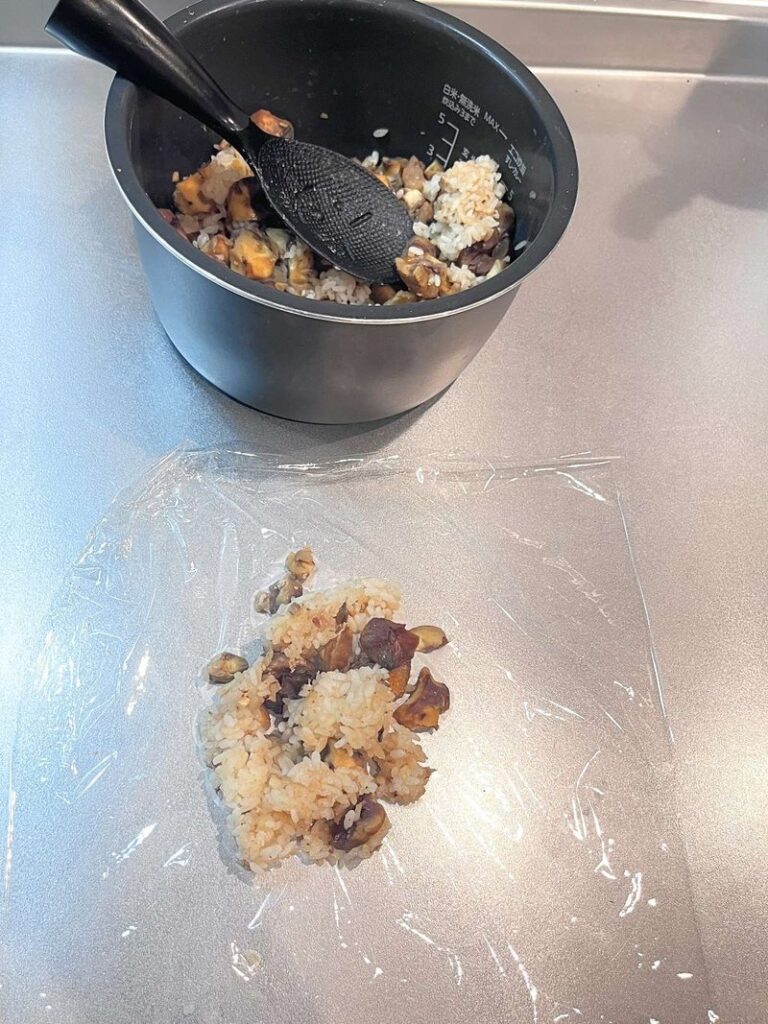
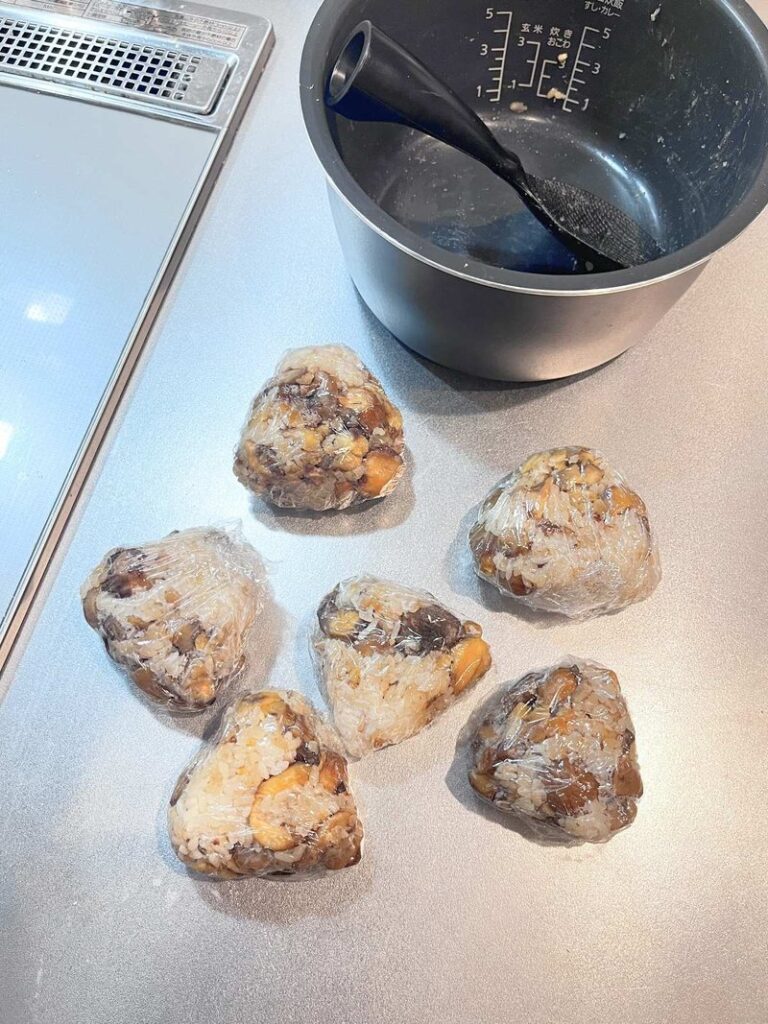
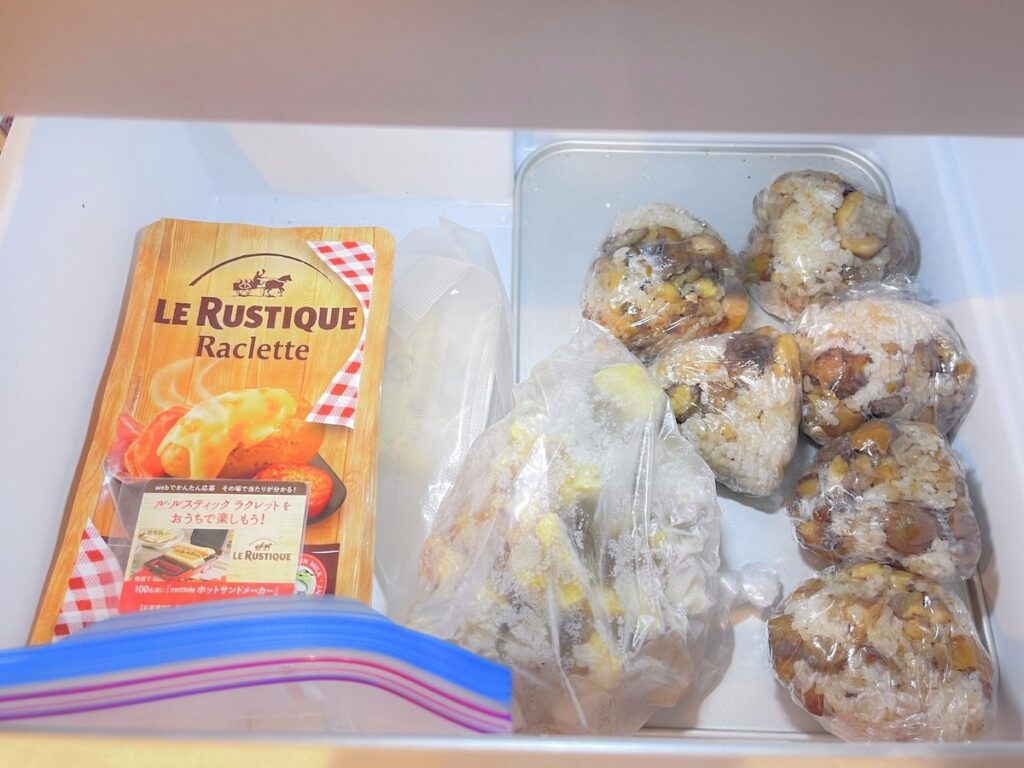
I made the rest into rice balls (onigiri) and froze them. I put rice on a sheet of plastic wrap, shaped it into a triangle, wrapped it up, and put it in the freezer. This time I ended up with six.
When I make seasonal rice like this, I usually cook 5 go, keep one or two meals’ worth, and freeze the rest the same way. Delish Kitchen, a Japanese recipe site, suggests eating rice cooked with other ingredients, like this, within about two weeks once frozen.
To eat them, I warm them in the microwave still in the plastic wrap, which is a very common way to do it in Japan. Check your wrap’s box to see if it’s microwave-safe, or unwrap them while they’re still frozen and warm them on a plate under a damp paper towel. About 2 minutes for one and 3 minutes for two at 600W. At 1,000W, about 1 minute for one or 2 minutes for two is a good place to start, and if it’s not warm enough, add 30 seconds at a time.
I also froze the chestnuts I couldn’t use this time, after boiling and peeling them. Next time, I plan to put them into the rice cooker still frozen, or I might simmer them in sugar syrup and use them in a pound cake.
My easy recipe
Makes about 6 to 7 rice bowls.
- Rice: 3 go (about 2¼ cups, or about 450g)
- Water: about 600ml (2½ cups), up to the 3 line in a rice cooker. By weight, that’s about 3 parts rice to 4 parts water.
- Chestnuts: boiled and peeled. About 300g (10.6oz) once peeled, or about 500g (17.6oz) in the shell, is a common amount for 3 go in Japanese recipes. Mine has a lot more than that.
- Salt: about 2 tsp of fine salt
- Cooking sake: about 2 tbsp (optional)
- Kombu: one piece, such as a long strip about 19cm (7.5in) or a piece about 10 × 5cm (4 × 2in)
Put the rice in the rice cooker and add water up to the 3 line (about 600ml, or 2½ cups, if you’re measuring). Then add the salt and cooking sake, lay the kombu and the chestnuts on top, and cook as usual. Take out the kombu once it’s done.
No rice cooker? When I lived on my own, I didn’t have one either, and I cooked my rice in a pot. For this recipe, put 3 go of rice (about 450g) and about 630ml (about 2⅝ cups) of water in a pot with a lid, and let it soak for about 30 minutes. Then add the cooking sake and salt, and stir lightly. Set the chestnuts and the kombu on top, and don’t stir after that. Cover, bring it to a boil over medium heat, then turn the heat to low and cook for about 10 to 13 minutes. Turn off the heat and let it sit, covered, for about 10 minutes.
Where to find them
I get my chestnuts from my grandmother, so I’m not sure where to find fresh ones in the US. If you can’t find them, peeled, cooked chestnuts from a pack work too, and plenty of people in Japan seem to make it that way. To me, though, fresh chestnuts taste different from the packaged ones. If you do get fresh ones, that’s where the shears come in.
The chestnut shears I use are Suwada’s New Kurikuri Bozu. If you’re in the US, you can find them on Amazon.com. If you don’t have shears, a knife works too; it just takes longer. That’s how I used to do it.
Suwada New Kurikuri Bozu Chestnut Peeler
One more thing
Once, when my husband and I were out for a walk near his family’s home in France, I saw some big, beautiful chestnuts lying by the road and asked him, “Aren’t you going to pick these up and eat them?” He said, “Those aren’t the kind you can eat. In France, the chestnuts you can eat and the ones you can’t are clearly different.” I had spent years picking up chestnuts under the tree at my grandmother’s place, so that came as a real surprise. When I looked into it, I found that France’s food safety agency and some US poison centers warn people not to mix up the edible and inedible kinds, since some look-alikes aren’t safe to eat. I don’t know much about the chestnut trees in the US, so if you come across chestnuts lying on the ground and you’re not sure what kind they are, please don’t eat them!
If you make kuri gohan at home, I’d love to hear how it goes: hello@minimalfromjapan.com