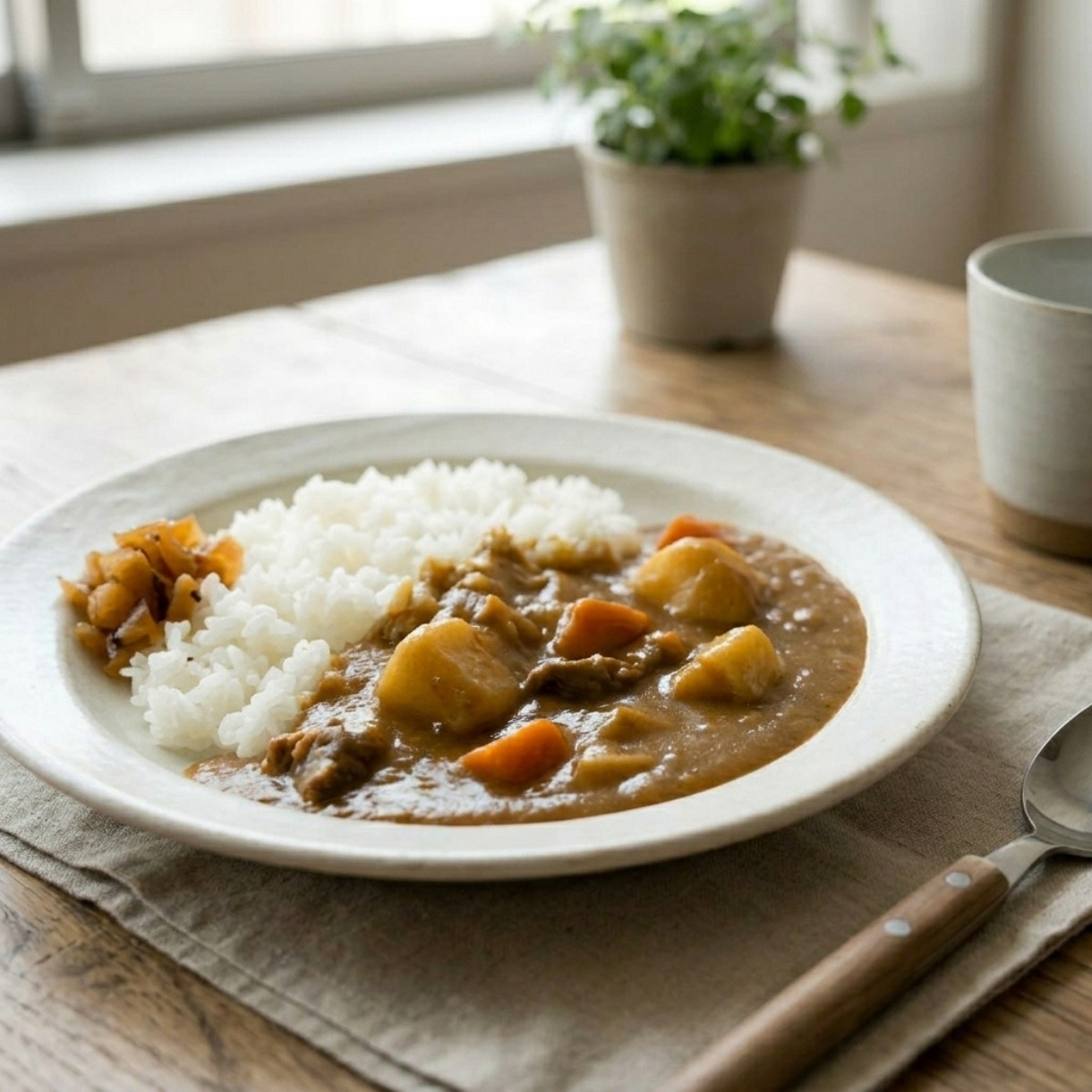
If you’ve shopped at MUJI in the US, you’ve probably walked past the curry shelf — five or six pouches, easy to miss. What you’d never guess is that MUJI Japan carries more than thirty. They run from mild, kid-friendly recipes to regional dishes built on Indian and Sri Lankan cooking, and almost none of that range crosses the Pacific.
I live in Japan, and the curry aisle is one of the more interesting corners of the store. It reads less like a convenience-food section and more like a rotating showcase of how MUJI’s food team interprets curry from around the world. Here’s how to pick the right ones — and how to get them shipped to you.
A quick note on the name: in Japan these are called retort curries, after the sterilization process that makes them shelf-stable. In English you’ll usually see the same thing sold as ready-to-eat or instant curry. Same product, different vocabulary.
Food import rules vary by country — check your customs guidelines before ordering.
How to choose a MUJI curry
Start with spice. Every MUJI curry is labeled 0 to 5, where 0 isn’t spicy at all and 5 will make you sweat. The number appears right in the product name, so check it before you order.
Then dietary needs. A handful of the lineup is meat-free or fully plant-based. Look for 肉・卵不使用 (no meat or egg) or 肉・乳・卵不使用 (no meat, dairy, or egg) on the package.
Then what you’re actually in the mood for. The lineup splits roughly three ways: home-style Japanese curry, the 現地に学ぶ (“learned on location”) regional series, and Japanese-fusion curries that work in local ingredients like miso or soy milk.
8 MUJI curries worth trying
Prices are listed in yen as of August 2026, since that’s what you’ll actually be charged. The dollar figures are rough estimates and will drift with the exchange rate.
| Curry | Spice Level | Price | Notable For |
|---|---|---|---|
| 6th Gen Butter Chicken | 2/5 | ¥350 (about US$2.3) | MUJI’s long-running signature recipe |
| Learned from the Source: India Roasted Chicken | 4/5 | ¥350 (about US$2.3) | Regional-style spicing |
| Learned from the Source: Sri Lanka Pork & Tamarind | 4/5 | ¥350 (about US$2.3) | Tamarind-forward, less common flavor profile |
| Not Spicy Green Curry | 0/5 | ¥350 (about US$2.3) | Beginner-friendly, kid-safe |
| Vegetable Dal (no meat/egg) | 2/5 | ¥290 (about US$1.9) | Vegetarian — made with ghee |
| Hokkaido Miso & Soy Milk Soup Curry | 2/5 | ¥490 (about US$3.2) | Japanese-fusion, soup-style |
| Roasted Spice Beef, made with “irregular-cut” beef | 3/5 | ¥590 (about US$3.8) | Ties into MUJI’s food-waste-reduction philosophy |
| Three Chili Pepper Chicken | 5/5 | ¥350 (about US$2.3) | For serious spice lovers only |
Which one should you start with?
- New to Japanese curry? The 6th Gen Butter Chicken. It’s the recipe MUJI has revised the most, and it shows.
- Want something you can’t get anywhere else? Go straight to the 現地に学ぶ regional line.
- Vegetarian? The Vegetable Dal is meat- and egg-free and doesn’t taste like a compromise. It’s made with ghee, though, so it isn’t suitable for vegans.
- Curious but cautious about heat? Stay in the 0–2 range until you know where you land.
How to get them shipped to you
Some of these aren’t sold outside Japan, so for those you’ll need a proxy shopping service — a company that buys the item in Japan on your behalf and forwards it internationally. I use Buyee for most of my own orders: you place the order with them, they purchase it from MUJI’s Japanese site, and the package ships to you. If you’ve never done this before, I wrote a full walkthrough of how proxy shopping works, what it costs, and how to avoid overpaying on shipping: How to Order From Japan.