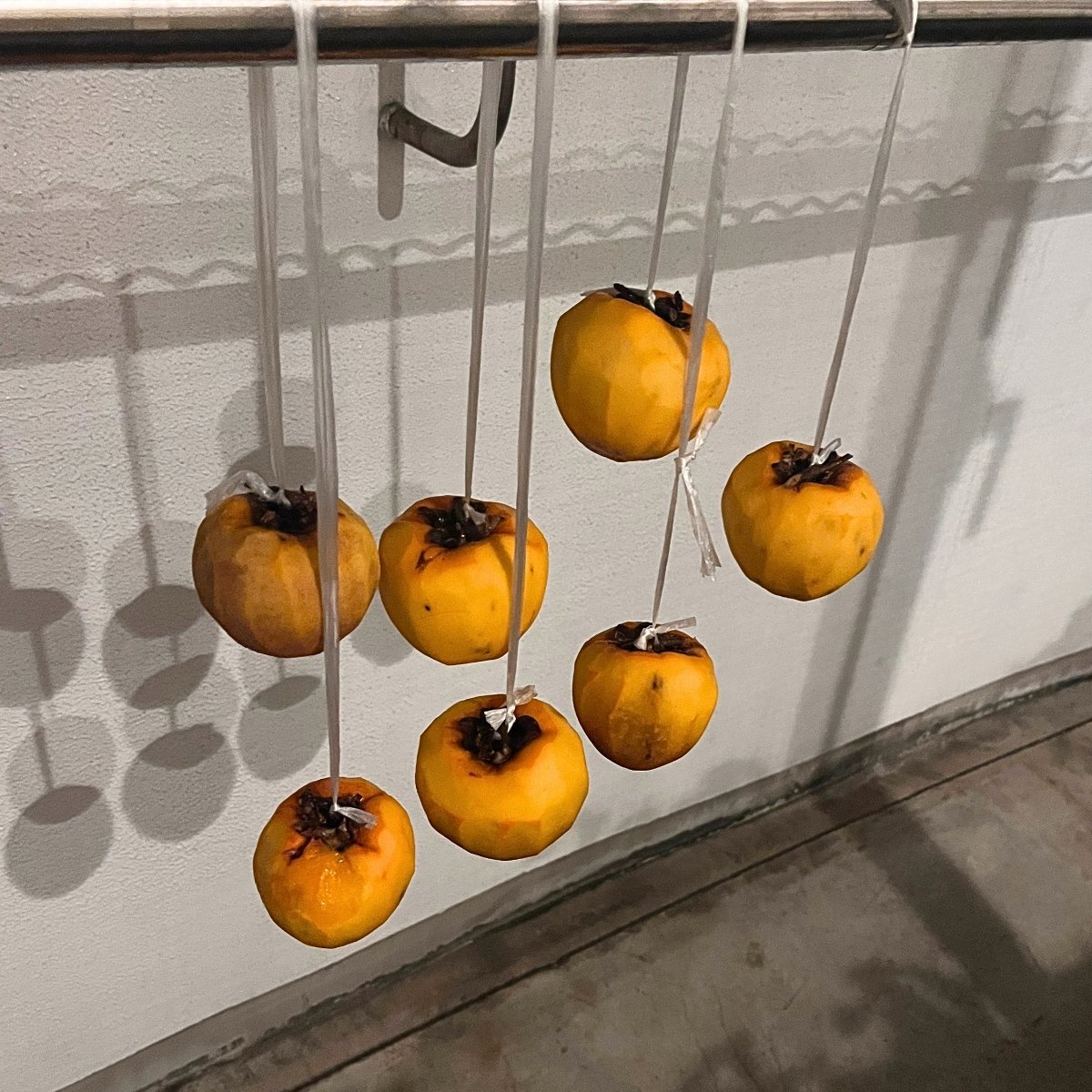
Hoshigaki are Japanese dried persimmons. In Japanese, “hoshi” means dried and “kaki” means persimmon. When the two words join, the “k” sound softens to a “g,” so it becomes hoshigaki.
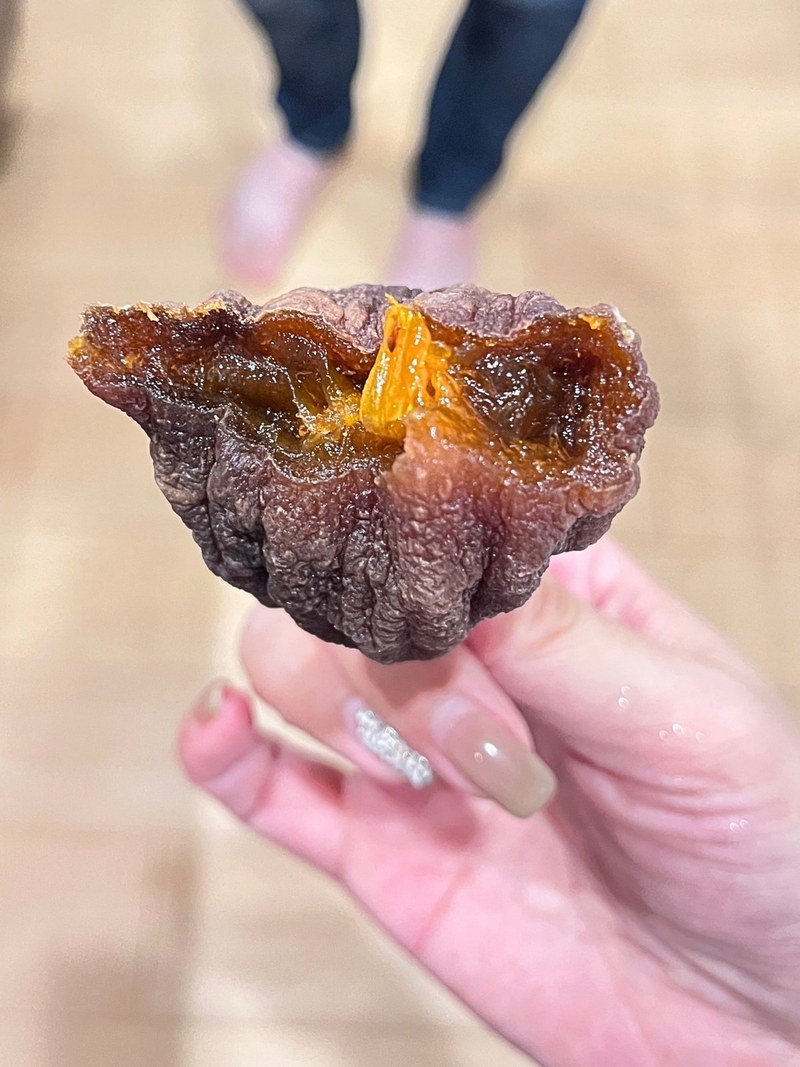
They’re made by peeling astringent persimmons and hanging them to dry. Astringent persimmons make your mouth feel dry and puckery if you eat them before they’re fully ripe. As they dry, the astringent taste goes away, and they turn sweet, wrinkly on the outside and soft inside.
When I was a kid, I didn’t really like dried persimmons. They were too sweet for me.
After I got married, my grandmother started sending me astringent persimmons so I could make my own. I didn’t like them, and it felt like a lot of work, so I kept putting it off. The persimmons went bad, and I threw them away.
When she asked me on the phone, “Did you make them?” I said, “Yes!” After that, she kept asking how they were doing. “They’re doing great,” I told her. “No white powder yet.” Keeping up the lie was so hard.
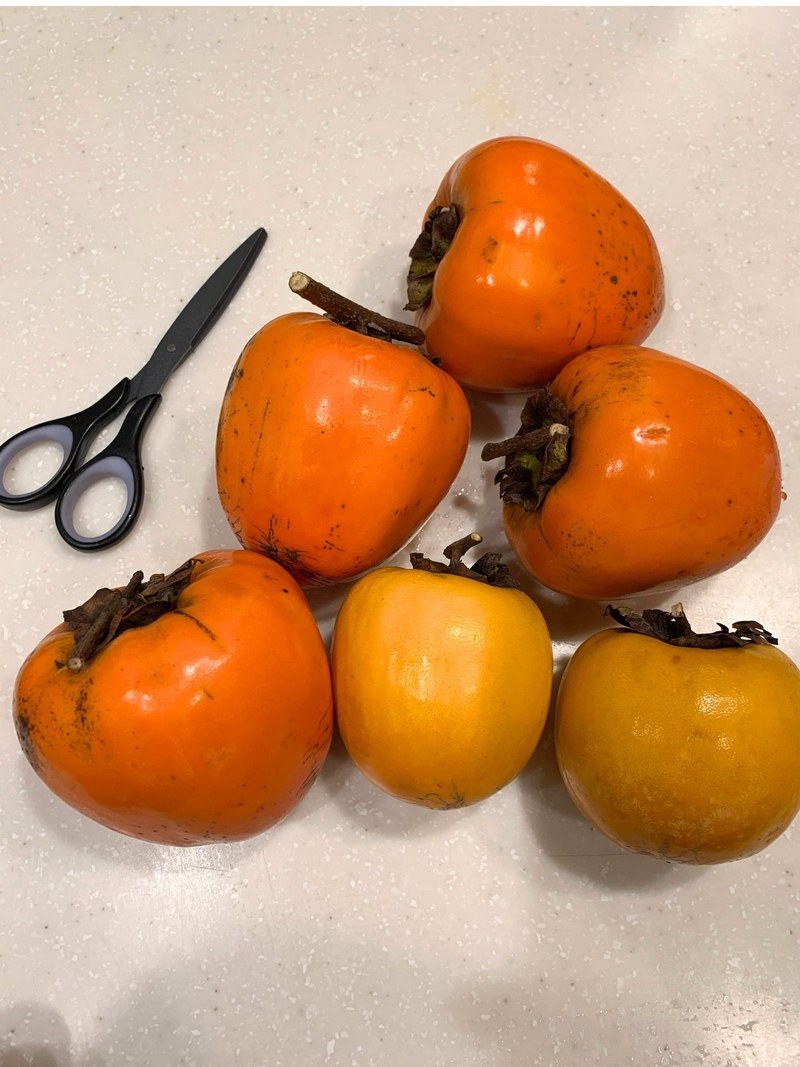
The next year, my grandmother, my husband and I visited relatives in the countryside. It was persimmon season, and I think that’s when I took this photo.
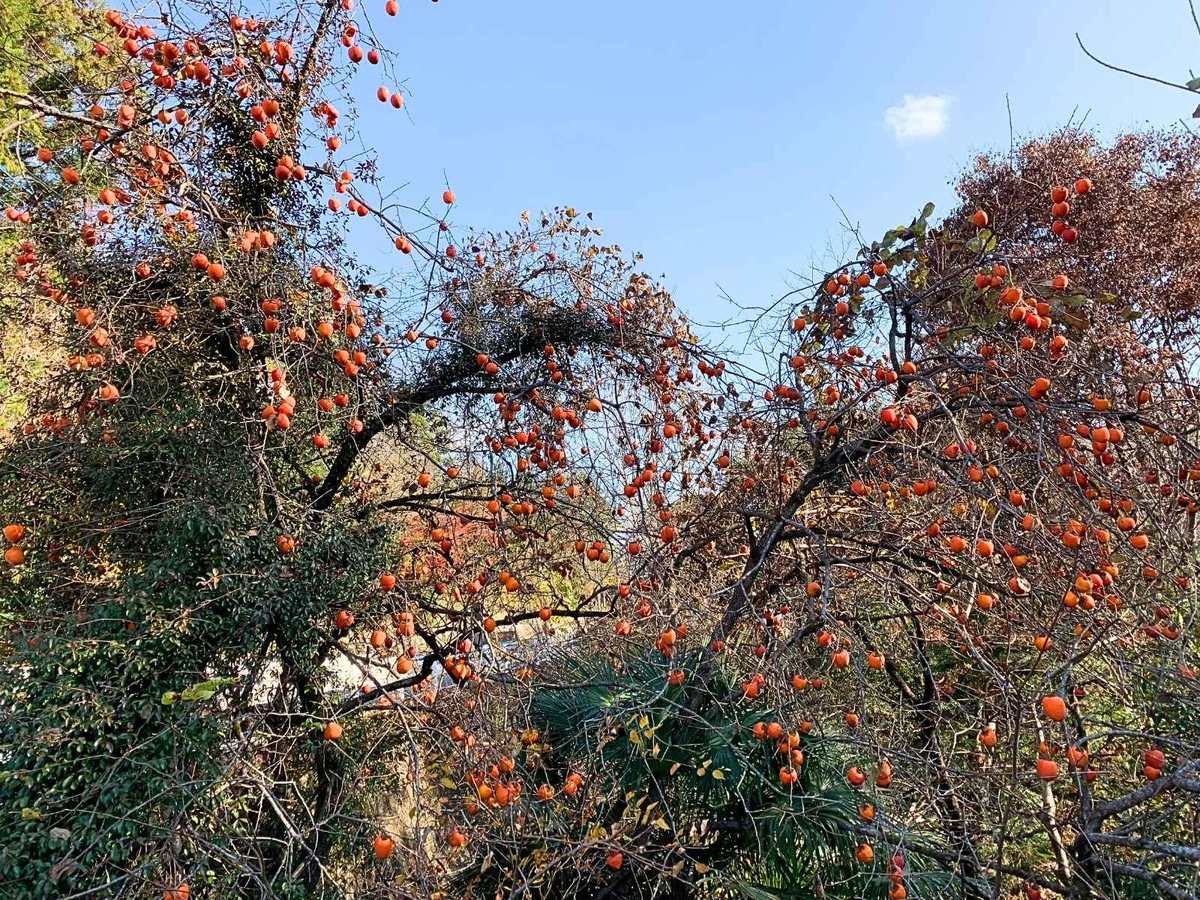
When dried persimmons came up, my grandmother said, “You made some, didn’t you?” And I said “Yes!” again. Later, I asked my husband, “She knows, doesn’t she?” I think he laughed.
I decided I wouldn’t lie about it again, and I started making them.
My grandmother also sends me the dried persimmons she makes. At first I left them all to my husband, but he kept saying how good they were, so I tried one out of curiosity. It was good.
Now, every fall, I turn the persimmons she sends into dried persimmons on my balcony. I don’t decide how many to make. I dry however many she sends. In the Japanese countryside, it feels like there’s a persimmon tree almost everywhere.
This is the way she taught me, plus one tip I picked up later. The photos here are from past years. This year’s persimmons won’t be ready to pick for a little while, so I’ll add new photos once they’re hanging.
This post contains affiliate links (see my disclosure for details). As an Amazon Associate I earn from qualifying purchases.
What I use
- Astringent persimmons (more on this below)
- A peeler (any kind works)
- A pot of boiling water
- String. I use flat plastic packing string
- A place to hang them. Mine is the laundry pole on my balcony
Use astringent persimmons, not sweet ones. Sweet persimmons get moldy easily, and astringent ones turn sweeter when they dry, so dried persimmons are traditionally made with astringent ones.
Strictly speaking, it’s not impossible with sweet ones, but it’s much harder, and I don’t think many people in Japan do it.
Finding astringent persimmons in the US
In the US, the persimmon most often used for drying seems to be the acorn-shaped Hachiya, an astringent variety. The ones I dry are Hachiya too. They come out in late fall and winter, and October to January is a good time to look.
The flatter Fuyu is a sweet variety, so it isn’t the one for hoshigaki. Check the name when you’re looking for astringent ones.
In the US, Hachiya are often left to soften and eaten fresh. In Japan, astringent persimmons usually aren’t eaten fresh. Instead, they’re dried like this, or the astringency is removed with alcohol or other methods.
For hoshigaki, pick ones that are still firm all over, and peel and hang them before they start to soften.
How I make them
1. Peel them
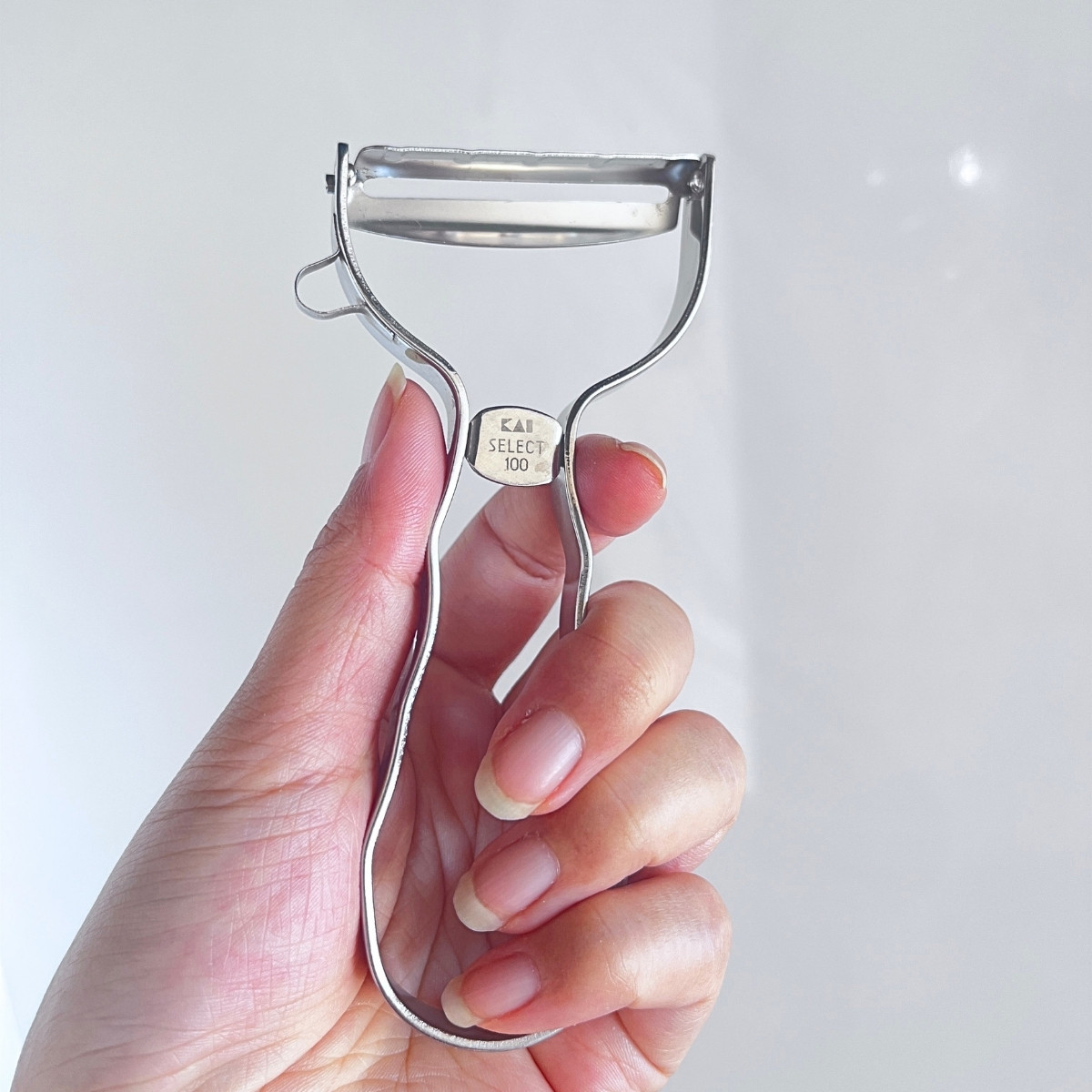
I peel them with a peeler. Mine is from Kai, a Japanese company known for its blades. In the US, you may know their Shun knives. I’ve probably used this peeler for more than 10 years. It wasn’t expensive, but it has lasted all these years, and I’ve used it for so long that I’ve almost forgotten what other peelers are like.
I’m left-handed, and it works well in either hand, so it’s easy for me to use. I also like how simple it looks. It cuts well.
Kai Select 100 T-Peeler
2. Dip them in boiling water
I dip each peeled persimmon in boiling water to help keep mold away. As a rough guide, it’s about 5 seconds for small ones, about 8 for medium ones and about 10 for large ones. If you’re not sure about the size, 10 seconds each is fine.
My string is plastic, so I dip them first and tie the string after. If your string won’t melt, you can tie it on first and hold it while you dip.
3. Tie string to the branch
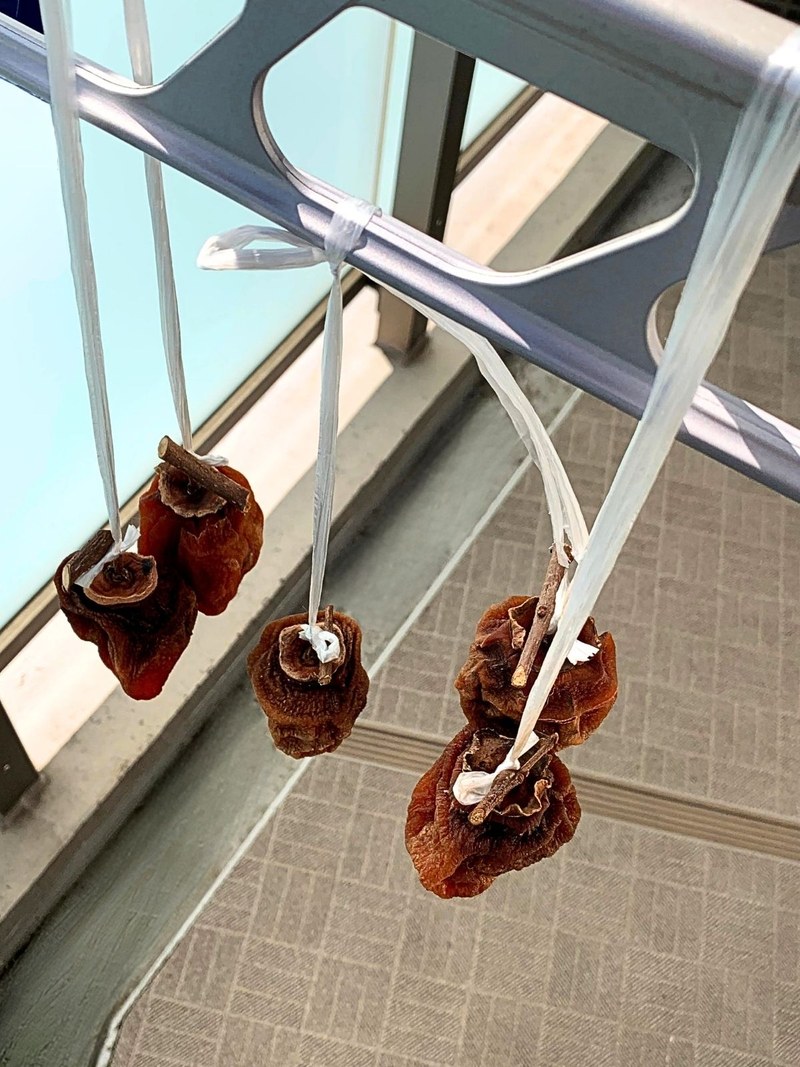
My grandmother’s persimmons come with a bit of the branch still on, so I tie the string there. The string isn’t anything special, just flat plastic packing string.
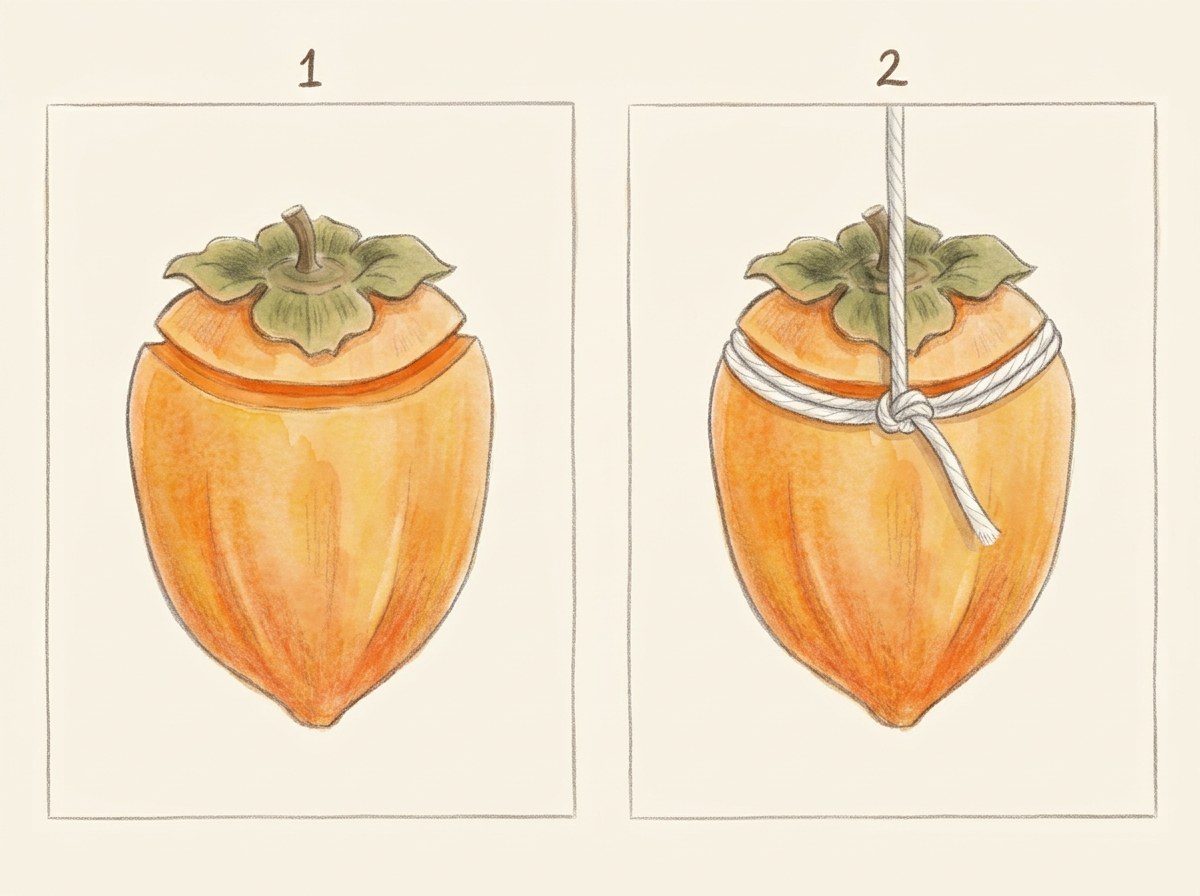
Persimmons sold in the US often don’t have that piece of branch. If yours don’t, one easy way I’ve seen is to cut a small notch just under the calyx (the leafy cap on top) and tie the string there. With this method, you tie one persimmon to each end of a string and hang it over the pole.
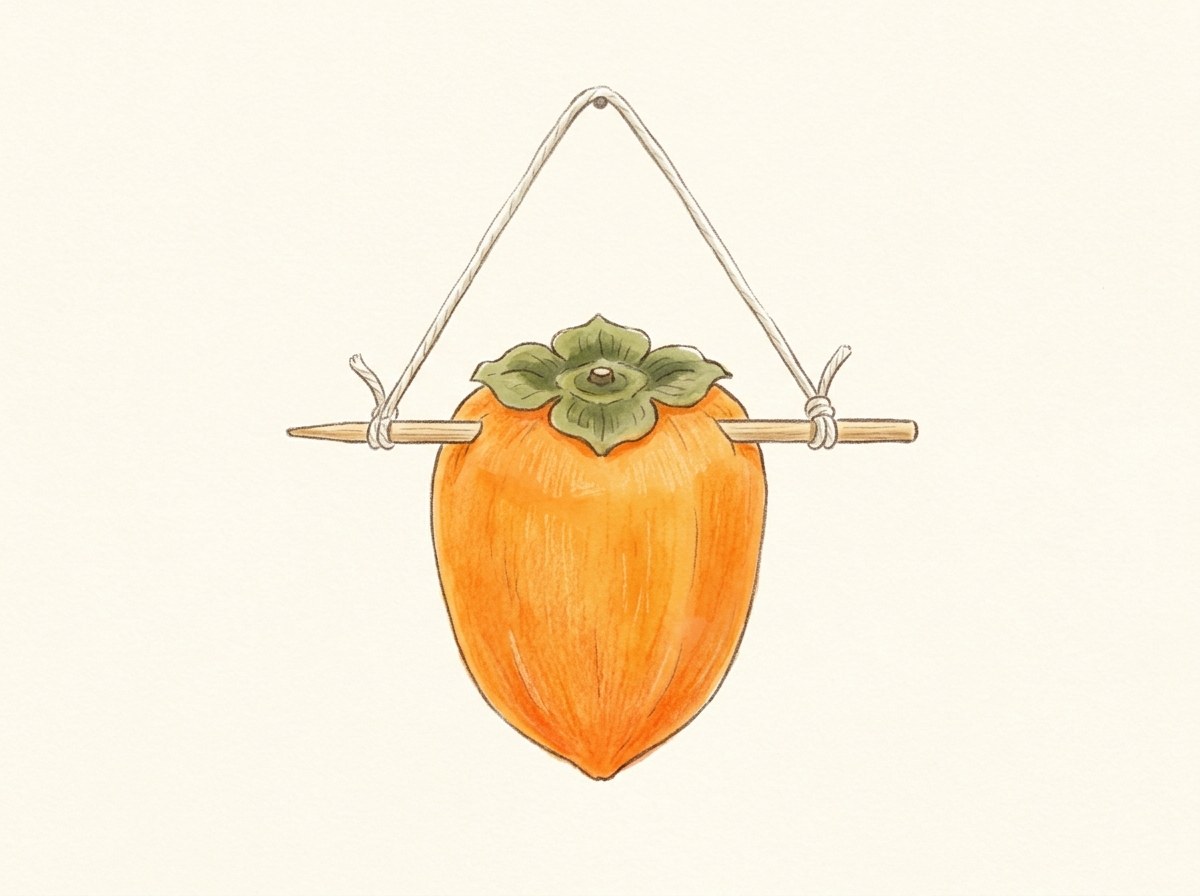
Another way is to push a skewer sideways through the persimmon, just under the calyx, and tie the string to both ends. A bamboo skewer or a metal one for grilling both work.
I’ve also seen two persimmons on one skewer. Just leave a little space between them.
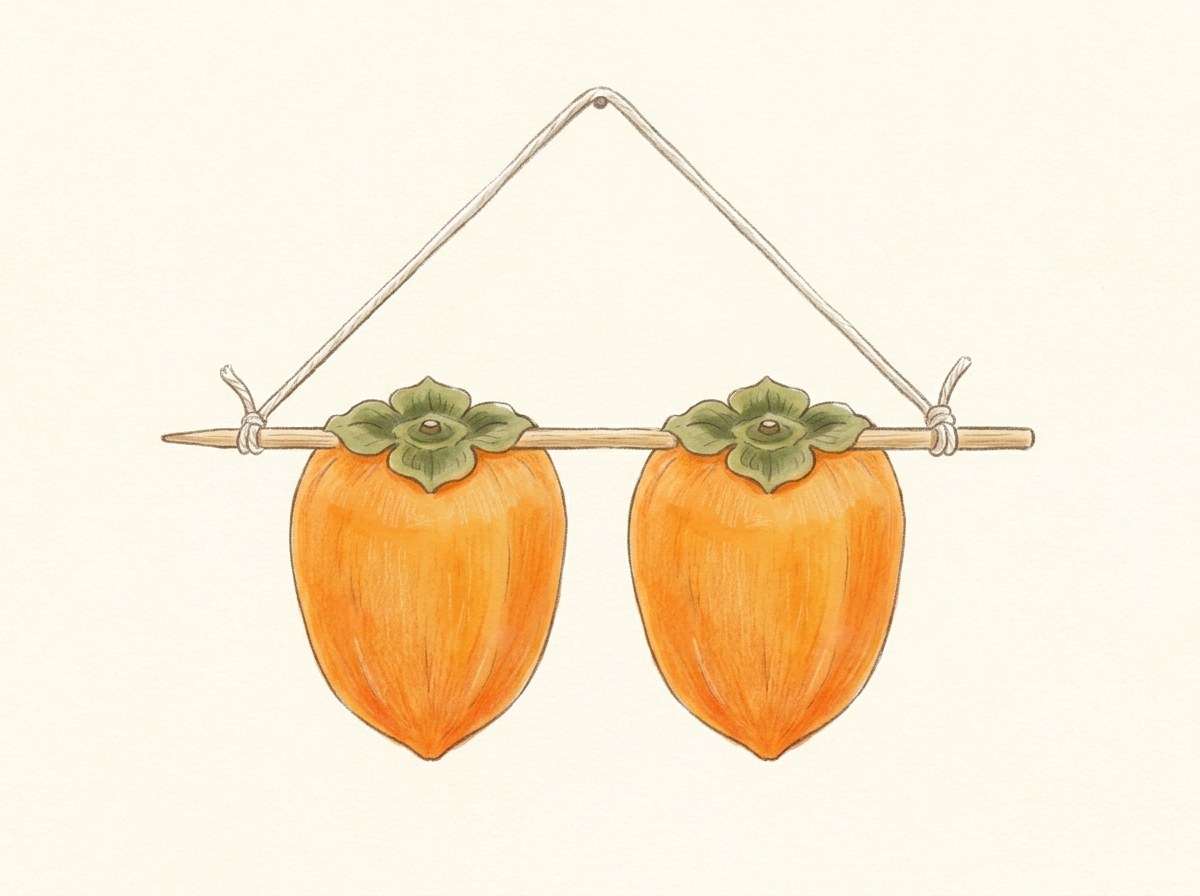
4. Hang them on the balcony
I hang them on the laundry pole on my balcony. Make sure they hang apart from each other, so they don’t touch or overlap.
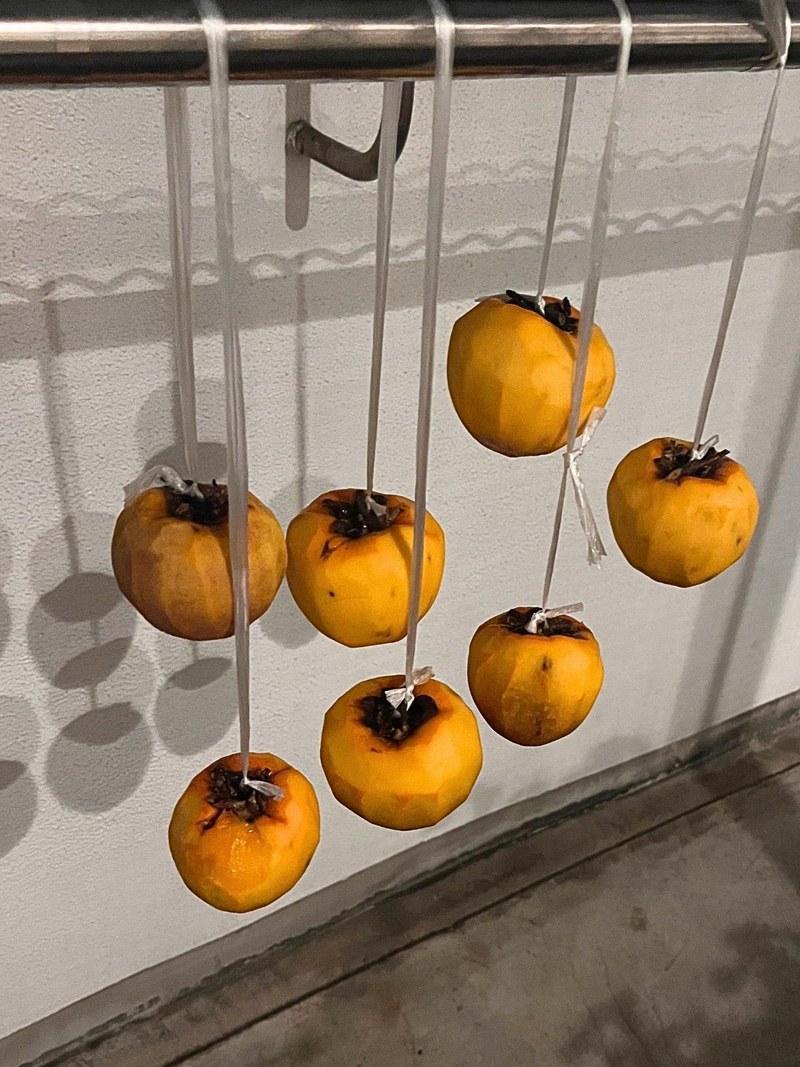
I hang them where there’s a good breeze and not too much direct sun. My balcony is like that. If the sun heats them up too much, they can spoil. Rain is a no too, because wet persimmons get moldy. That’s why in the countryside, people often hang them under the eaves.
On rainy days, I bring them inside, put them in a cool spot and run a fan.
If you don’t have a balcony, a covered porch or a drying rack in a cool room with a fan may work too. Just avoid humid spots like the bathroom.
I don’t make them while it’s still warm. In warm weather, they can get moldy before they dry. Many guides say it’s best to start once it stays around 10°C (50°F) or cooler, which in Japan is usually around November or December.
They usually take somewhere from about 2 weeks to a month. It depends on your home, the kind of persimmon and how sweet and soft you like them. When I think they might be ready, I just try one.
The winter air where I live is dry, which is part of why hanging them outside works here.
If the weather where you live isn’t right for it, like if it’s humid, and you’d still like to try, a food dehydrator is another way to go. The dehydrator recipes I found slice the persimmons first. One recipe from Excalibur, a dehydrator maker, dries 6–10mm (1/4–3/8in) slices at 57.2°C (135°F) for 11 to 19 hours. I think it’s an easy way to make something similar.
Whether whole ones fit depends on the size of the machine. These two are simple and don’t cost much. Both go up past 57.2°C (135°F), so either one can dry slices like the recipe above. Both let you change the tray height, but it may not be enough for a whole persimmon.
COSORI Pioneer 5-Tray Food Dehydrator
Magic Mill 5-Tray Food Dehydrator
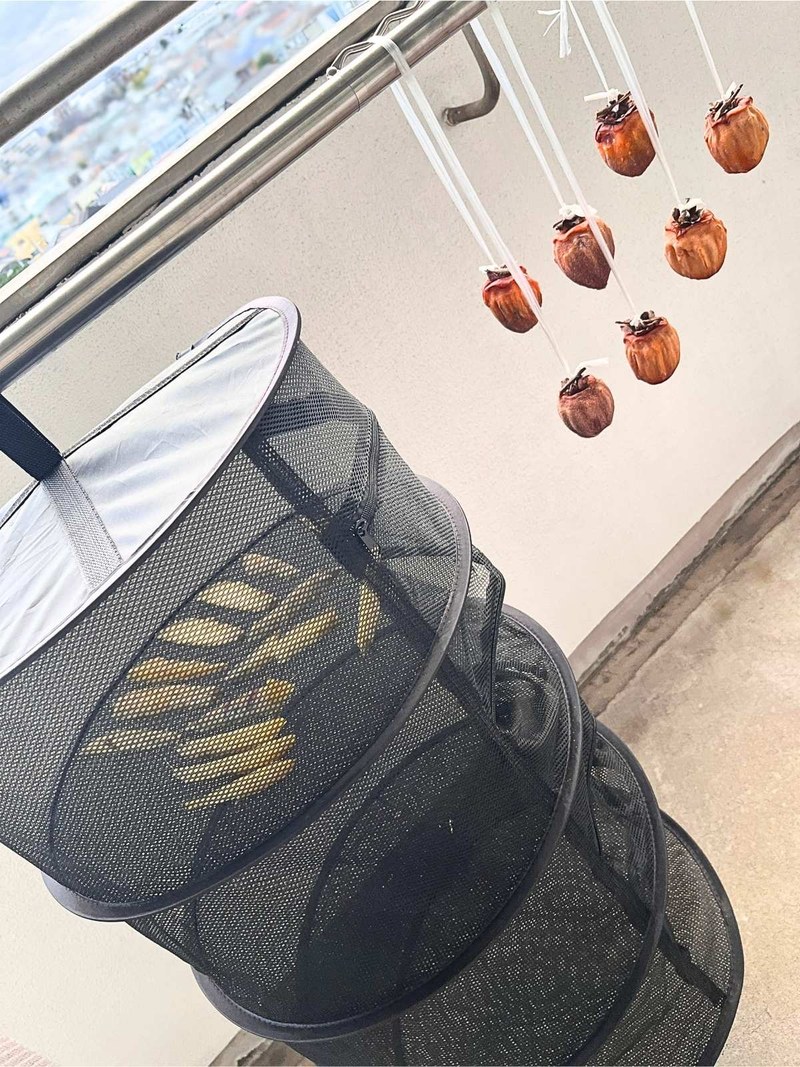
The net next to them has sweet potatoes drying in it. It was the best photo I had from that stage.
While they hang, I check now and then for mold, like green or blue spots. I’ve been told that if you find some, you cut that part off early and spray it with strong drinking alcohol, like vodka. Whiskey or brandy may work too, though they could add a little flavor.
I’ve never had mold on mine, but I once sprayed them with some imo shochu (a Japanese spirit made from sweet potatoes) that someone gave me, just in case. If the mold has spread, or you’re not sure, it’s safer not to eat it.
One tip I added later: massaging
When they’re slow to soften, I massage them. I start about a week to 10 days after hanging them, once the surface has dried and wrinkles start to show. I think of it as spreading the sugar evenly through the whole persimmon.
I don’t have a set schedule. It’s maybe once a week, whenever I think of it. Wash your hands well before you start.
I learned this from an older woman, a friend’s mother, not from my grandmother. Everything else is my grandmother’s way.
White powder: sometimes yes, sometimes no
The white powder I told my grandmother about is sugar that sometimes crystallizes on the surface of dried persimmons. It feels gritty. If something white feels fluffy like cotton, that’s mold, not sugar.
Sometimes mine get it, and sometimes they don’t. I don’t worry about it either way.
Sweet persimmons that didn’t turn sweet
Last year, the fruit from my grandmother’s sweet persimmon tree didn’t get very sweet. They were still astringent.
Even sweet persimmons can keep some astringency if fall turns cold early, or if there isn’t enough sun and it doesn’t get warm enough, even when they look ready and it’s the usual time to pick them. There wasn’t much sun that fall, so I think that’s why.
Since they were astringent, I dried those too. They turned into hoshigaki just fine, but the ones made from astringent persimmons were sweeter.
When they’re done
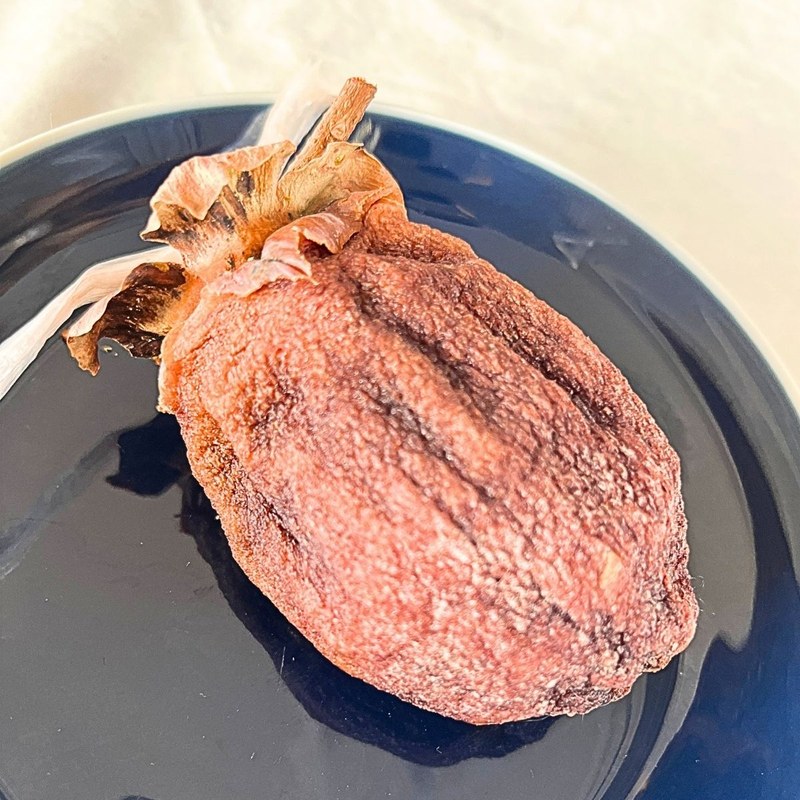
I just bite into them as they are.
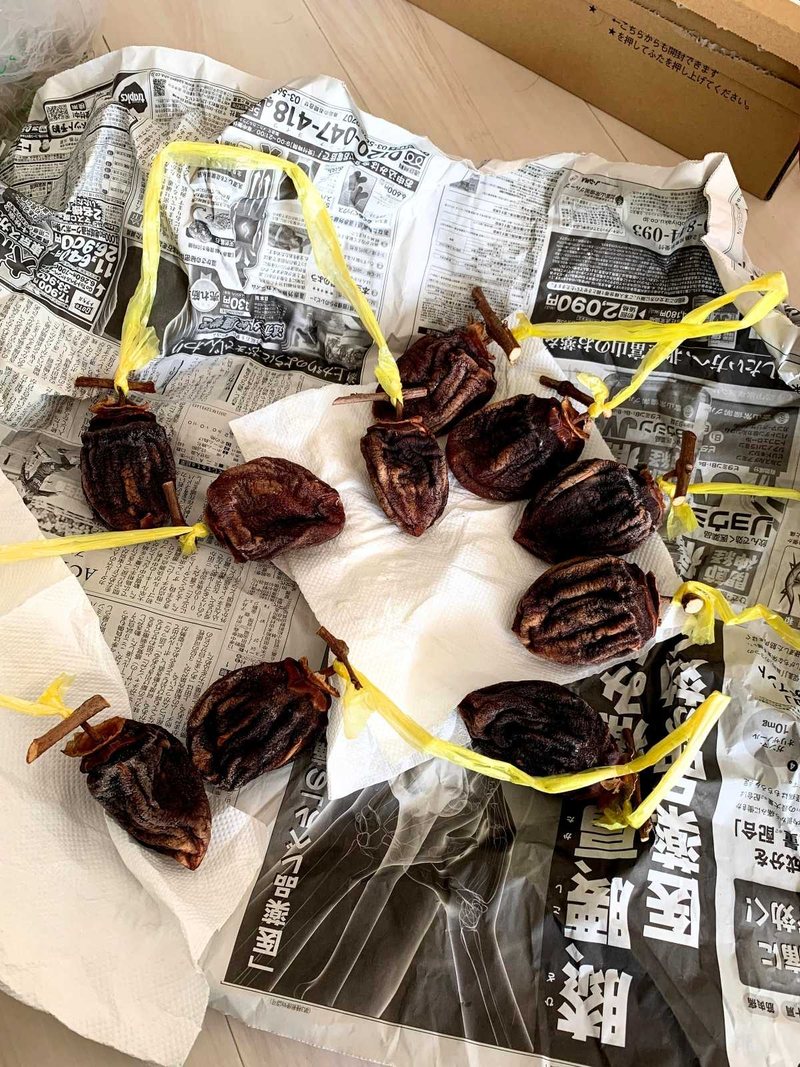
When I keep them in the fridge, I wrap them in a paper towel and then in newspaper. That’s another thing my grandmother taught me. If you don’t have newspaper, a paper towel and a zip-top bag work fine too.
Where to find them
Kai Select 100 T-Peeler
COSORI Pioneer 5-Tray Food Dehydrator
Magic Mill 5-Tray Food Dehydrator
In the end
I imagine dried persimmons made to sell take a lot more care, like massaging them every day and keeping them from turning dark. At home, this is how I do it, and it works just fine for us.
What I do is peel, dip, tie, hang, and check on them now and then.
Every year, when the persimmons arrive, I know fall is here. My grandmother gives me chestnuts in the fall too, and I wrote about the chestnut rice I make with them.