In my chestnut rice post, I wrote that if you can’t find fresh chestnuts, peeled, cooked chestnuts from a pack work too. I’d seen lots of people in Japan say they made chestnut rice with store-bought roasted chestnuts and that it was good, but I had never tried it myself. I wanted to see for myself, because if it worked, I could recommend it to you too. So I tried it, and there was no peeling at all. I just opened the bags.
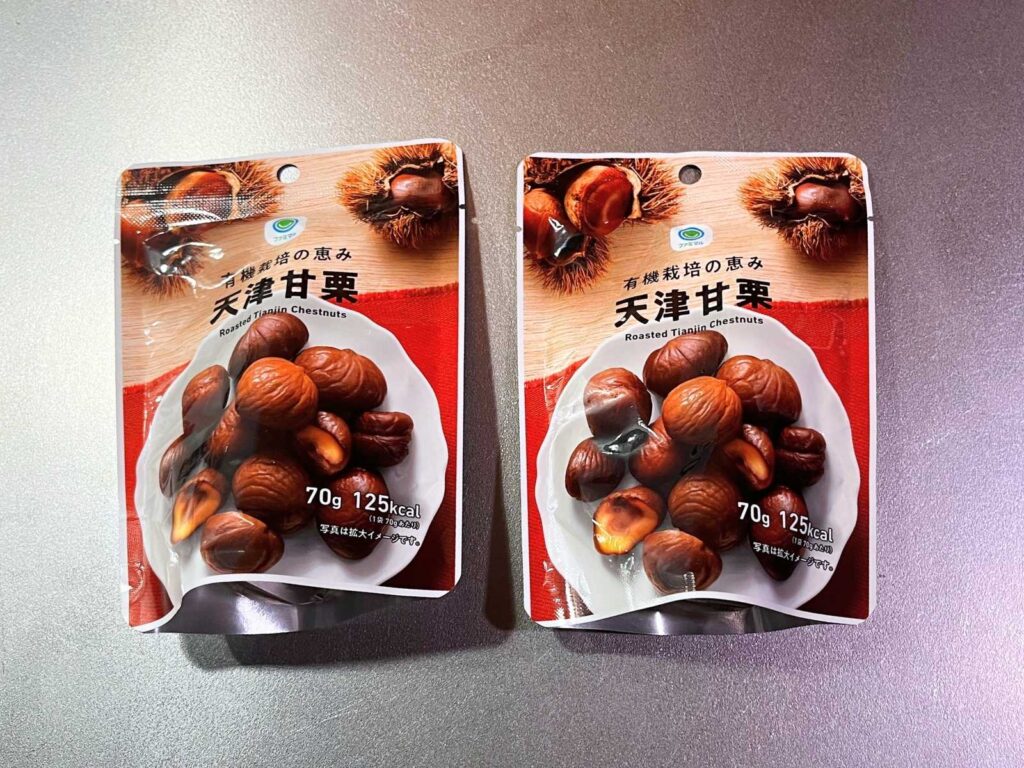
The short version: it tasted good, but two 70g (2.5oz) bags didn’t give me enough chestnuts for 3 go of rice (a Japanese rice measure, about 2¼ cups). About 300g (10.6oz) is the common amount in Japanese recipes.
This time, I measured everything to match the recipe in my chestnut rice post, so the only thing I changed was the chestnuts.
This post contains affiliate links (see my disclosure for details). As an Amazon Associate I earn from qualifying purchases.
What I used
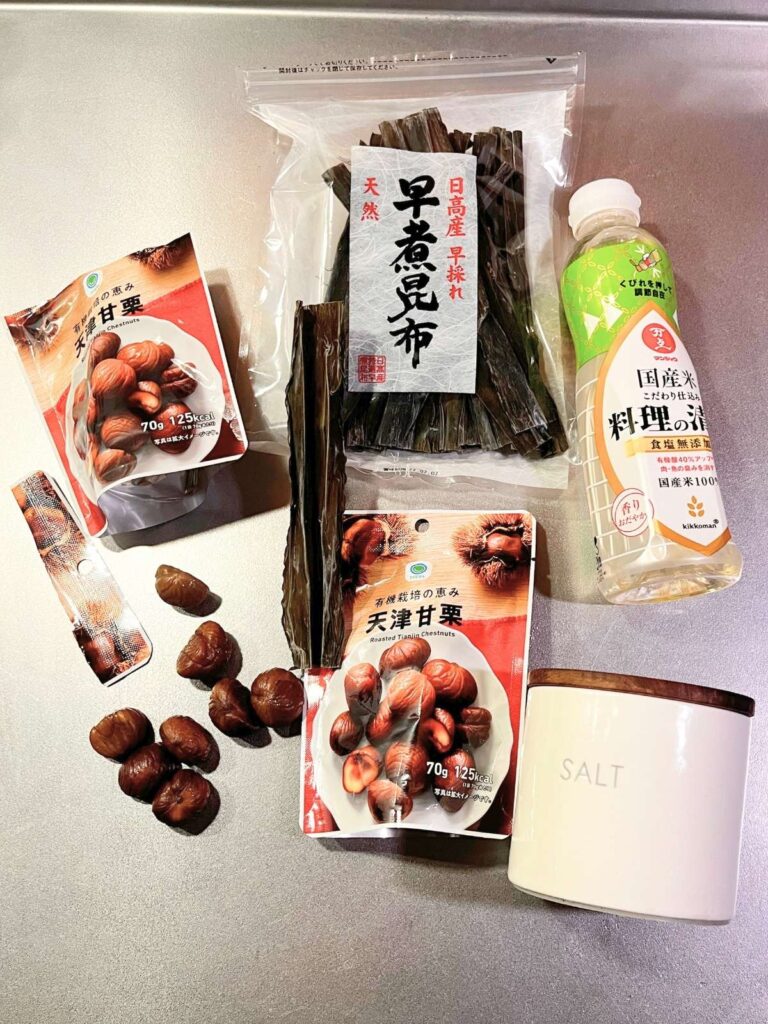
- Chestnuts: two 70g (2.5oz) bags of roasted peeled chestnuts, 140g (4.9oz) in all. Mine were organic Tianjin chestnuts from FamilyMart’s own brand (FamilyMart is a convenience store chain in Japan). Tianjin chestnuts are small chestnuts named after the Chinese city of Tianjin, and in Japan they’re sold roasted as amaguri, which literally means “sweet chestnuts.” The only ingredient on the bag was organic chestnuts. There were nine chestnuts in each bag.
- Rice: 3 go of regular Japanese white rice. Go is a Japanese rice measure of about 180ml (about ¾ cup). If your rice cooker came with its own measuring cup, that’s usually 1 go.
- Everything else, from the salt and cooking sake to the kombu, followed my chestnut rice recipe. Cooking sake is Japanese rice wine for cooking. Kombu is a dried seaweed that adds a gentle, savory flavor, and I take it out once the rice is cooked.
In the US, roasted peeled chestnuts come in many bag sizes. Wang’s comes as five 60g (2.1oz) packs, 300g (10.6oz) in all, which is about the common amount for 3 go. Galil’s comes as six 100g (3.5oz) bags, so three bags make 300g.
Wang Organic Roasted Chestnuts
Galil Organic Roasted Chestnuts
If you can’t find Japanese rice, short- or medium-grain rice works too. Koshihikari is a short-grain variety that’s a popular pick in Japan, and Shirakiku sells it in the US. Nishiki is a medium-grain rice grown in the US.
Shirakiku Koshihikari Rice
Nishiki Medium Grain Rice
How I made it
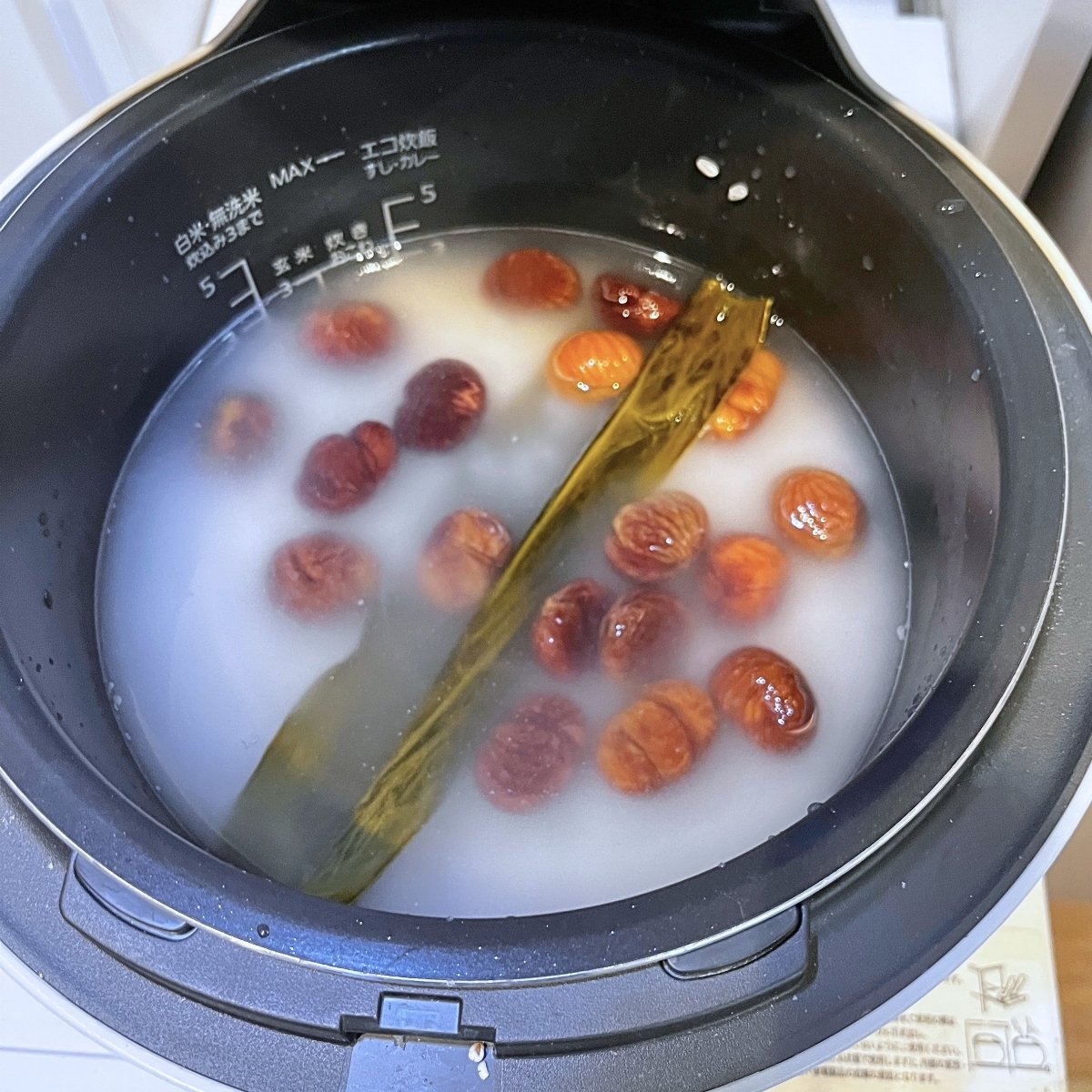
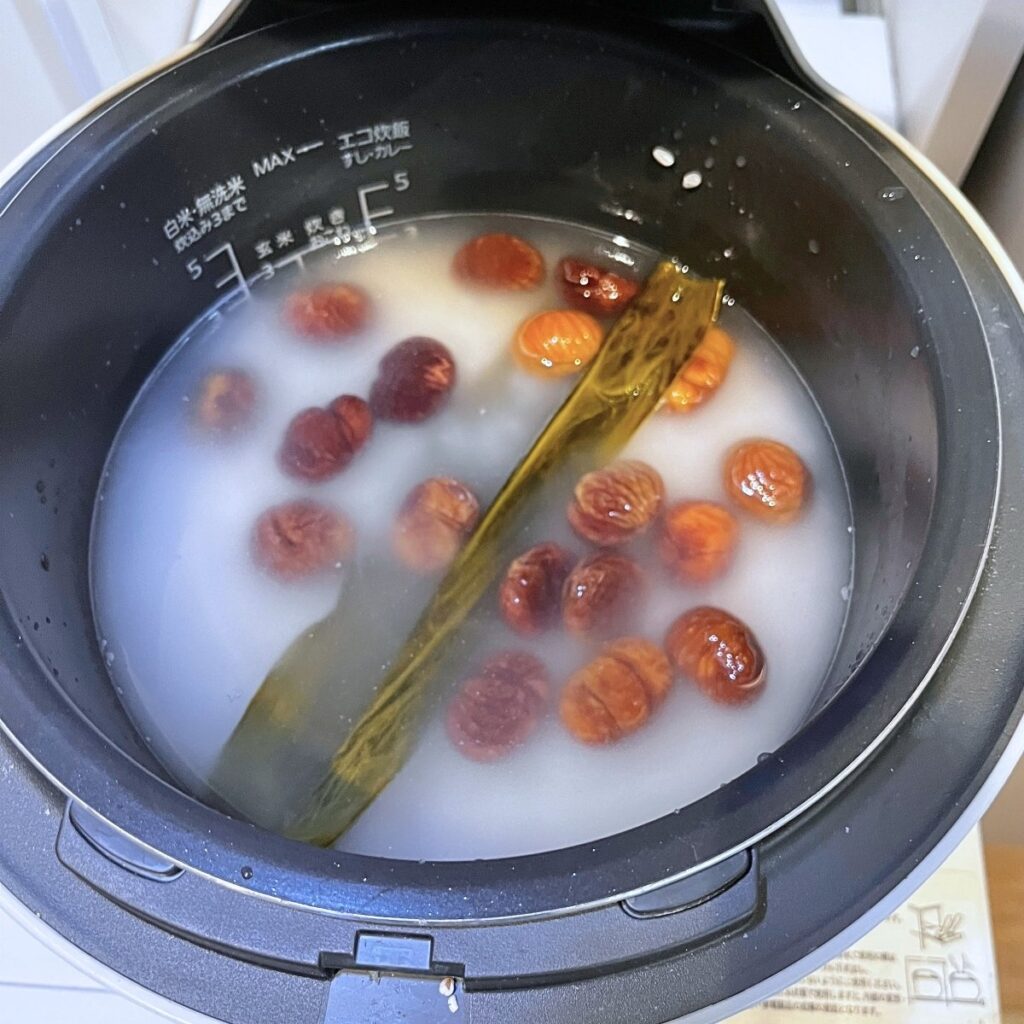
I made it the same way as my recipe. Rice in the rice cooker, water up to the 3 line, then the salt, cooking sake, kombu and chestnuts. Then I cooked it as usual.
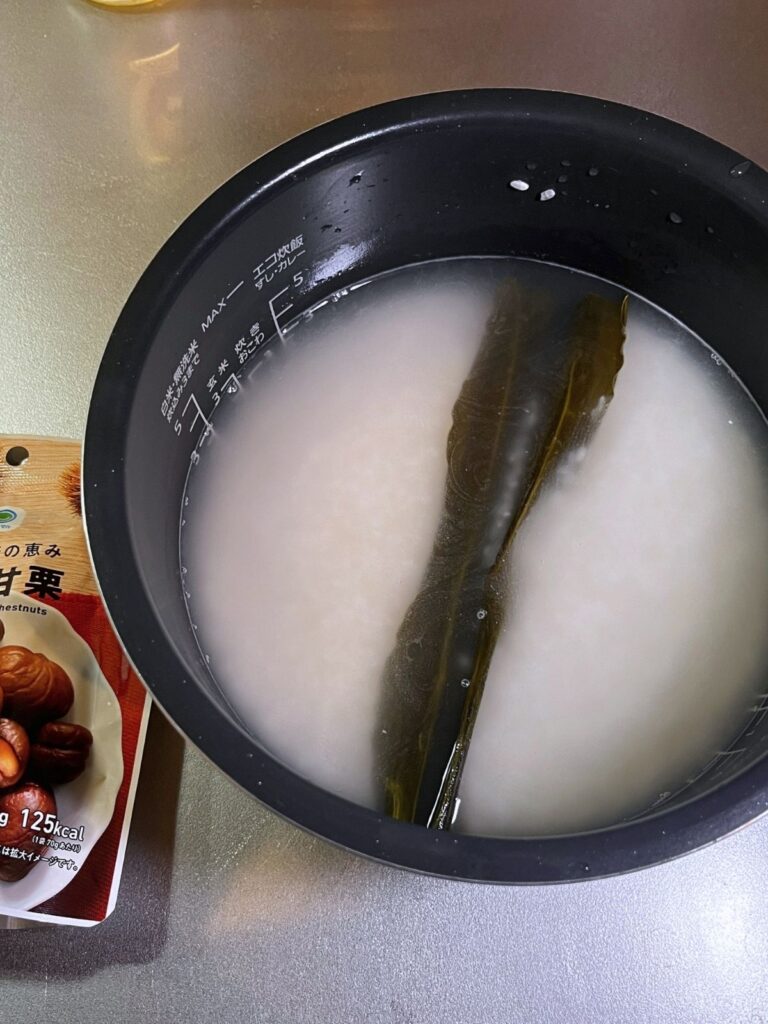
I knew before I even pressed start
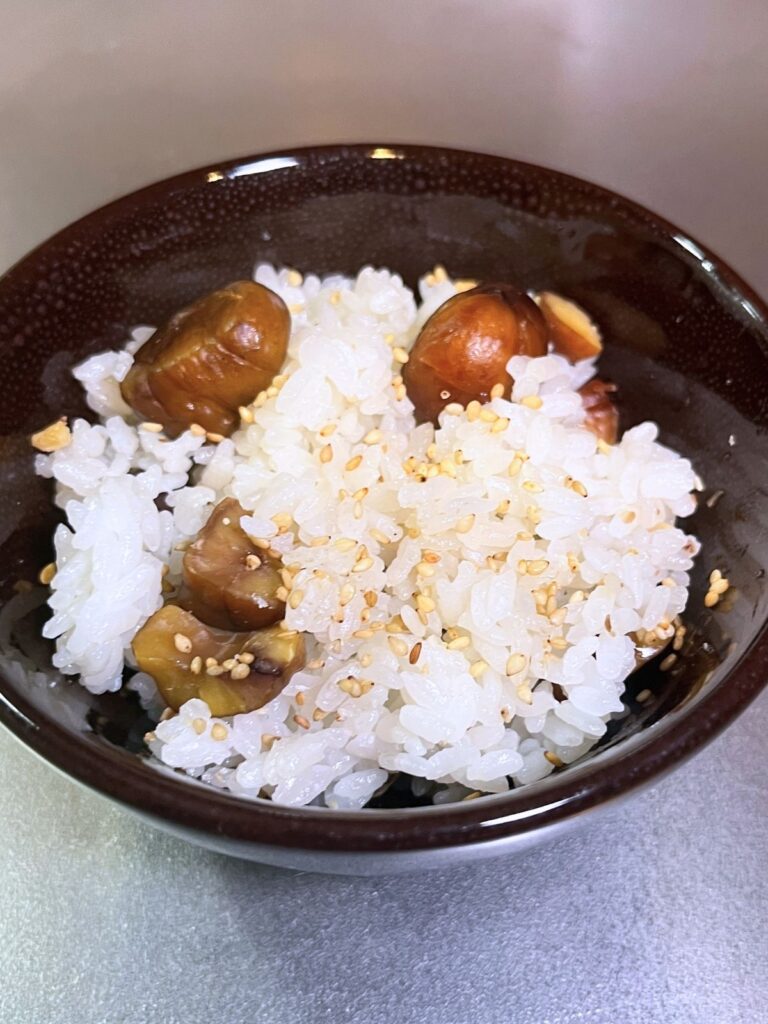
Once the chestnuts were on top of the rice, I could tell there weren’t enough. Two bags made just 18 chestnuts, and there was a lot of white rice showing between them.
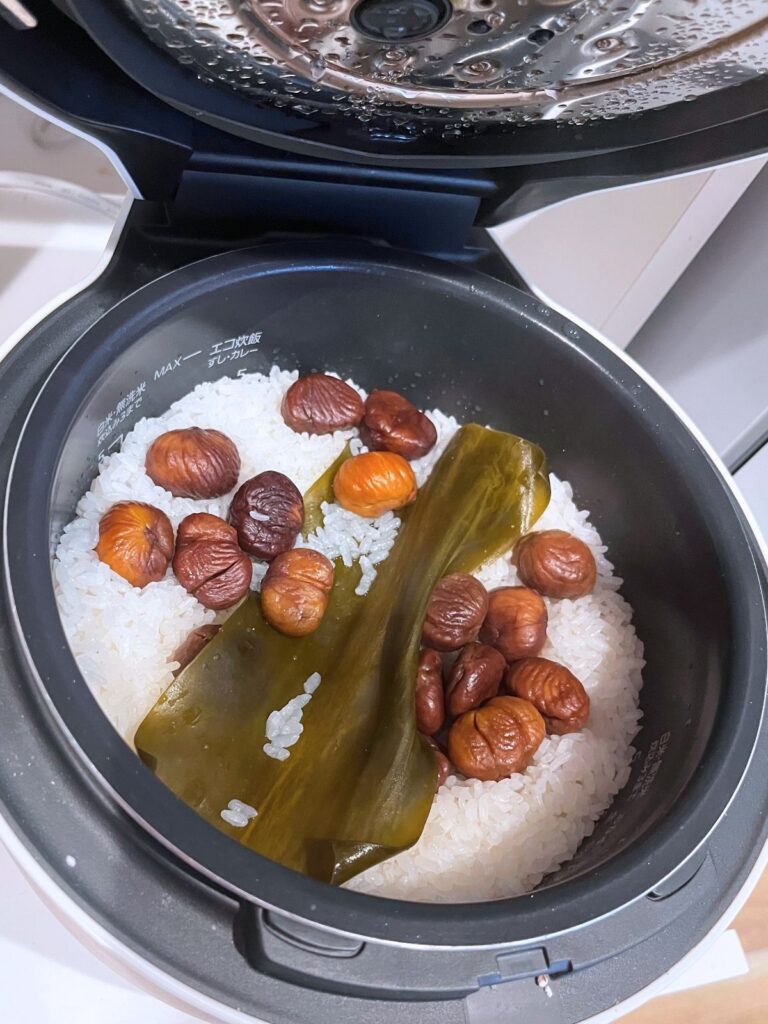
How it turned out
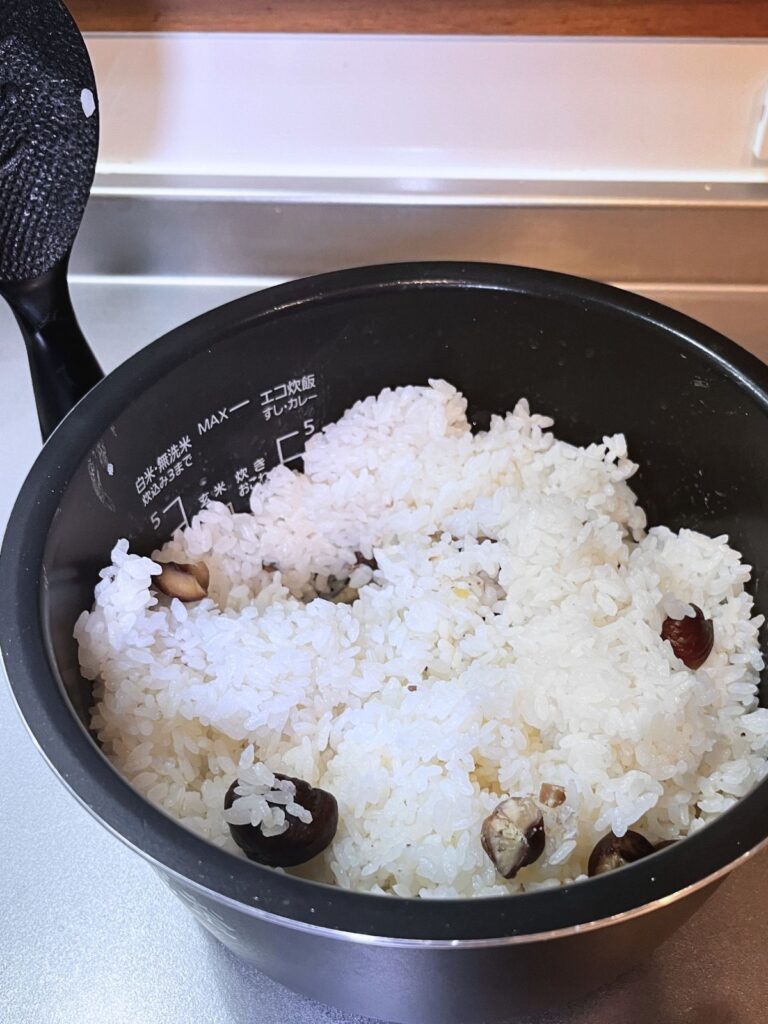
The chestnuts kept their shape. And it tasted good. The chestnuts had the sweetness of amaguri, and to me they tasted sweeter than fresh chestnuts, even though the only ingredient on the bag was chestnuts.
Why two bags weren’t enough
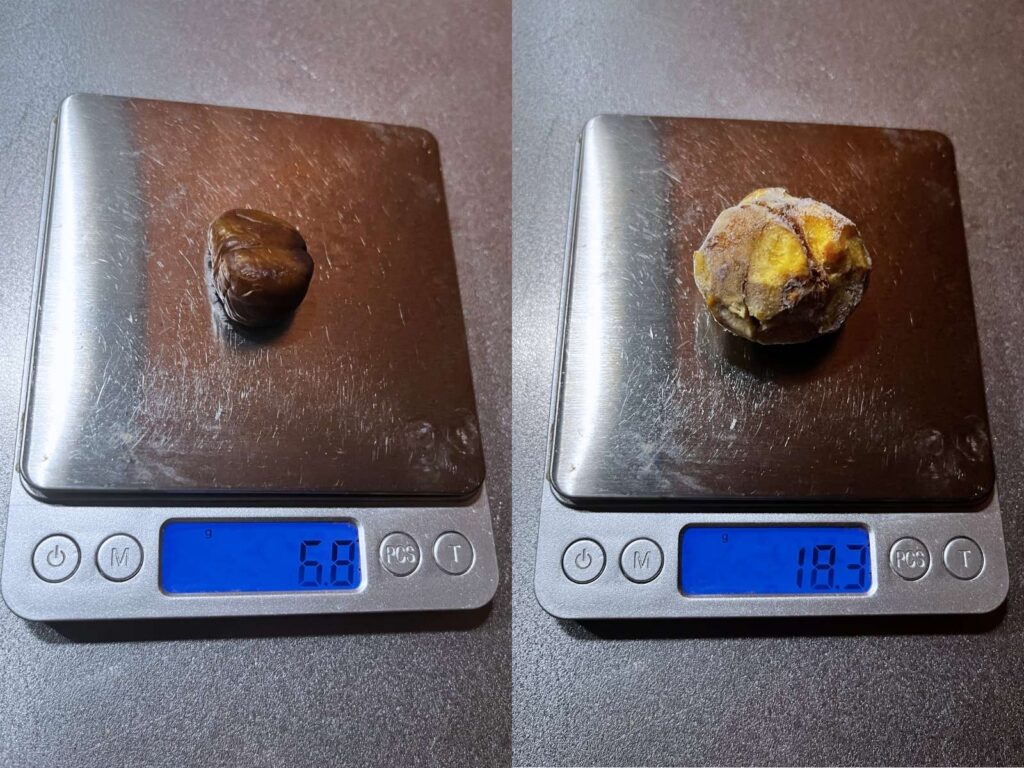
I weighed one chestnut of each kind. One of my grandmother’s chestnuts, from the big tree on her land, boiled, peeled and frozen after my last batch of chestnut rice, was 18.3g (0.6oz). One chestnut I picked out of the rice after cooking was 6.8g (0.2oz). They weren’t in the same state, but the difference in size is easy to see. And each bag had only nine. A pot of my chestnut rice needs at least 25 to 30 of her chestnuts. For 3 go of rice (about 450g before cooking), my two bags came to only about a third of the rice’s weight, about half of what Japanese recipes often use.
If you make it with a pack
Think of the chestnuts as a share of the rice by weight, not as a number of bags. For 3 go of rice (about 2¼ cups, or about 450g), it goes like this:
- 140g (4.9oz), about a third of the rice’s weight: too few for me. That’s what my two bags came to this time.
- About 300g (10.6oz), about two-thirds of the rice’s weight: the standard amount, common in Japanese recipes. With my 70g (2.5oz) bags, that’s about four bags.
- About 450g (15.9oz) or more, about the rice’s weight or more: lots of chestnuts (my favorite). I’ve never weighed it, but that’s what I get going by how many chestnuts I usually use.
Per go of rice, the standard amount works out to about 100g (3.5oz) of chestnuts.
I haven’t tried four bags yet. I’m used to putting in lots of my grandmother’s chestnuts, so I have a feeling even four bags might be too few for me. Bag sizes vary, so check the weight on the bag and pick the amount you like.
Where to find them
If you’re in the US, you can find roasted peeled chestnuts on Amazon.com. They’re also sold at Asian grocery stores and some regular supermarkets.
Wang Organic Roasted Chestnuts
Galil Organic Roasted Chestnuts
Shirakiku Koshihikari Rice
Nishiki Medium Grain Rice
For the full recipe, from boiling fresh chestnuts to cooking the rice in a pot, see my chestnut rice post.
In the end
Chestnut rice with roasted peeled chestnuts was easy, with no peeling, and it tasted good. Two bags just weren’t enough for me.
If you make chestnut rice with a pack, I’d love to hear how many grams you used: hello@minimalfromjapan.com