It was an ordinary Sunday with nothing planned. I’d stayed up late the night before, so when I woke up, it was already noon. My husband was already up. He’s not one to sleep until noon.
“Want to go out for lunch?” “How about ramen?” That was about all it took. We got there around 1:30.
We went to a small ramen shop near home that we go to every now and then. This is what a late Sunday lunch looks like for me in Japan.
It ended the way it usually does for me: I put my bowl back up on the counter, where the ramen comes out. For me, it’s a small way of saying thank you for the meal, and it saves the staff a trip out of the kitchen to clear it. There’s a little more to it, which I’ll get to later on.
Why shio ramen
I ordered shio ramen. Shio means salt, and shio ramen is ramen made with chicken or pork stock and a salt-based seasoning. The soup is usually clear and lighter than something like tonkotsu ramen (a rich pork bone soup).
What I like about it is that it isn’t greasy and tastes clean and light.
In my experience, not that many ramen shops make shio ramen their main dish, and shops where the shio ramen is really good are even fewer. I think that’s because it’s hard to get right. The soup is clear and simple, so there’s no strong miso, soy sauce or rich pork bone flavor to lean on. So this shop is a bit special to me.
What we ordered
When we came in, the staff poured water for us and set it on the counter. People who came in later didn’t wait. They just poured their own from a pitcher on the counter before the staff could get to it.
We ordered at our seats and paid after we ate. We didn’t leave a tip, since tipping isn’t customary in Japan.
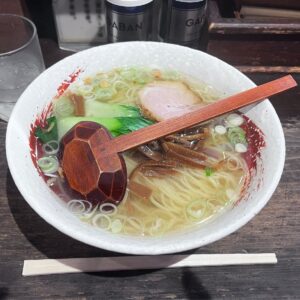
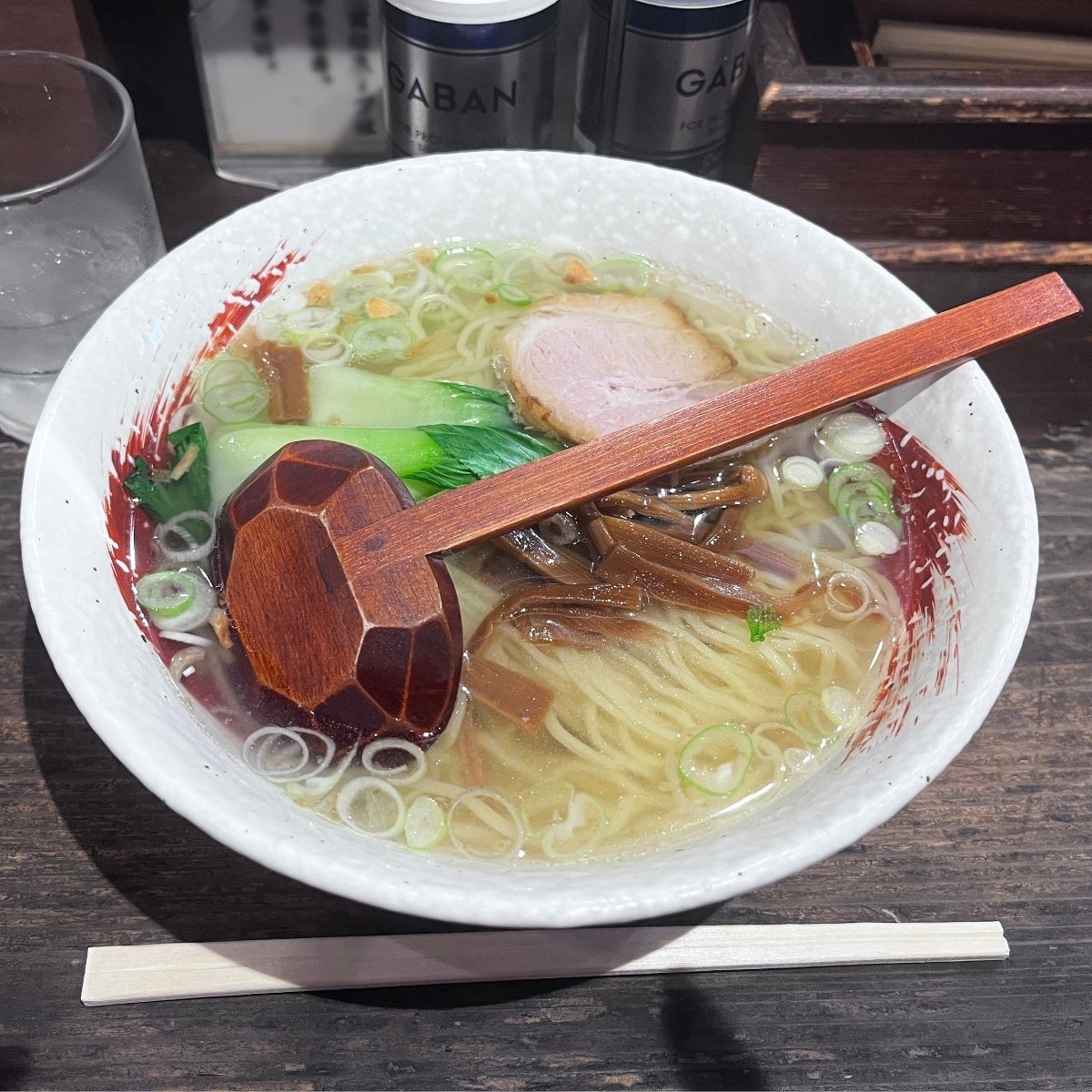
Mine was the shio ramen, which was ¥900. It’s topped with chashu (sliced pork), menma (seasoned bamboo shoots), bok choy and green onions. My husband had the same shio ramen with a marinated soft-boiled egg (¥100) and wontons (small dumplings, ¥200) on top, so his came to ¥1,200. His came with an egg cut into two halves, and he gave one of them to me. The two of us paid ¥2,100 in total (about US$13, as of October 2026).
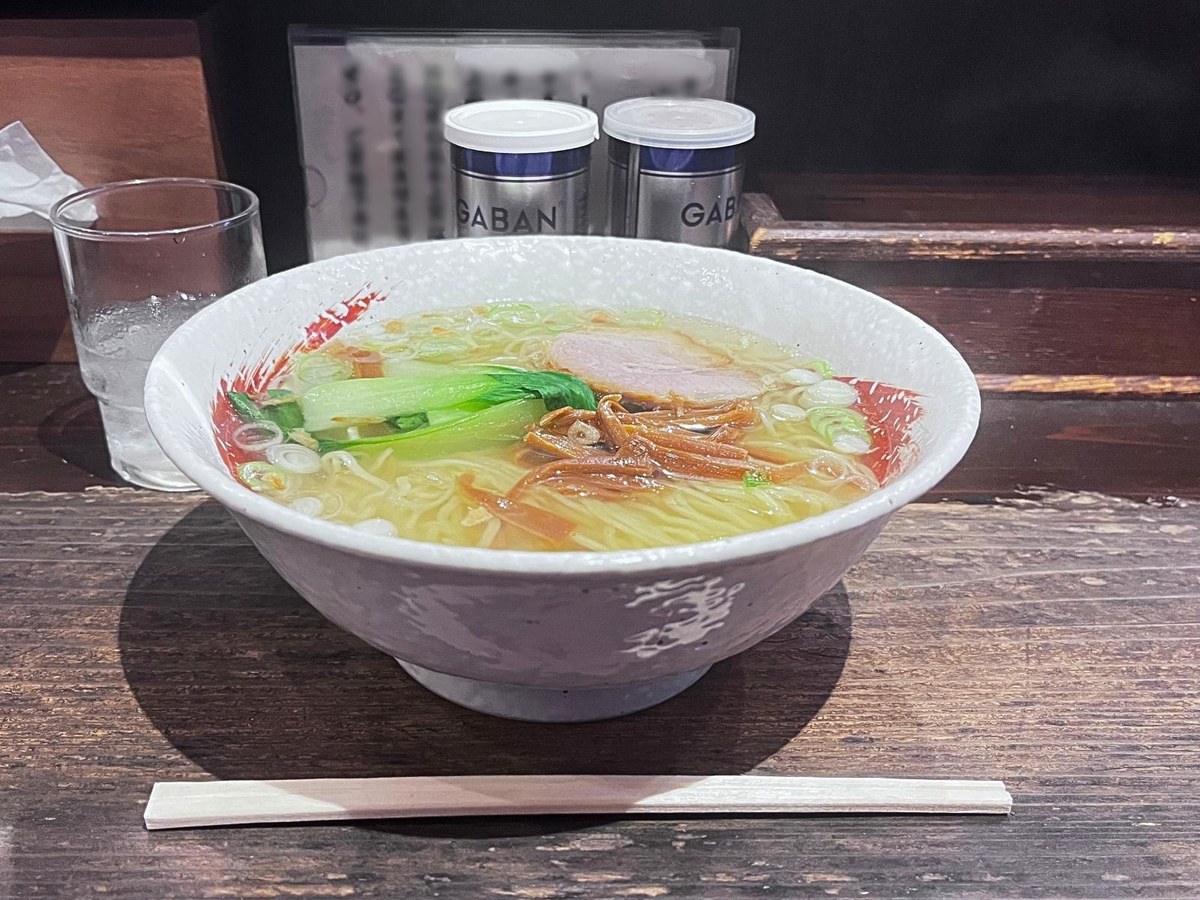
The soup is light but full of flavor, and the saltiness is right in the middle, not too mild and not too strong. The noodles are thin and smooth. I loved the little bits of toasted garlic, which add a nice accent. The bok choy picks up the salty soup, and its crisp stems add some crunch. The egg was so carefully soft-boiled that the white jiggled when I poked it with my chopsticks.
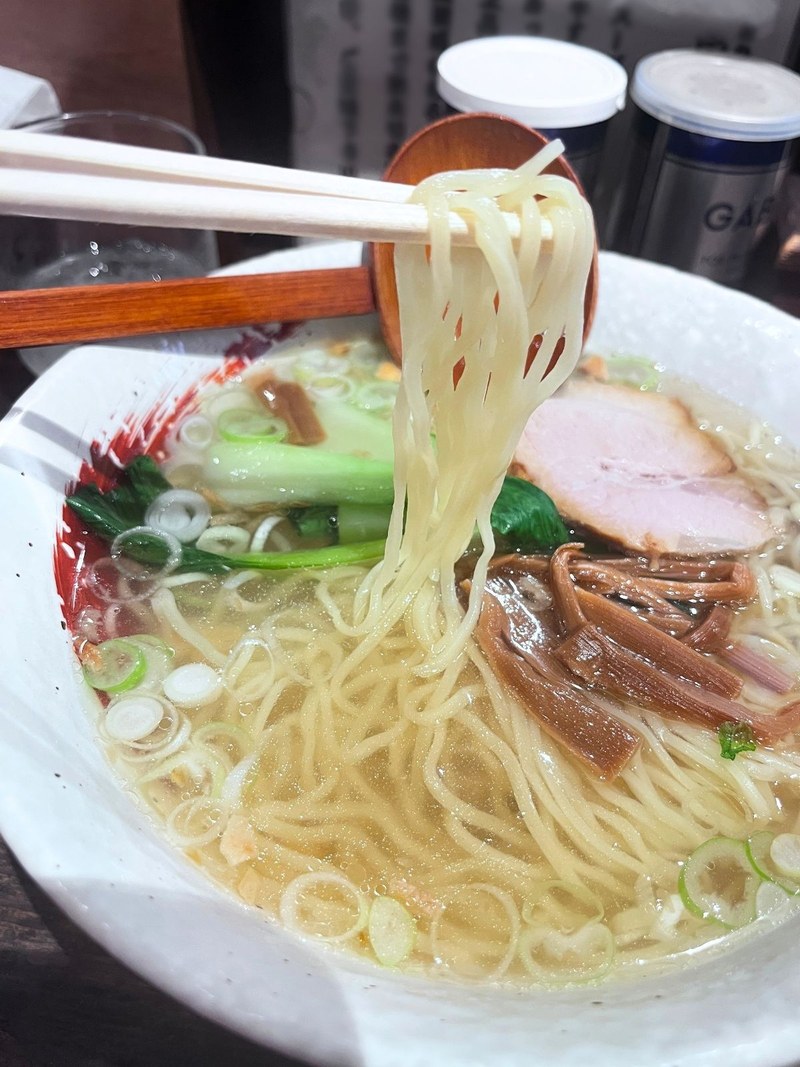
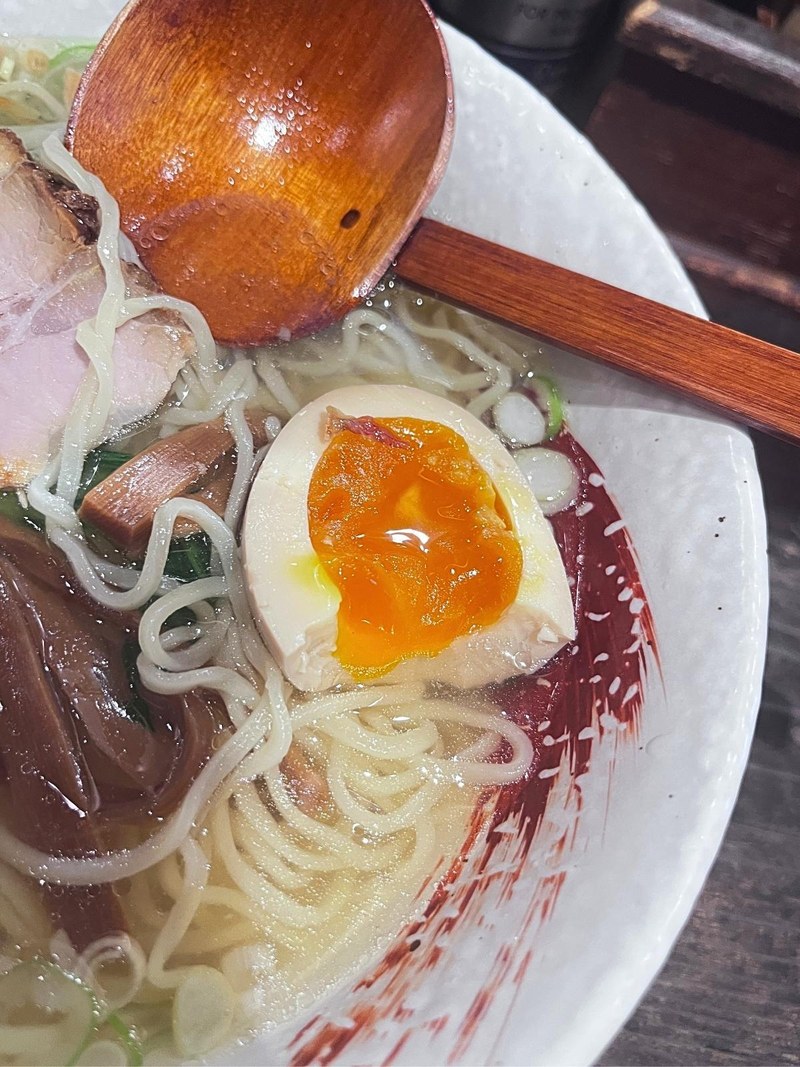
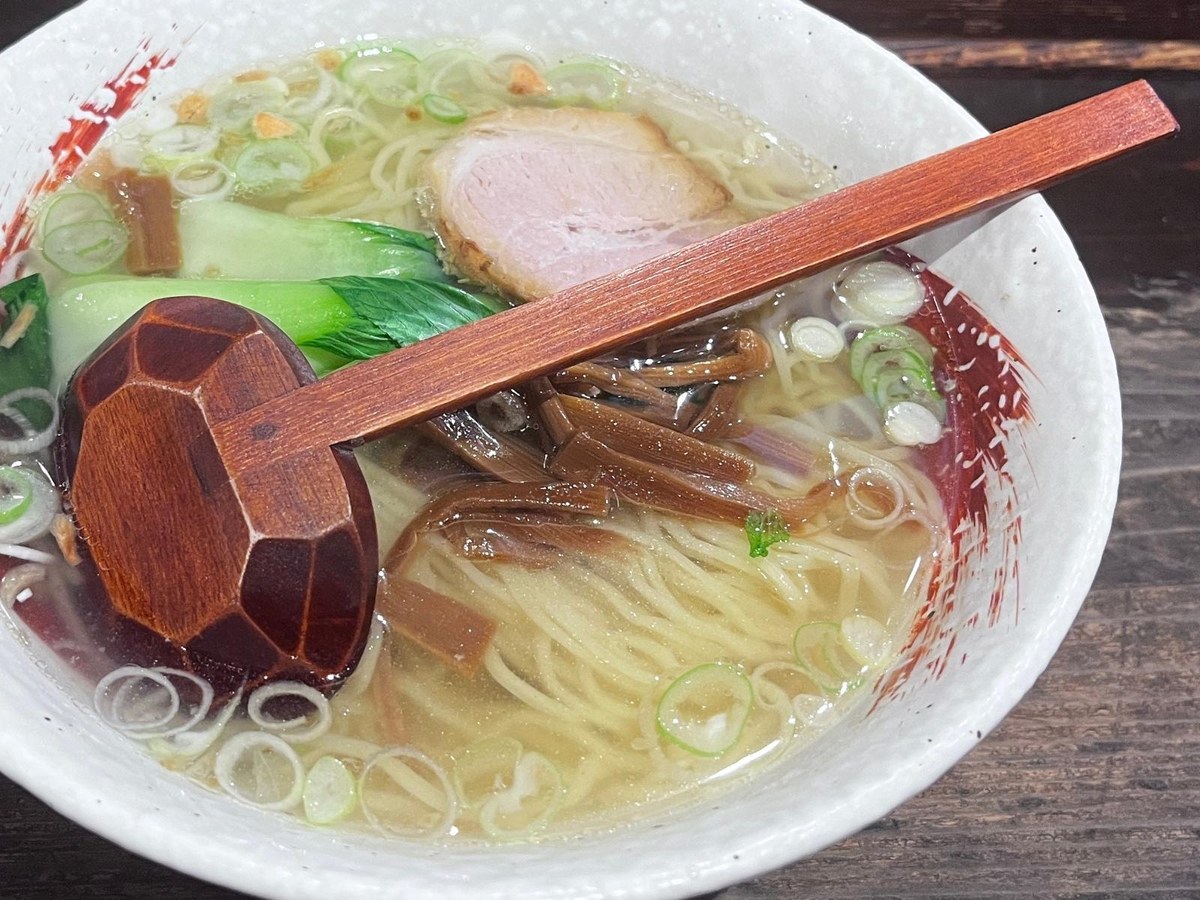
The spoon here is made of wood, which I don’t see at many ramen shops. The back is carved into little facets, and the front is smooth. I could tell the owner really cares about the little details. Even though it sits in the hot soup the whole time I’m eating, it doesn’t feel too hot on my lips, so the soup is easy to sip. I keep wooden spoons at home too, mostly for soup, so I think it’s a lovely touch that this shop chose them. I’ll write about the wooden spoons I use at home in another post.
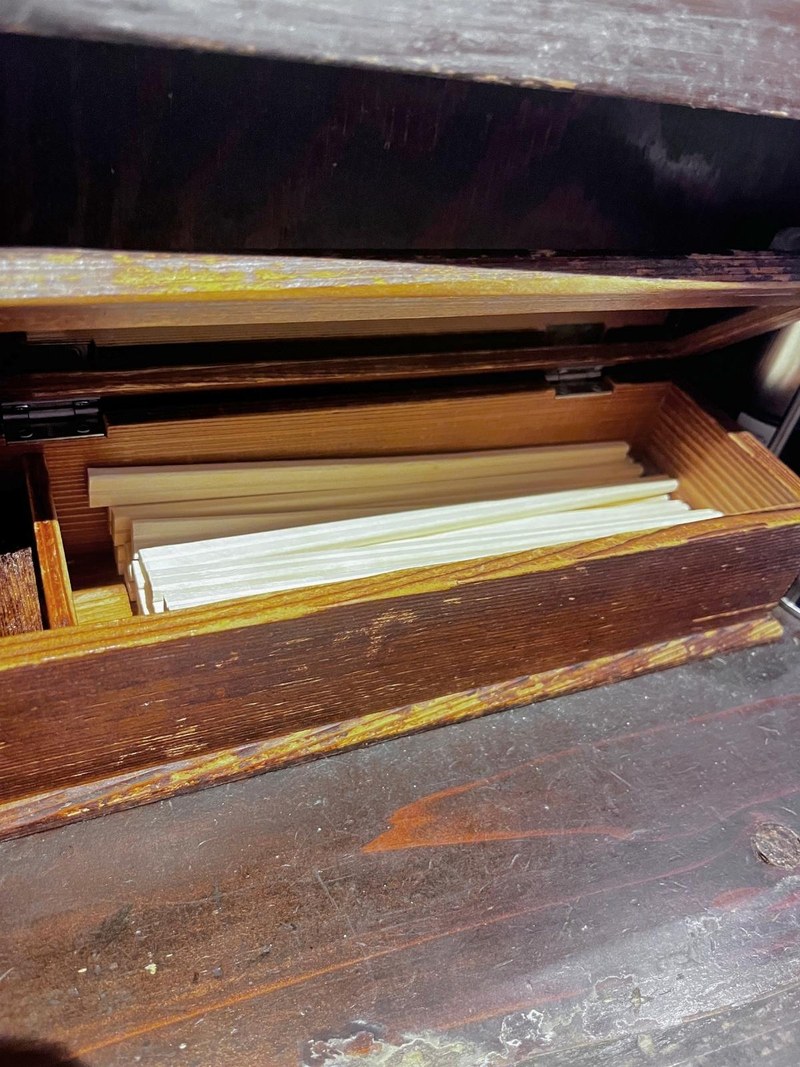
Chopsticks from the box on the counter
This is a counter-seat shop. The counter has two levels: the part in front of you is lower, and the kitchen side is a step higher. On the lower part, tucked under the higher one, there’s a wooden box with a lid, and inside are disposable wooden chopsticks. You take out a pair for yourself. I took a pair out while I was waiting for my ramen.
Why I put my bowl back on the counter
When I’m done eating, I put my bowl and water glass back up on the higher level of the counter, where the ramen comes out. I’m not the only one. Plenty of people in Japan do this at counter-seat ramen shops, and at this shop, the other customers were doing it too.
Like I said, it’s my small way of saying thank you for the meal. My impression is that a lot of ramen shops are run by the owner alone or are short-staffed. So I put my bowl up there so they don’t have to come all the way out of the kitchen to clear it. At shops that keep a cloth on the counter for customers to use, I also give my part of the counter a quick wipe. This shop didn’t have one, so I didn’t that day.
At busy shops with people waiting outside, it also helps the staff seat the next person a little sooner. There was no line that day.
If you’re ever at a shop like this, don’t feel you have to do it. Ramen bowls can be heavy, and if you might spill the soup or drop the bowl, it’s perfectly fine to leave it where it is.
Not every shop wants customers to do this, either. When I go to a shop for the first time, I watch what the other customers do when they leave. If they put their bowls back and the staff thank them, I do the same.
The shop makes good ramen quickly, and we customers help out just a little. I really like that quiet feeling of everyone keeping the place running together.
It’s just something I try to do, but ideally, I’d lay my chopsticks together across the bowl from front to back, not side to side, with the ends I ate with on my side. The staff take the bowl from the kitchen side, so that way they don’t have to touch the part that was in my mouth. But the moment I set the bowl down, the staff reached over to clear it. They paused for just a second, and I used that second to take a photo for this post instead of fixing my chopsticks. So my chopsticks just stayed lying sideways across the bowl.
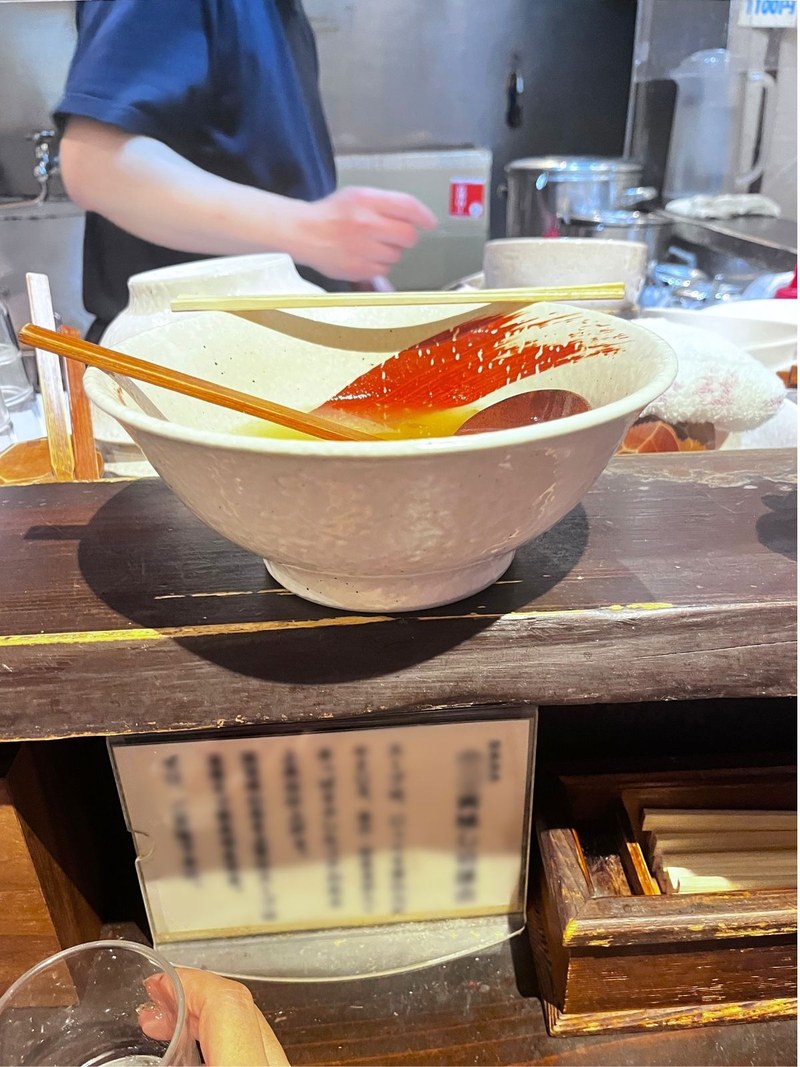
I put my bowl back on the counter, and on the way out, I said “gochisousama deshita” (thank you for the meal), like I usually do. That was our Sunday lunch.
If you’d like to see what I make for lunch at home on a busy day, here’s my 19-minute udon.