Toshikoshi soba is the soba (buckwheat noodles) that many people in Japan eat on New Year’s Eve. “Toshikoshi” means something like “crossing into the new year.” There are a few stories about why. People often say the long, thin noodles stand for a long life, or that soba, which breaks easily, cuts away the hardships of the year. How it started isn’t clear.
Toward the end of December, supermarkets in Japan fill their shelves with soba and ready-made tempura for New Year’s Eve, and you see a lot of commercials for instant cup soba on TV. On New Year’s Eve itself, soba shops get very busy. Some have long lines, and some sell fresh soba and tempura to take home.
Since I got married, when I spend New Year’s Eve in Japan, it’s just my husband and me. Most years, a bowl of tempura soba fills us up, so that’s the whole meal.
In this post, I’ll share what toshikoshi soba is like for people in Japan, through how we do it in my home. I’ll write about the recipe, New Year’s countdowns and the first shrine or temple visit of the new year in separate posts.
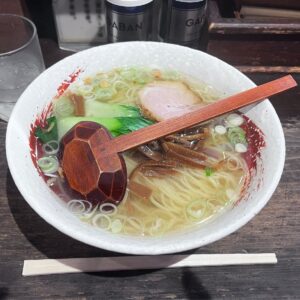
My toshikoshi soba, year by year
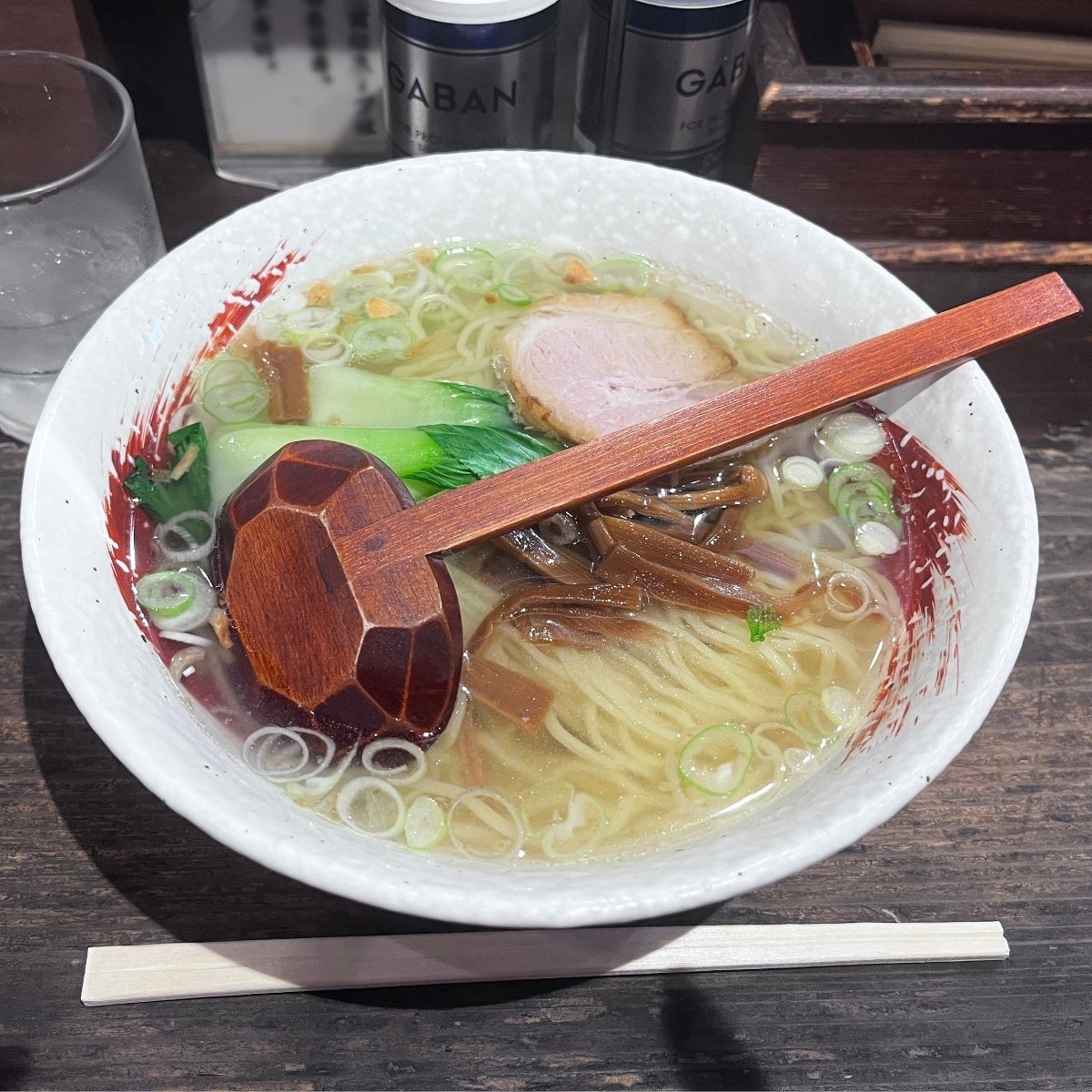
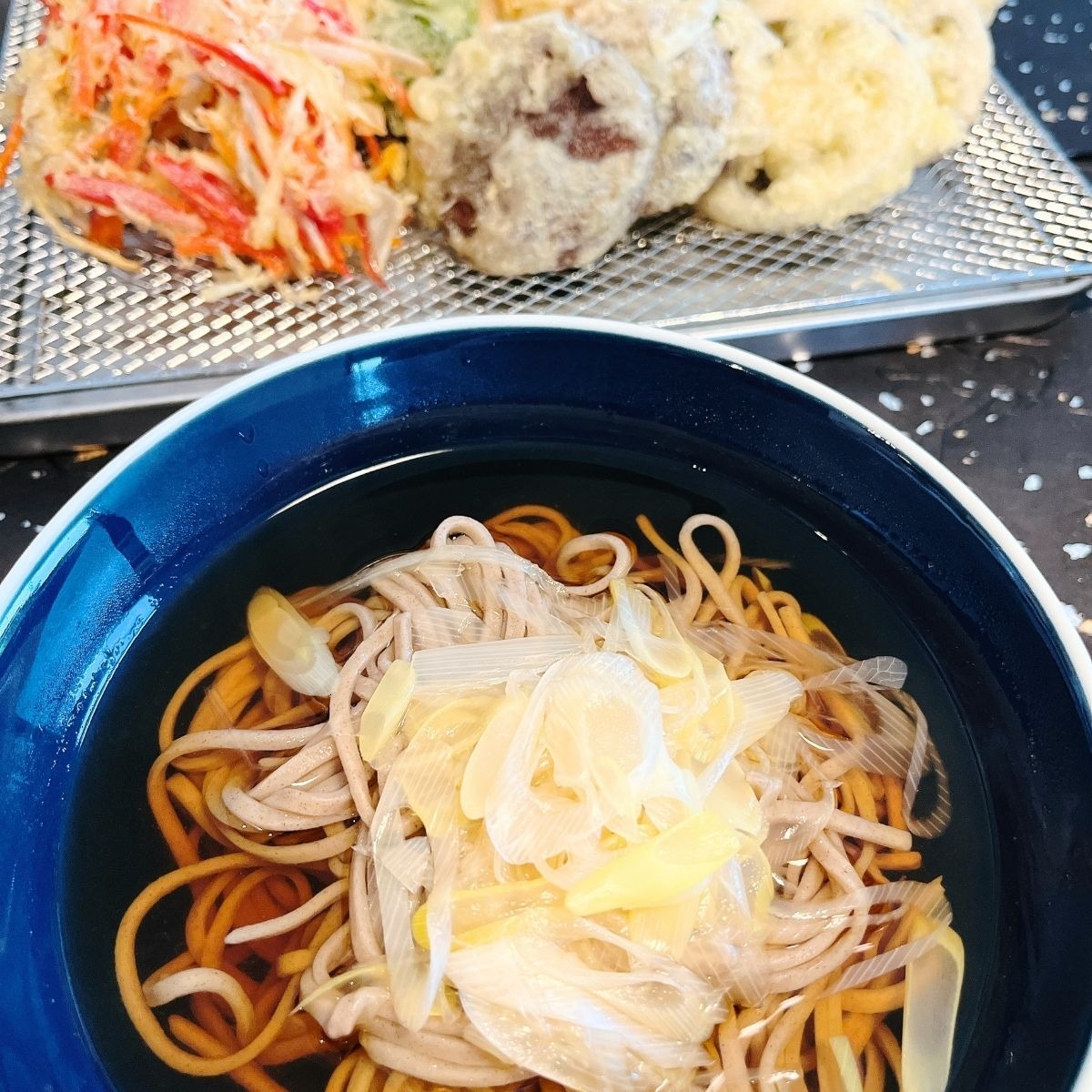
These are from the years I spent New Year’s Eve at home in Japan.
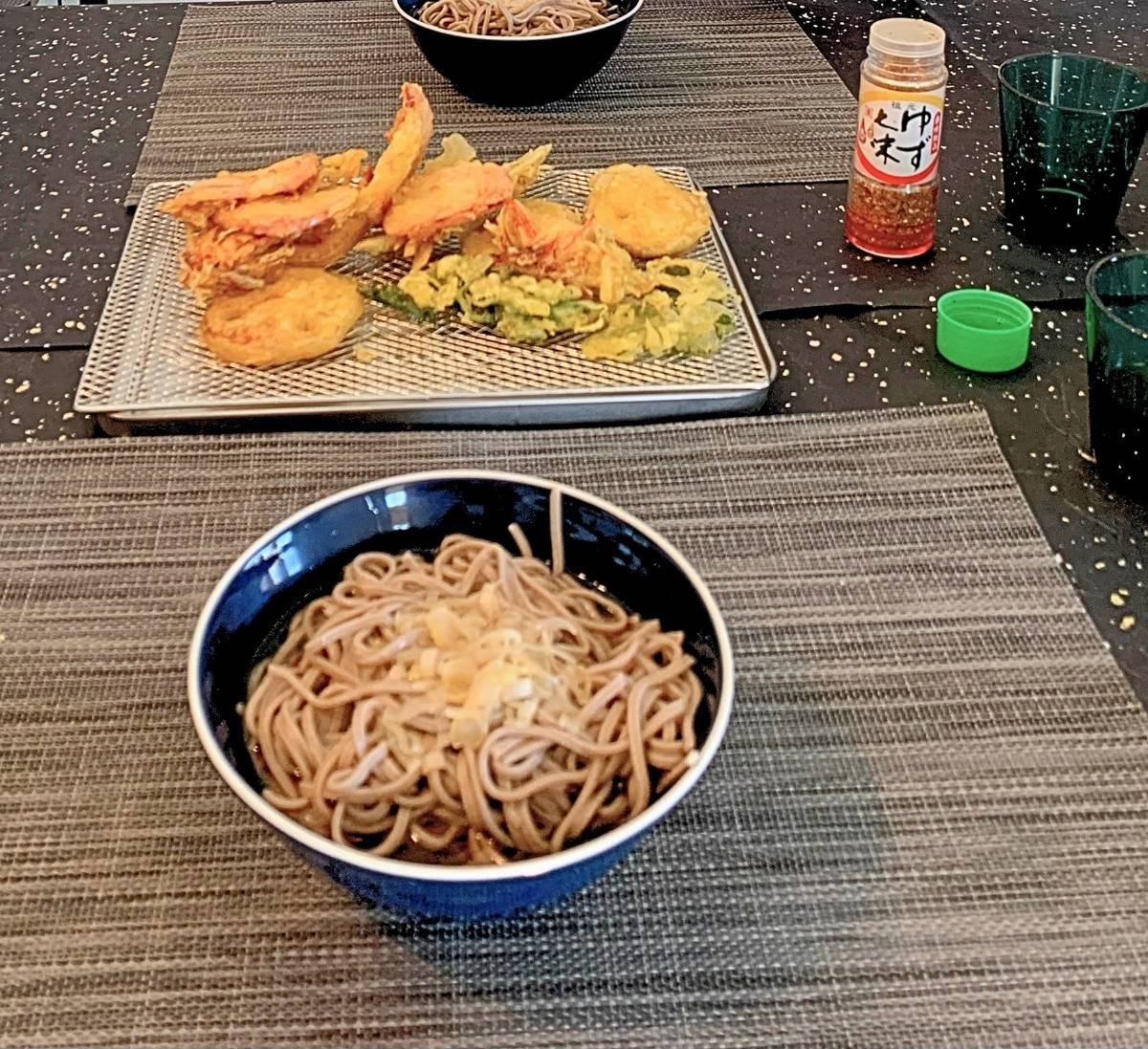
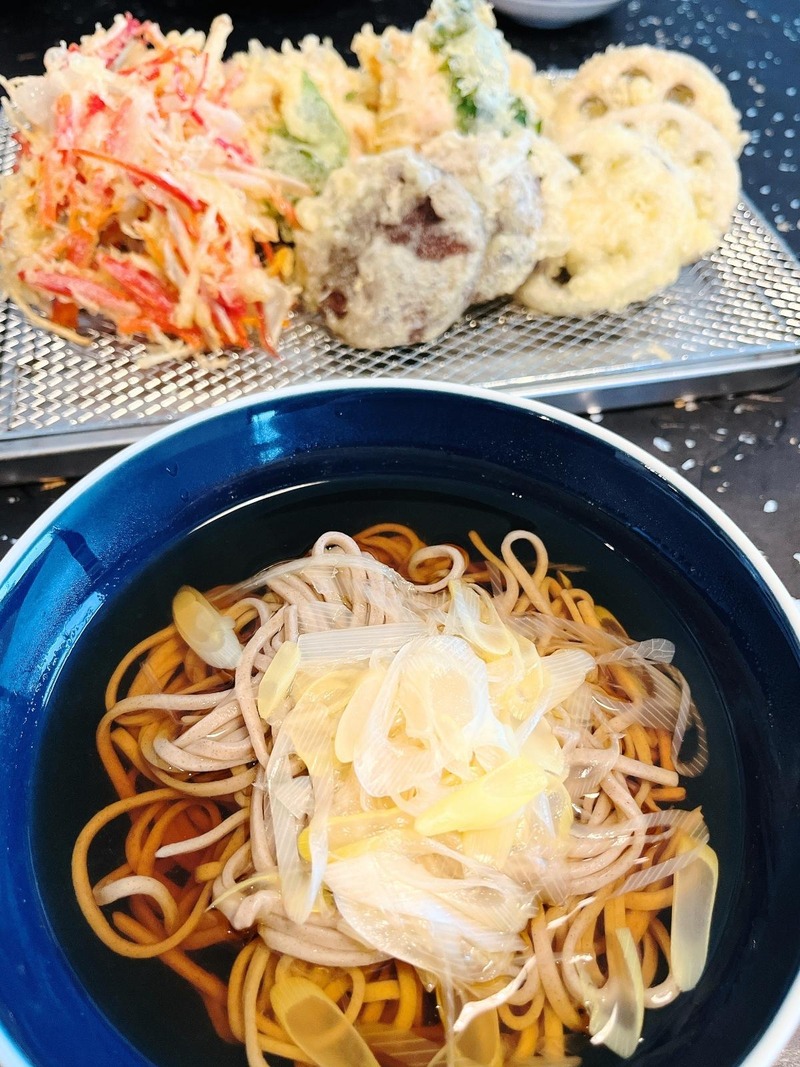
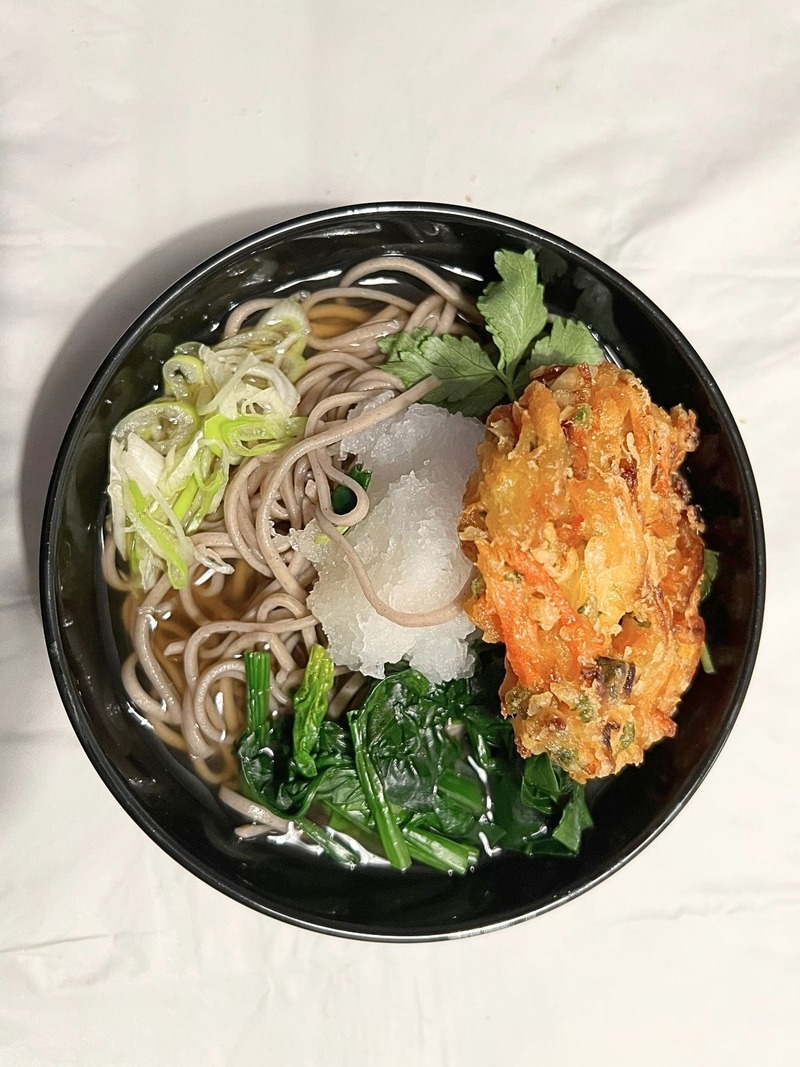
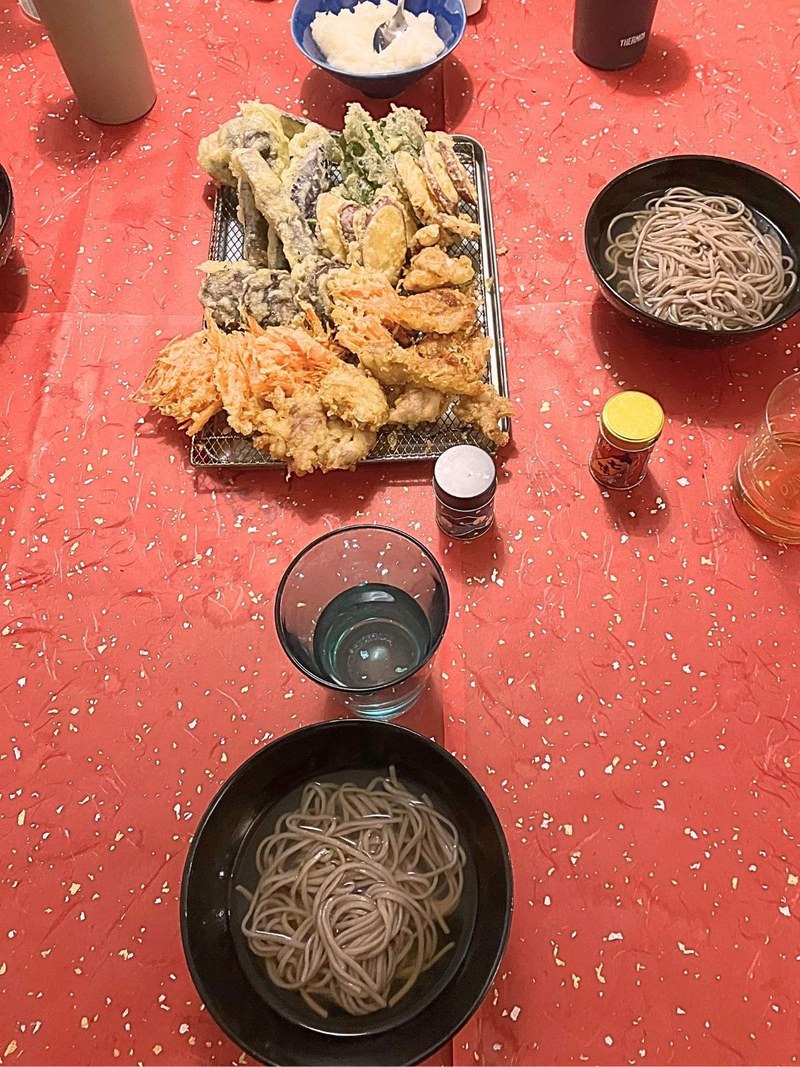
The bowls change, and the tempura changes too, depending on what I have that year.
When I eat it
Many people eat it in the evening on New Year’s Eve, and some eat it close to midnight while listening to joya no kane, the temple bells that ring 108 times, slowly, as the old year turns into the new one. My impression is that they go on for about two hours. It’s often said that it’s best to finish it before the new year begins. There’s no set time in my home, though. It depends on what we’re doing that day. Some years I’ve had it for lunch, some years for dinner, and some years just before midnight.
Why I buy dried soba
At the supermarket in Japan, soba usually comes in four forms: fresh noodles you boil yourself, noodles that are already boiled and only need warming up, frozen noodles, and dried noodles.
I buy dried. Pre-boiled soba is already soft, so I can’t cook it to the firmness I like. Fresh soba doesn’t keep long. With dried soba, I can cook it the way I like, it keeps for a long time, and I can cook just what I need. It’s also easier to choose how much buckwheat is in it.
My favorite is juwari soba, made with only buckwheat flour. I like its stronger buckwheat aroma. In my experience, most soba has some wheat flour in it to hold the noodles together, and some packages have more wheat than buckwheat. A common mix is nihachi soba, which is 80% buckwheat and 20% wheat. Without wheat flour to hold it together, juwari soba falls apart easily, so it’s hard to make. From what I’ve seen, it isn’t something you see everywhere. I don’t think I’ve ever seen fresh juwari soba at the supermarket.
Once, my mother-in-law in France sent us a lot of buckwheat flour for galettes (French buckwheat crepes). It was good flour, so my husband and I tried making juwari soba with it. It tasted great, but it crumbled and never really became noodles.
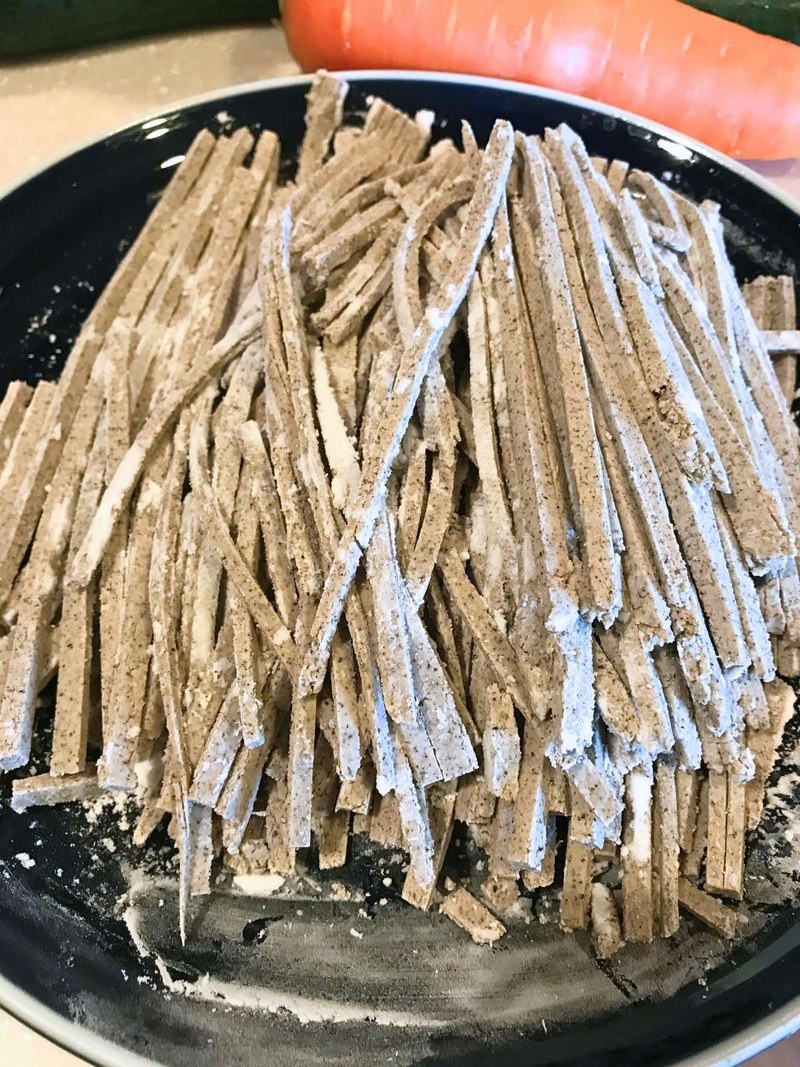
Later, I asked an older relative in the countryside, who makes soba by hand, about it. She told me, “Juwari is hard. Even I don’t make it. I put in 20% wheat flour.”
Some soba has only a little buckwheat flour, so I check the ingredients on the package. In Japan, ingredients are listed from most to least by weight, so I look at whether buckwheat flour comes first. But juwari is just my preference. Soba made with wheat flour is good too, so any soba you can find near you will work.
Homemade tempura, but no shrimp
Since I got married, I’ve made the tempura myself every year I’ve spent New Year’s Eve in Japan. Shrimp tempura is a topping you often see on toshikoshi soba. Shrimp is said to stand for a long life, because its curved back looks like the bent back of an older person. But my husband isn’t a big fan of shrimp, so I don’t make it.
I love shrimp tempura, so around New Year’s Eve, I catch myself looking at the ready-made ones at the supermarket. Then I think homemade would taste better, and I don’t buy them. But cleaning one shrimp just for myself feels like too much work.
Instead, I try to fry what my husband likes, such as Japanese sweet potato, kabocha squash (a sweet Japanese winter squash) and shiitake mushrooms, when I have them.
How I make it
This is the order I make it in. I’ll write the full recipe in another post, so here I’ll just share the rough steps.
- Fry the tempura. For two people, a 23cm (9.1in) frying pan is plenty. I don’t have to take out a big pot, so there’s less to wash.
- Make the broth. These days, at home, I usually use shiro dashi (a light-colored, concentrated dashi seasoning) with a little soy sauce. I think a light-colored broth looks prettier. Sometimes I use mentsuyu (a bottled Japanese noodle soup base made with soy sauce, mirin and dashi, darker and a little sweeter) instead. In Japan, soba broth tends to be darker in color in the Kanto area around Tokyo and lighter in color in the Kansai area around Osaka and Kyoto.
- Boil the soba.
- Top it with the tempura and sliced Japanese long green onion. Some years, I add grated daikon or spinach too.
Years without tempura
Some years, I spend New Year’s Eve in France, and one year, I made soba there too. There’s no tempura to buy there, and it’s my in-laws’ kitchen, so I don’t fry it myself. I also want to pack light, so I brought dried soba from Japan and just one bottle of mentsuyu, since I could use it in all kinds of dishes there. Soba with just the broth felt a little too plain, so I added chicken. I couldn’t find Japanese long green onions or green onions there, so I used leeks.
While writing this post, I looked up how leeks are different from Japanese long green onions. With leeks, people mostly eat the white part, and the green leaves are tough. That brought it back to me. I remember thinking the green parts were tougher than Japanese long green onions, and it took longer than usual to simmer them until they were soft.
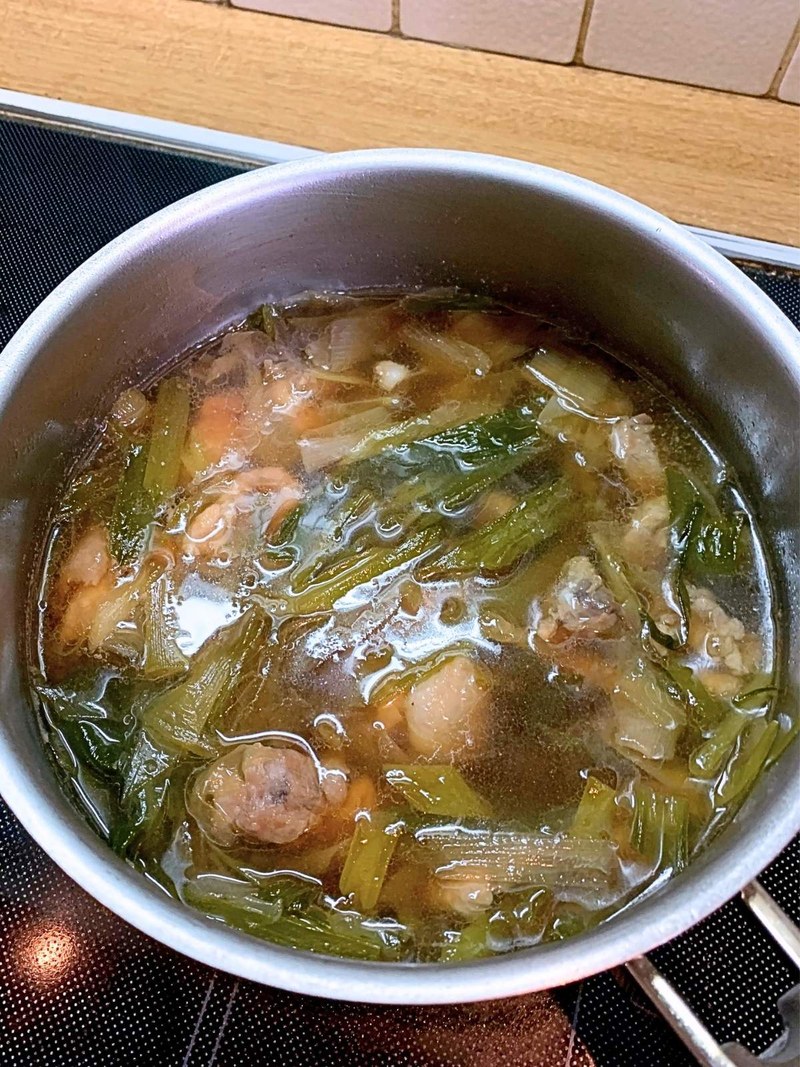
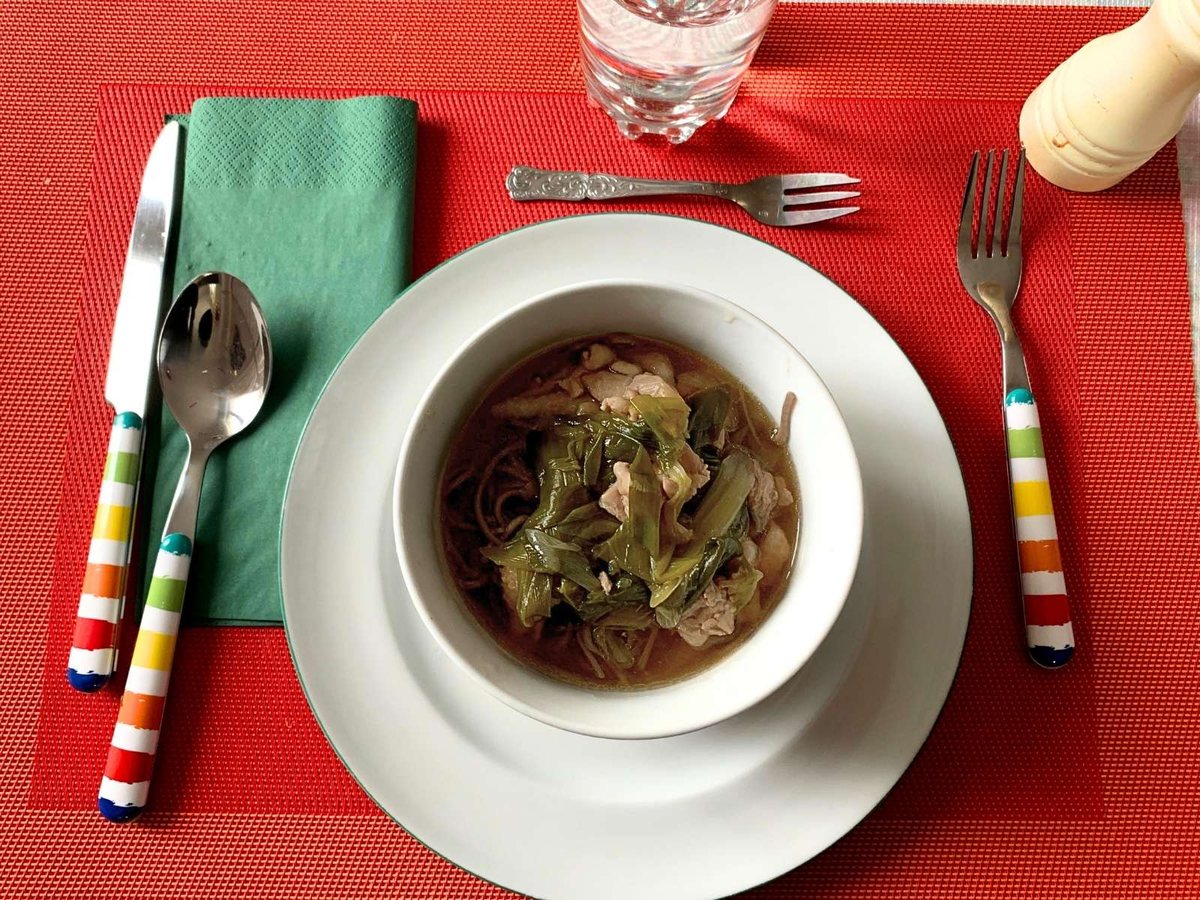
I think it’s close to the soba I ate as a kid. Tempura isn’t a must. Even with just chicken, it made a good bowl.
At home in Japan, I have my own tools and ingredients, so it’s easier to make the clear broth I like.
Different New Year’s Eves
How people spend New Year’s Eve depends on their family and what’s going on in their lives. I’ve had toshikoshi soba on all kinds of New Year’s Eves, depending on the year.
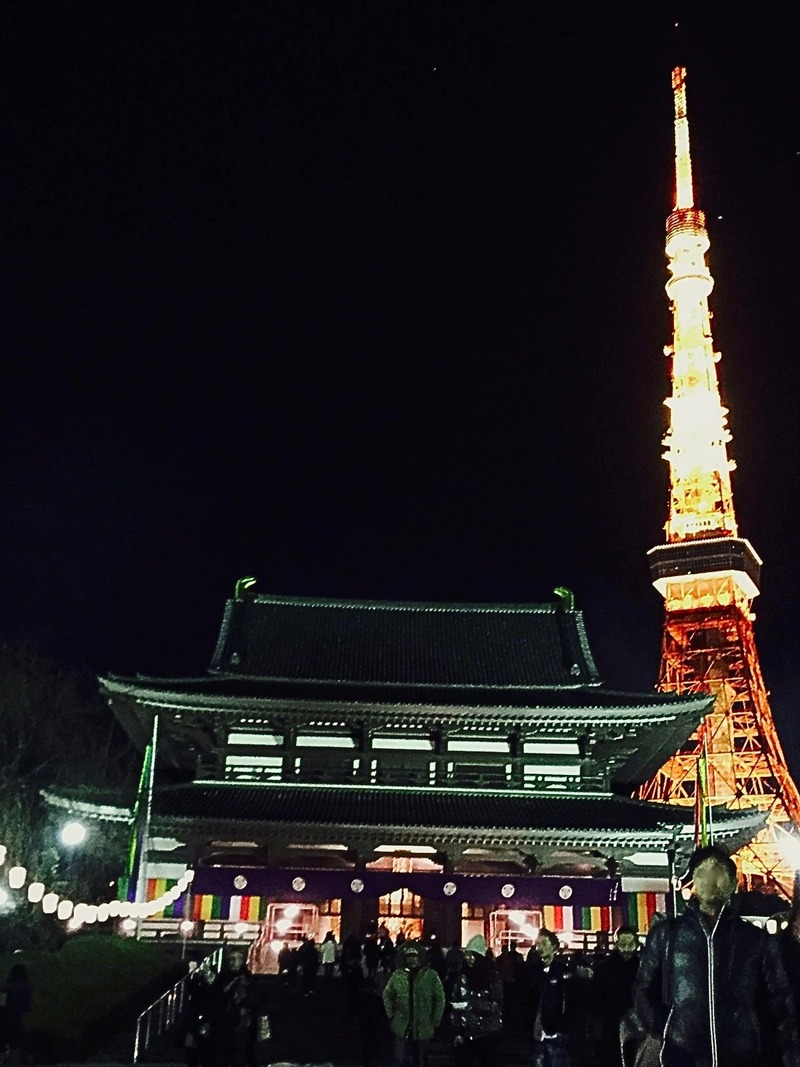
- New Year’s Eve 2015 (before I got married): At a friend’s place, we all cooked toshikoshi soba and fried tempura together. After midnight, we all went to Zojoji, a Buddhist temple, for our first visit of the new year.
- New Year’s Eve 2016 (before I got married): At home alone with instant cup soba. A lot of people go back to their hometowns over the New Year holidays, so finding a friend who’s staying in Tokyo and free that night takes some effort. That year, I was tired, so I didn’t try to make plans and took it easy on my own.
- New Year’s Eve 2020: Toshikoshi soba for lunch. That night, my husband and I went for a drive. We welcomed the new year in the car and watched the first sunrise of the year, which some people in Japan go out to see.
- New Year’s Eve 2023: In France, with friends who are Japanese and French couples like us. A friend made the soba, and there were lots of other dishes on the table too.
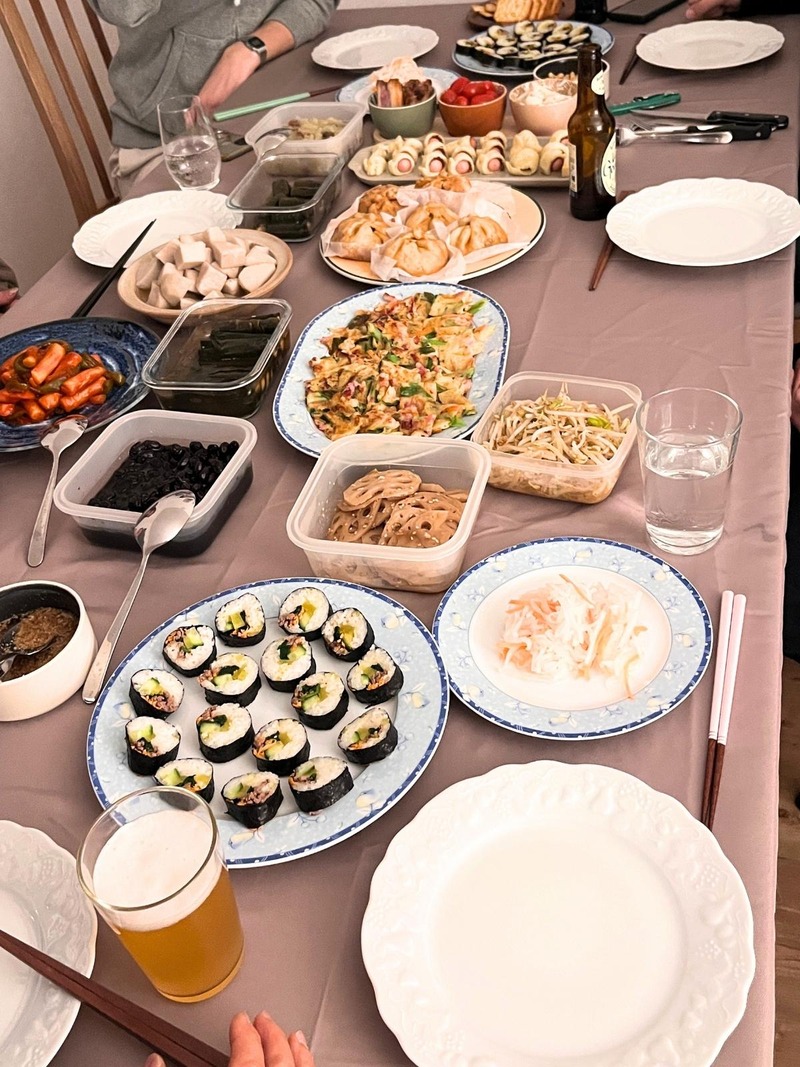
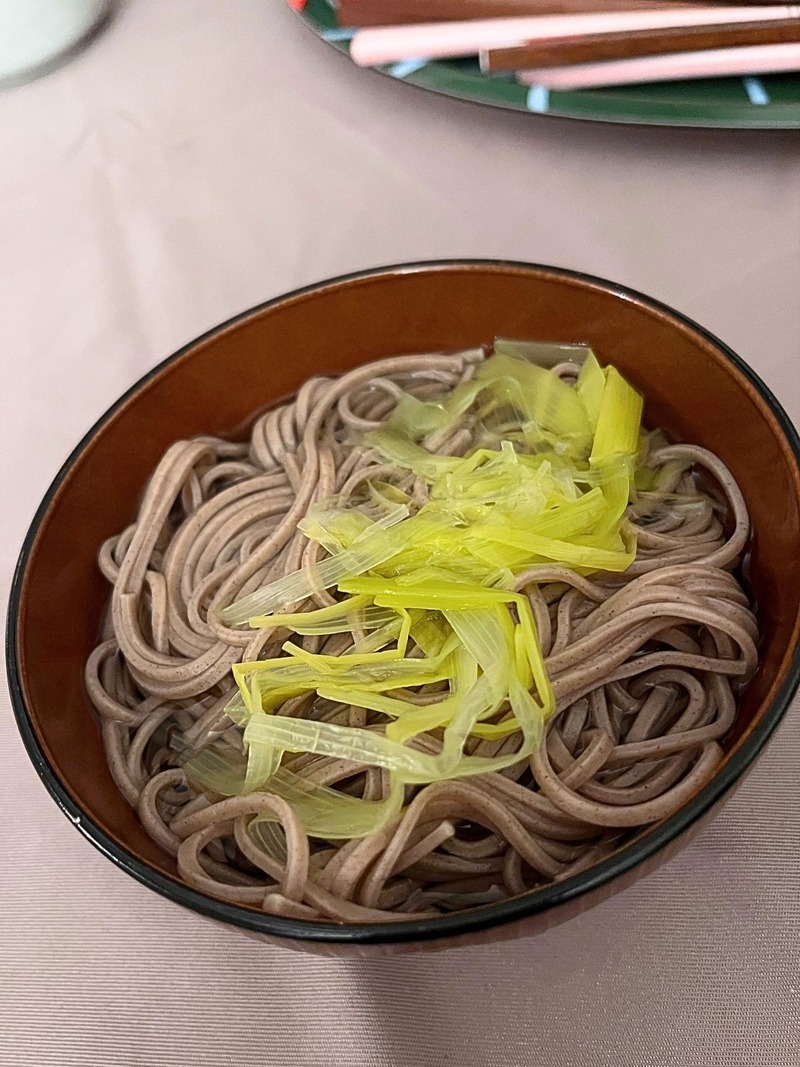
- New Year’s Eve 2024: Tempura soba at home, then a late-night visit to Kanda Myojin, a Shinto shrine, for our first visit of the new year.
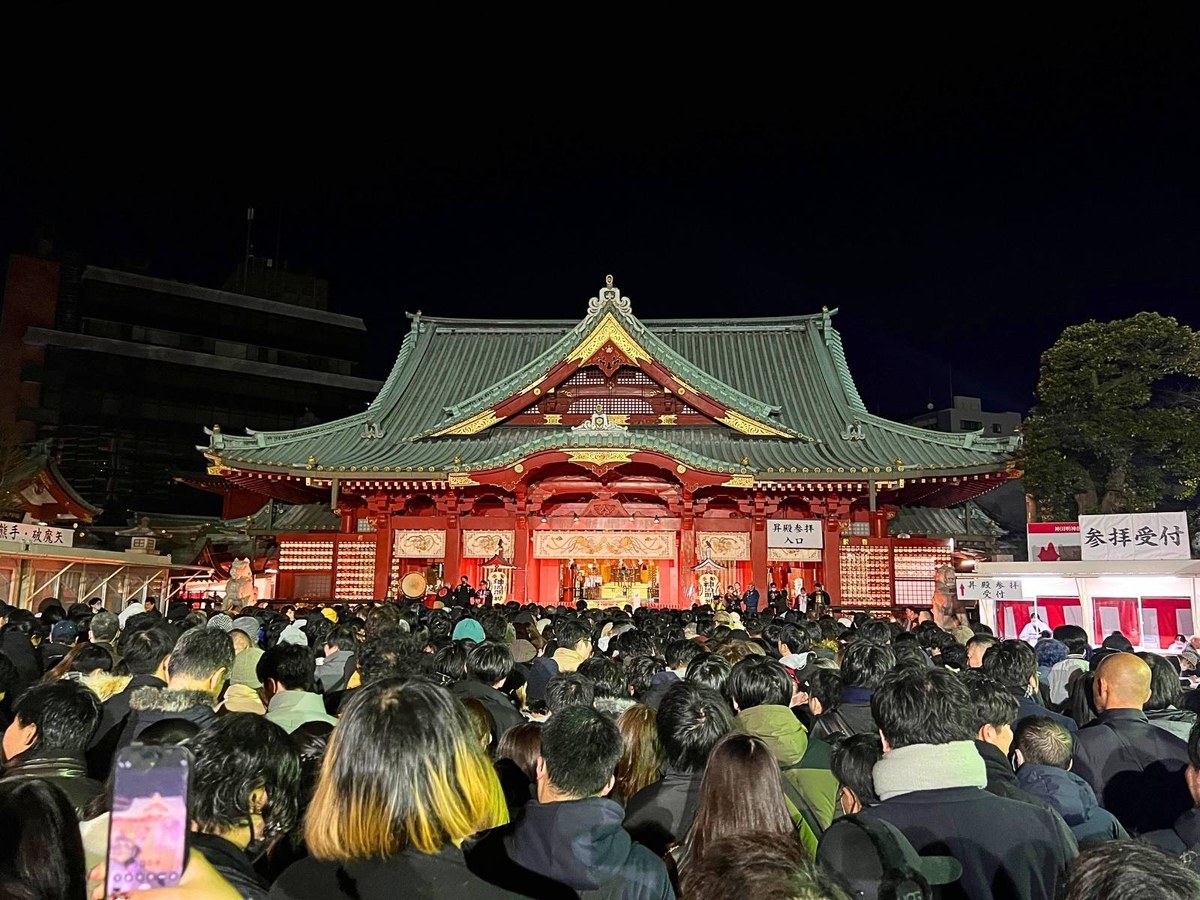
In the end
Tempura soba at home, chicken and leek soba in France, a cup of instant soba on my own. What’s in the bowl changes from year to year, but most years, my New Year’s Eve has soba in it.