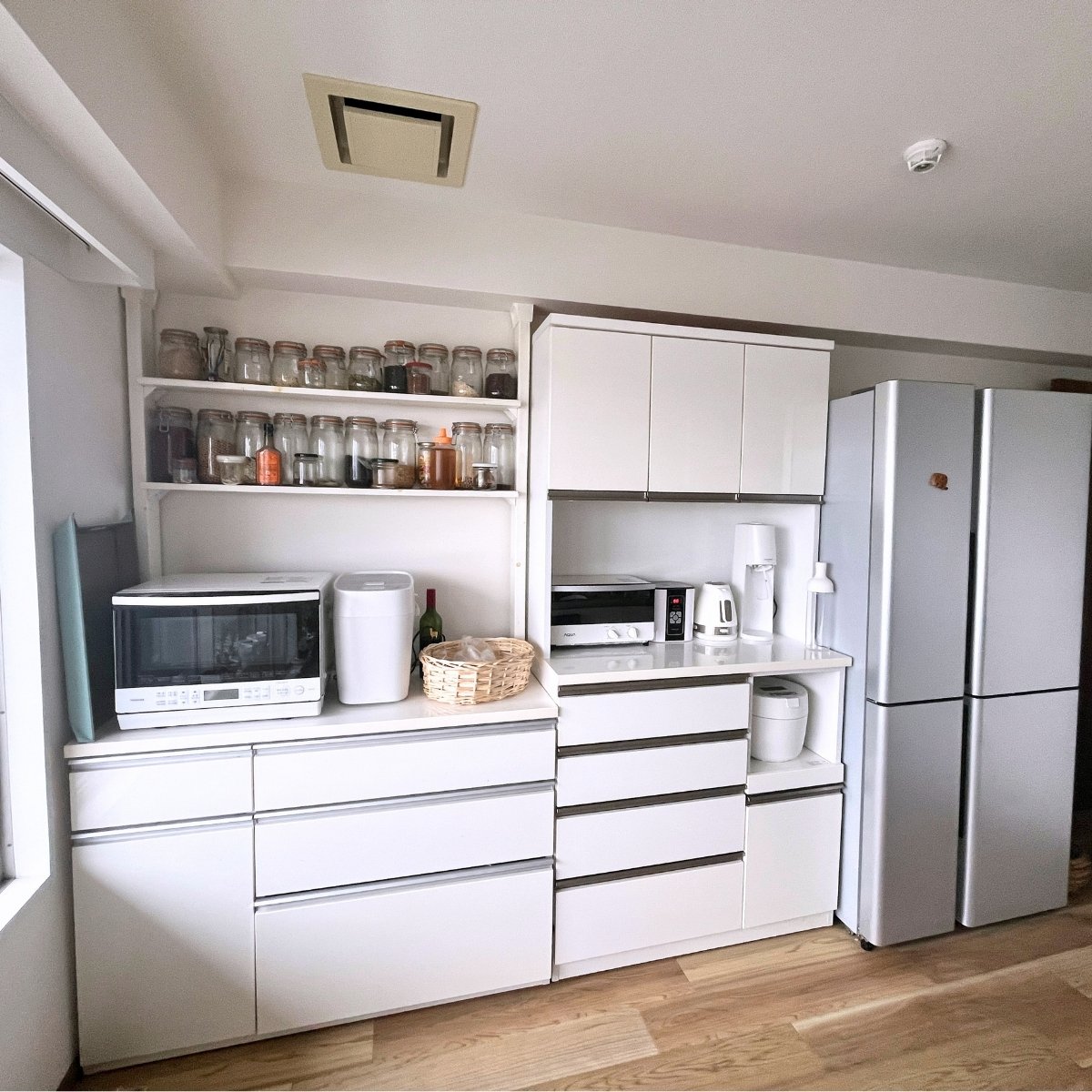
In my kitchen, dry goods are split between two places: a shelf of glass jars and the fridge. It isn’t a strict system. It’s based on a few bad experiences with bugs and my own sense of what seems safe to leave out.
Here’s what goes where, the rough rule behind it, and one thing about my jars I didn’t know until recently.
This post contains affiliate links (see my disclosure for details). Prices and shipping rates change — the numbers below were accurate when this was written, and the services’ own fee pages are the final word. As an Amazon Associate I earn from qualifying purchases.
The jar shelf
The jars sit on a shelf we built above the kitchen counter without drilling into the walls. How we built it is in this post about the shelf. The spot doesn’t get direct sunlight, which I’m grateful for.
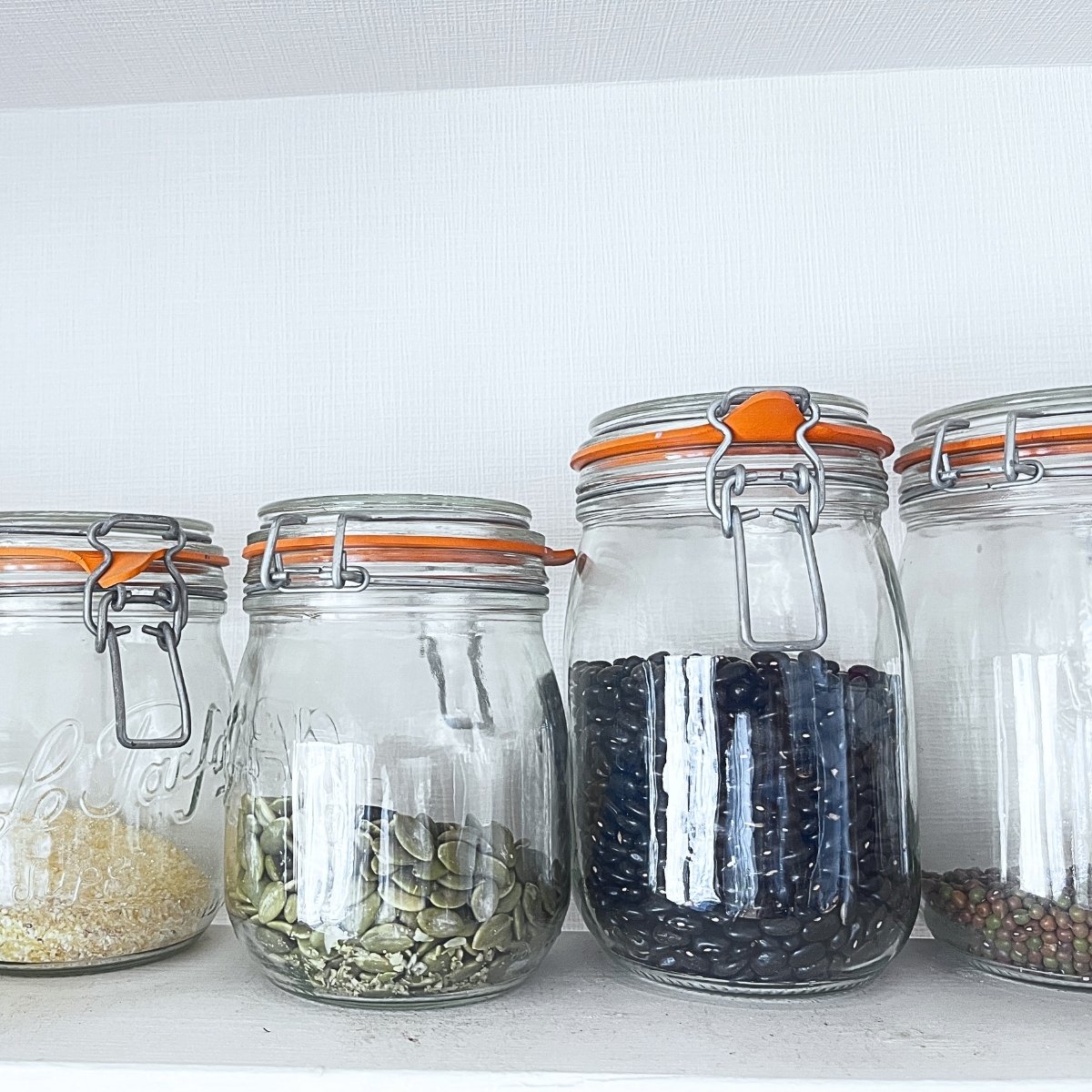
Right now the jars hold azuki beans, soybeans, white kidney beans, red kidney beans, chickpeas, black beans, mung beans, lentils, chana dal (skinned, split chickpeas), quinoa, bulgur (wheat that has been cooked, dried, and cracked), oats, cornmeal, almond flour, sesame seeds, pumpkin seeds, mixed nuts, raisins, sliced dried chili peppers, and vanilla beans.
We have bulgur, quinoa, and lentils because my husband is French. I’d guess not many homes in Japan keep this many kinds of beans and grains.
The shelf didn’t start out this full. First I bought enough jars for things we already had at home and wanted to move out of their bags right away, like azuki beans, soybeans, and sesame seeds. Later, I looked at the empty spots, bought more jars, and filled them with a few beans and dry goods I had been curious about.
Even with everything in plain sight, things slip past me. I only just noticed I still have mung beans.
What goes in the fridge
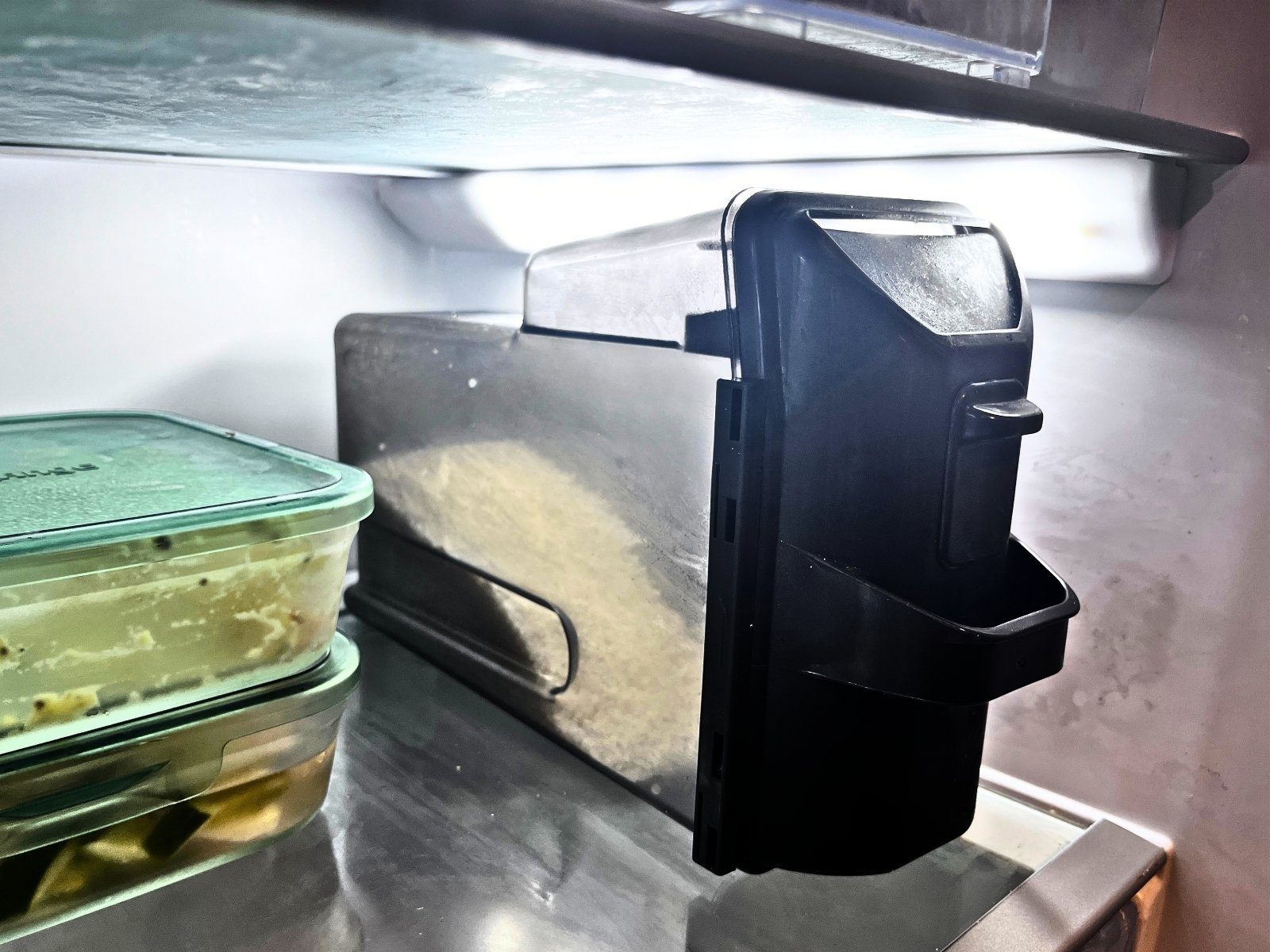
Rice. We once found bugs in our rice, and since then it has lived in the fridge, in a slim rice container that holds about 2kg (about 4.4lb).
Rice is one of the foods pantry bugs are known for. Japan’s Ministry of Agriculture, Forestry and Fisheries names the Indian meal moth and the rice weevil as the main ones, and notes that they slow down and stop multiplying below about 15°C (59°F). For anyone worried about bugs, it suggests wrapping rice well and keeping it in the fridge’s crisper drawer.
Flour and fine grains. These go in lever-lid containers on the top shelf of the fridge:
- hakurikiko, a low-protein flour similar to cake flour
- bread flour
- whole wheat flour
- buckwheat flour
- potato starch
- sweet rice (also called glutinous rice), which is rice, so it goes in the fridge like our regular rice
- a multigrain mix you add to white rice and cook together in the rice cooker
The buckwheat flour came from my mother-in-law in France.
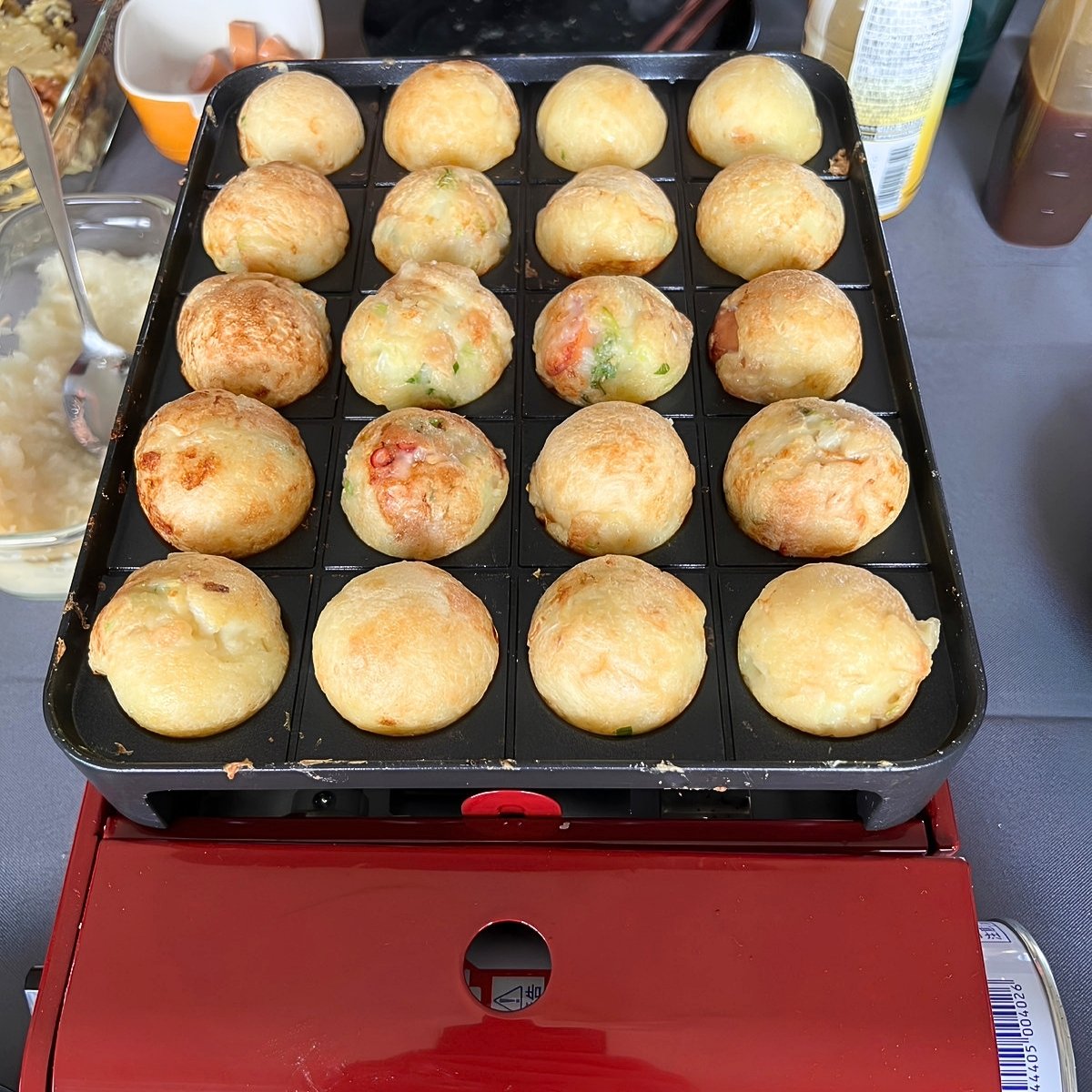
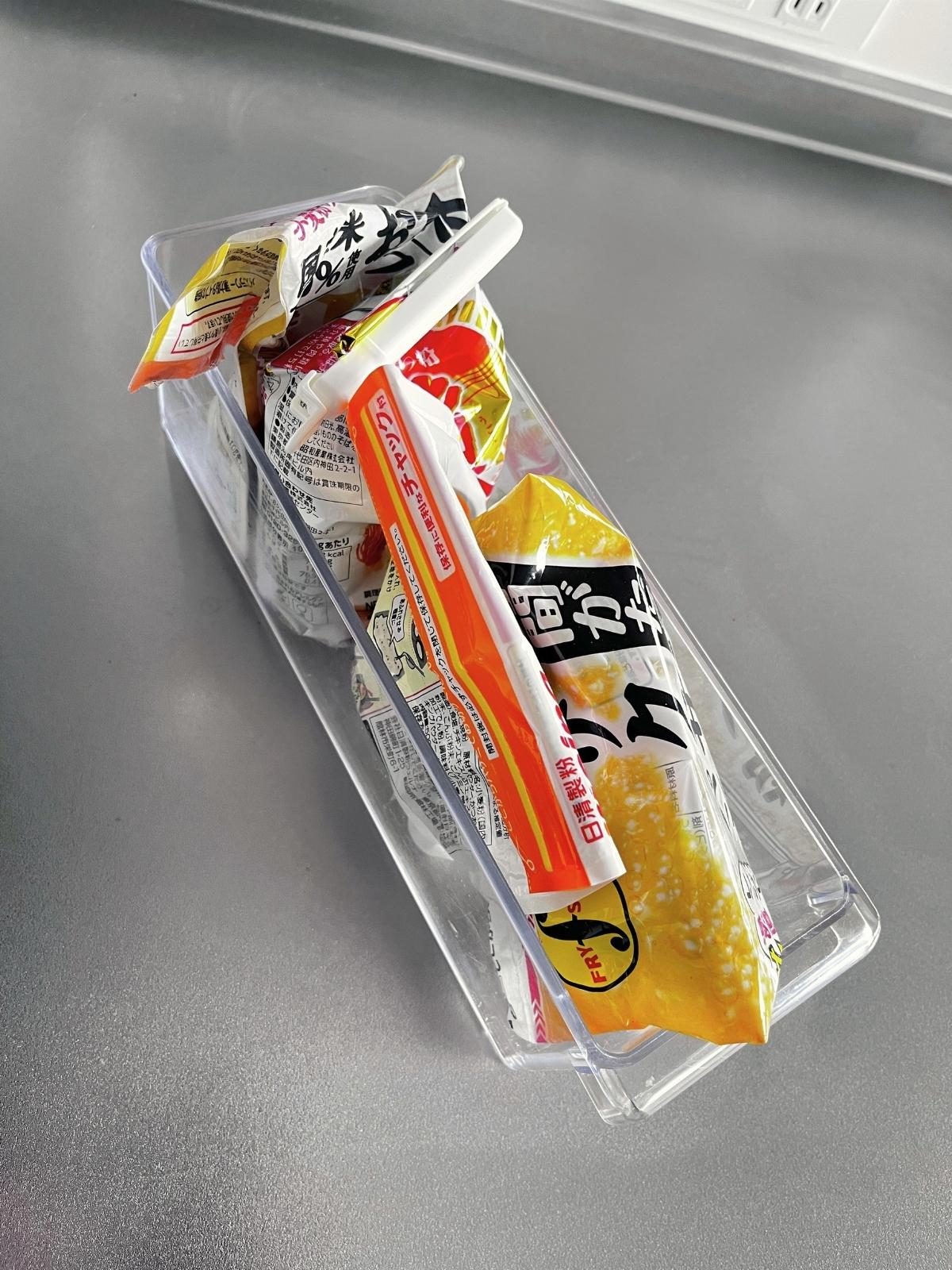
A slim clear case in the fridge holds smaller bags: tempura batter mix, panko, and takoyaki batter mix, for making takoyaki, bite-sized balls of batter with octopus inside. I wrote about the takoyaki maker I use in another post.
The rough rule, and where it bends
My rough rule is that things that aren’t flour go in the jars, and flours and other fine things go in the fridge. I don’t have evidence for this. I’d seen on TV and online that mites can get into flour and set off allergies, and I didn’t want that, so fine things just feel safer in the fridge to me.
But the fridge only has so much room, so a few fine things, like almond flour and cornmeal, ended up in the jars too, just because they felt okay out on the shelf.
How the fridge is arranged
Our fridge has the fridge section on top and six freezer drawers below. At the bottom of the fridge section are separate drawers for meat and vegetables.
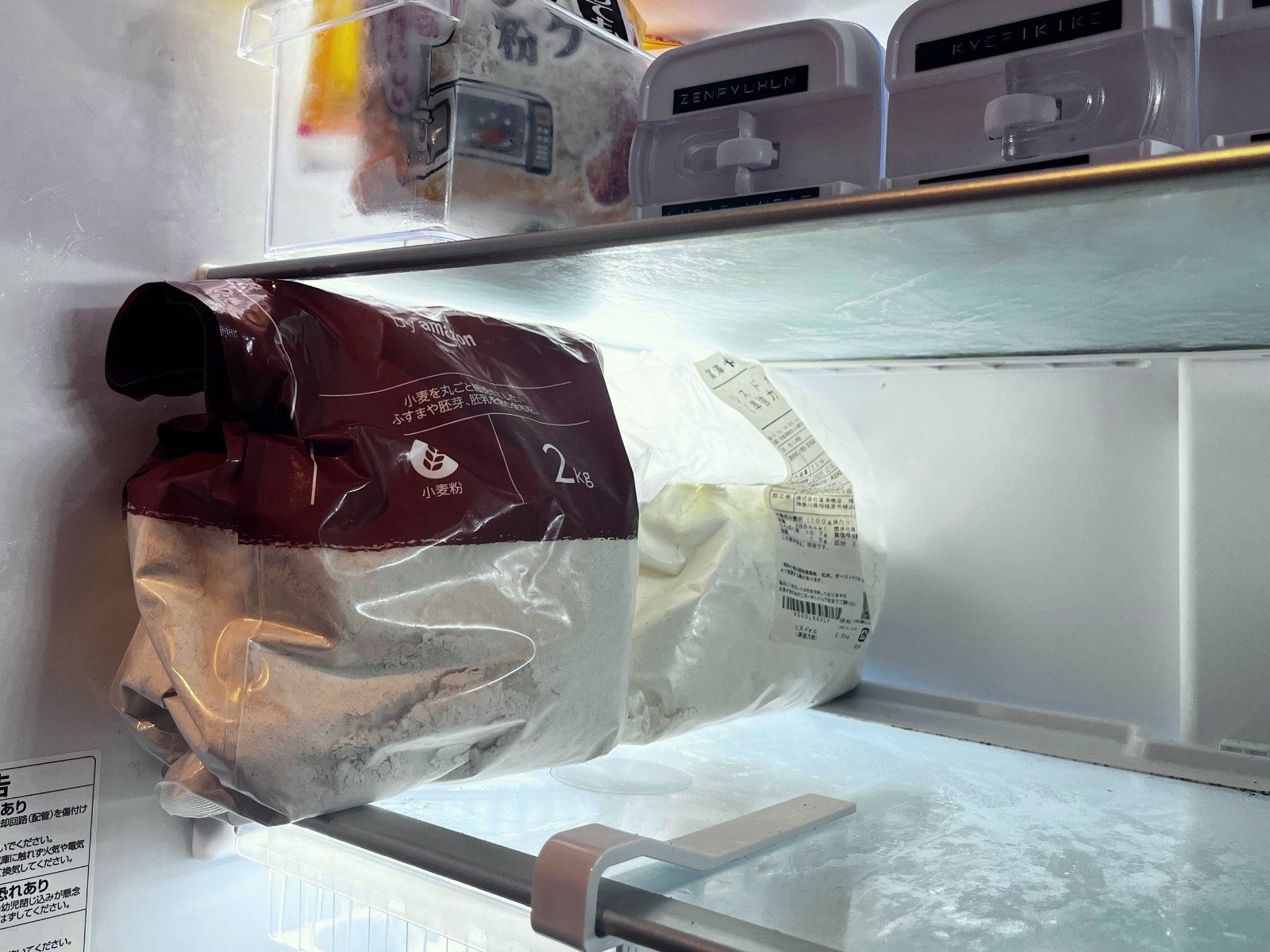
The flour containers go on the top shelf. The back of that shelf is hard to reach, so I use the depth with containers that are long from front to back, set side by side with the labels facing forward. That way I can see all of them at once and pull out the one I need.
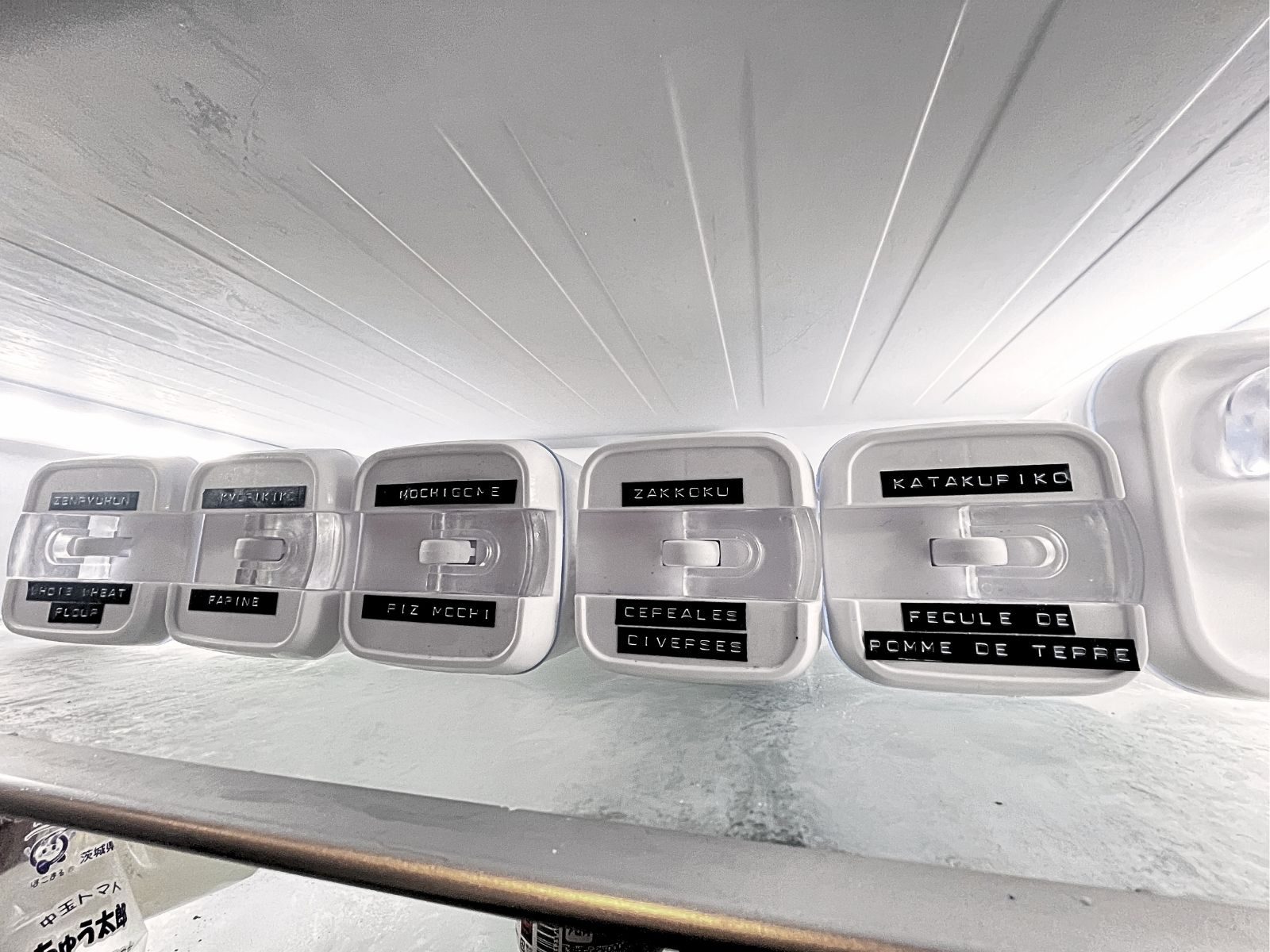
The big bags of flour, whole wheat flour and Lys D’or (a French-style bread flour from the Japanese miller Nisshin), usually 1–2kg (about 2.2–4.4lb), sit at the end of the shelf below. I take them out less often than things like the food I’ve made ahead, so they get the spot that’s harder to use.
Labels in two languages
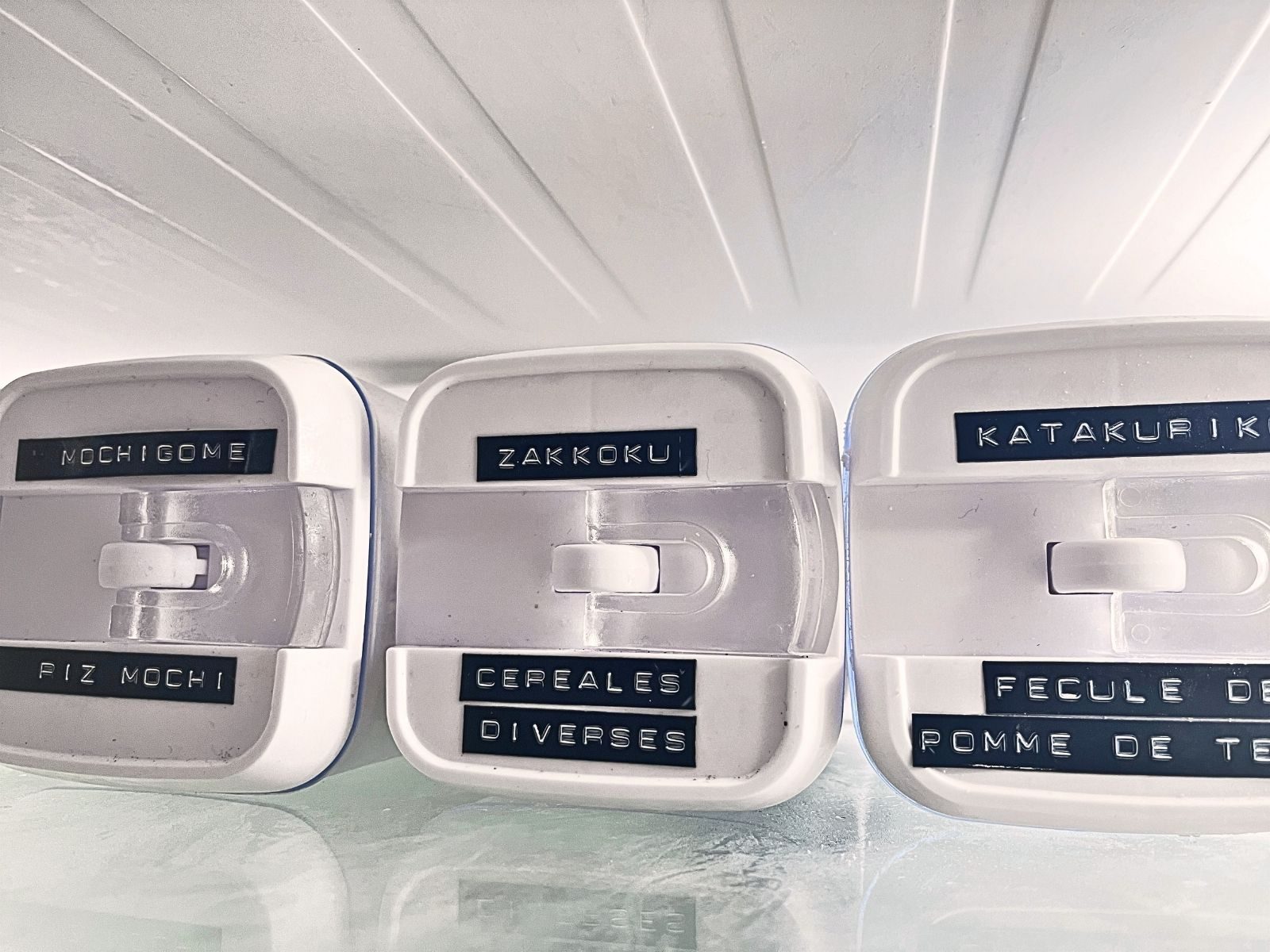
The labels are in French and romanized Japanese, for my husband. He cooks and bakes a lot, and flours are sorted differently in France and Japan, so the French tells him what each one is closest to and what it’s made from, and the romanized Japanese helps him learn the Japanese name.
Potato starch is one example. In France, he’s more used to cooking with cornstarch, and potato starch seems to be something you’d look for at an Asian grocery store.
About the jars
Most of the jars are Le Parfait Super jars in three sizes: 0.75L (about 25 fl oz), 1L (about 34 fl oz), and 1.5L (about 51 fl oz). The shorter ones are on the upper shelf and the taller ones below, with a few other jars with gold screw lids mixed in.
I chose Le Parfait because I like how they look, and on a shelf where every jar is in view, I wanted them all to be the same shape. What I didn’t know when I bought them is that Le Parfait doesn’t recommend its Super jars for pantry storage you open often, since the wire clasp can wear out. For that kind of use, it suggests its screw-top jars, sold in the US as Le Parfait Screw Top Jars, so if you’re buying jars for everyday dry goods, those may be the better fit.
What I use, and where to find it
Jars. You can find Le Parfait Super jars on Amazon.com, and in the US they’re also sold through Le Parfait’s own site and Whole Foods Market.
Le Parfait Super Jars
If you’d like the screw-top kind instead, Le Parfait Screw Top Jars are on Amazon.com too.
Le Parfait Screw Top Jars
Rice container. Ours is Arnest’s rice container for 2kg of rice. It measures 19.5 × 11.5 × 33cm (7.5 × 4.5 × 13in), holds about 2kg (about 4.4lb) of rice, and has a sliding lever that measures out about 1 go at a time (a Japanese rice measure of about 180ml, or about ¾ cup).
ZenMarket, a proxy shopping service that buys from Japanese shops for you and ships the order abroad, can order it from Rakuten, a big Japanese online marketplace. The container itself is ¥2,200 (about US$14), with ZenMarket’s fee and shipping on top, and you can add other things to the same shipment. (Checked in September 2026; prices and the exchange rate move.) ZenMarket has a shipping calculator, so you can check the cost before you order. If you haven’t used a proxy service before, my guide to ordering from Japan walks through how it works.
One thing I ran into: Buyee, the proxy service I usually recommend, won’t take this one. Because it’s made to go in the fridge, its listings include the Japanese word for “fridge,” which contains the word for “refrigerated.” That gets picked up as a restricted-shipping keyword, so the order is blocked automatically no matter which shop it comes from. It has nothing to do with the container itself.
The short version
- Our dry goods are split between a jar shelf and the fridge, based on bug trouble and gut feeling rather than a strict rule.
- Rice goes in the fridge. Japan’s agriculture ministry notes that rice bugs stop multiplying below about 15°C (59°F).
- Things that aren’t flour go in jars, and flours and other fine things go in the fridge, with exceptions when the fridge is full.
- The flour containers use the hard-to-reach depth of the top fridge shelf, labels facing forward. Big bags that get opened less often go in the less convenient spot.