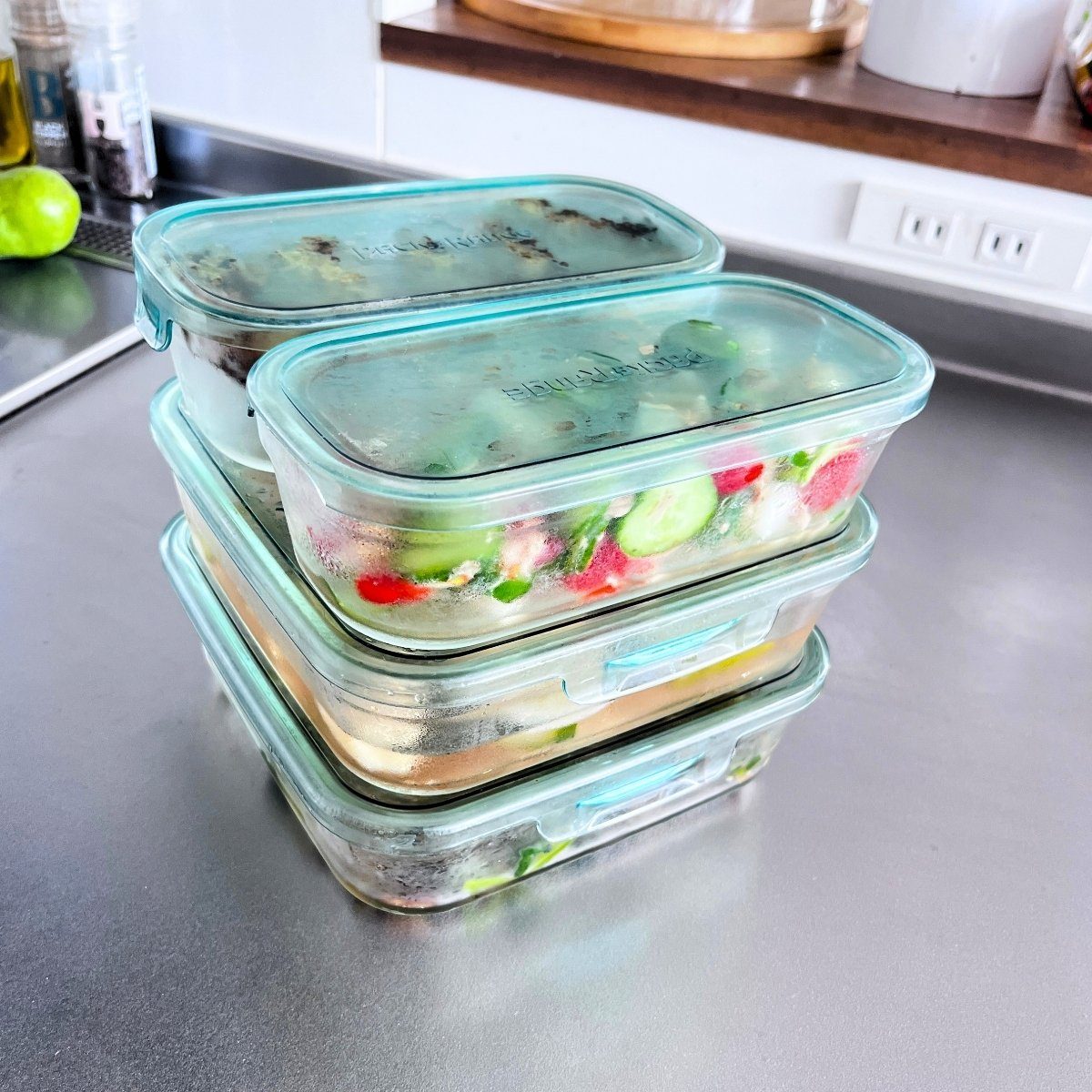
In my previous home, I used a magnetic L-shaped shelf every day. It was a Magnetic Kitchen Shelf from tower, a line by the Japanese housewares maker Yamazaki — the wide one, 50cm (19.5in) across. It was stuck to the wall beside my stove. On it sat my salt and sugar containers, the pepper I reached for most, and a Himalayan pink salt grinder.
In Japan, the wall behind the stove is often covered with a wipe-clean kitchen panel. Some, like enamel ones, take a magnet; others don’t. When I moved, the panel in my new kitchen wouldn’t take a magnet (I wrote about that panel in my post on Japanese bathroom and kitchen storage). My first thought was to get rid of the shelf. I didn’t, for three reasons: heavy things on it didn’t make it budge (it’s rated for 4kg (8.8lb), which may be why), the design is simple enough that it might work somewhere else, and I might move again. So it’s in storage, waiting.
This page is about the two things that explain why that shelf is still in storage: whether a surface takes a magnet, and whether there’s a free spot near where you’d actually use it.
This post contains affiliate links (see my disclosure for details).
Check With a Magnet You Already Own
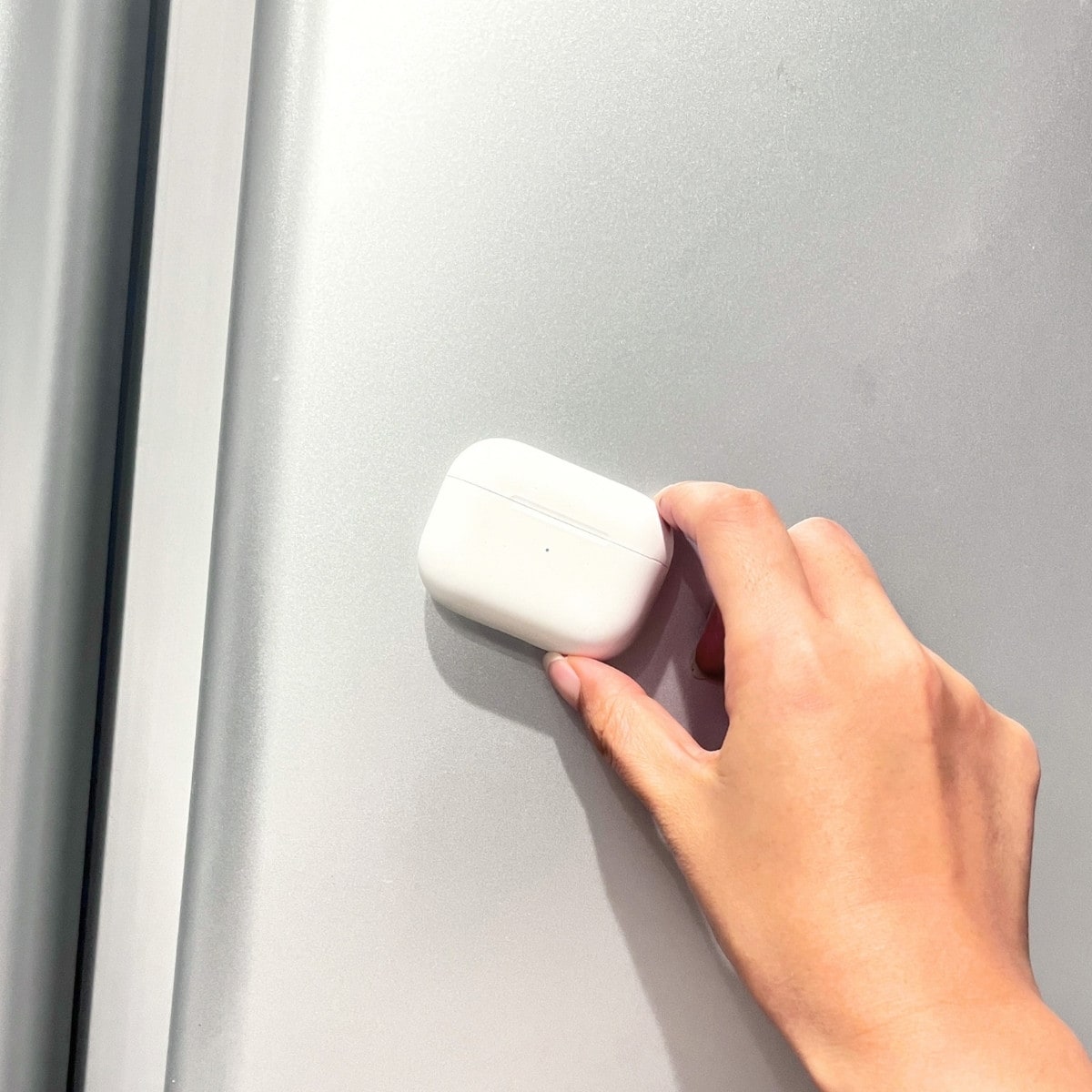
A magnet you already own will do. If you have an iPhone, a MagSafe battery pack or card wallet works; so does an AirPods case (its magnet is weak, but if I let go gently, mine stays on my fridge), or any magnet already on your fridge. Hold it against the exact spot you have in mind and let go.
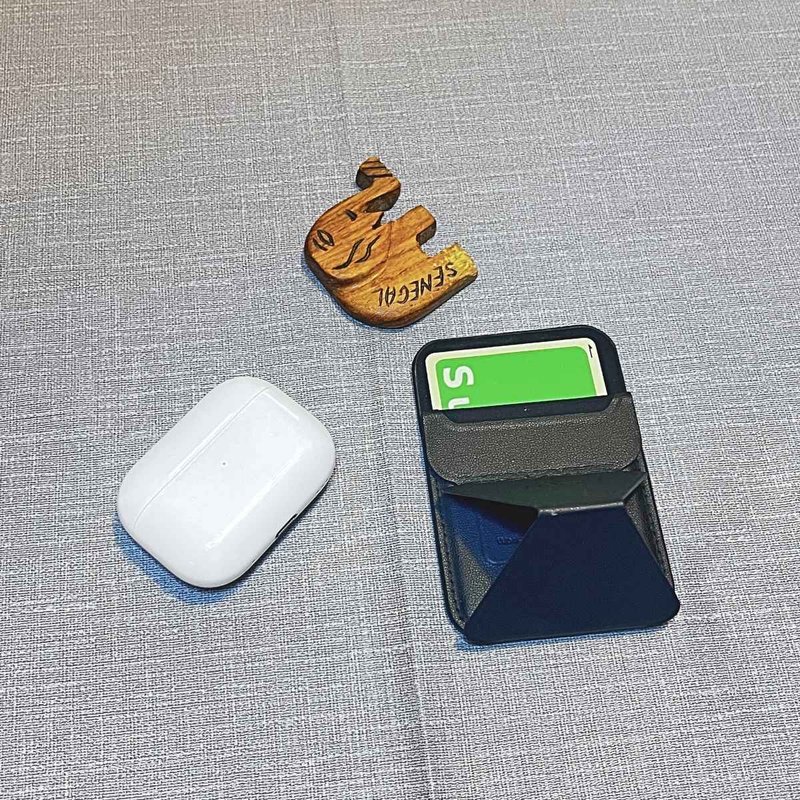
A small magnet only tells you whether the surface is magnetic. Whether it will hold a loaded shelf is a separate question: check the maker’s load rating and keep what you put on it under that. I wrote a little more about it in the bathroom and kitchen post.
Where It Didn’t Stick in My Home
Two places in my home don’t take a magnet. The front of my front-loading washer-dryer is plastic, so nothing magnetic stays on it. And the panel behind my stove doesn’t hold one either — that’s the panel that sent my shelf into storage. I don’t know what it’s made of inside. Neither gives it away by looking, which is the reason to test rather than guess.
Fridges, Washers, Doors and Walls
This part isn’t from my own home. It’s what the makers themselves say, plus one thing about how walls are built.
Fridges. With stainless steel, it depends on the type. Whirlpool explains that some stainless steels (called austenitic) don’t attract magnets, and that a coated finish can leave a magnet too weak to hold. GE says its painted finishes and its vinyl stainless-look finish sit over metal, so they hold a magnet, and that most of its stainless fridges from 2017 on do too. It still recommends testing older models with a magnet, and notes that its Café stainless models don’t hold one.
Washers. Yamazaki makes some of its magnetic laundry racks to go on a washer or dryer. That’s a good sign, but it’s still worth pressing a magnet to the exact panel — the front of mine is plastic.
Doors. A steel door will take a magnet, so pressing one you own against it tells you straight away.
Walls. Drywall (plasterboard) doesn’t hold a magnet on its own. If a strong magnet grabs at one spot, it’s usually finding a screw behind the board — which is how magnetic stud finders work.
In every case, test the exact surface, not the appliance or the room in general.
It Sticks — But Is There a Free Spot Near Where You’d Use It?
My current fridge takes a magnet on the front and the sides. So why is the shelf still in storage? One side sits right against a cabinet, and the other faces a walkway, where I didn’t want anything sticking out. I didn’t put it on the front, either. An L-shaped shelf sticks out quite a bit — this one is 14cm (5.5in) deep — and the door moves a lot as it opens and closes, so I think things would fall off it. It’s the same with my washer-dryer: the sides hold a magnet, and both are taken.
So “does it stick?” is only the first question. The second is whether there’s an empty stretch of that surface near where you’d actually reach for what’s on it. A magnetic rack can go anywhere the surface allows, but it tends to be most useful where your hands already are.
Yamazaki’s Magnetic Storage, One Piece at a Time
I’ll be writing about Yamazaki’s magnetic pieces one at a time, starting from this page. Until those posts are up: if you’re in the US, Yamazaki Home’s own store has a magnetic organizers section where you can see what’s available there.