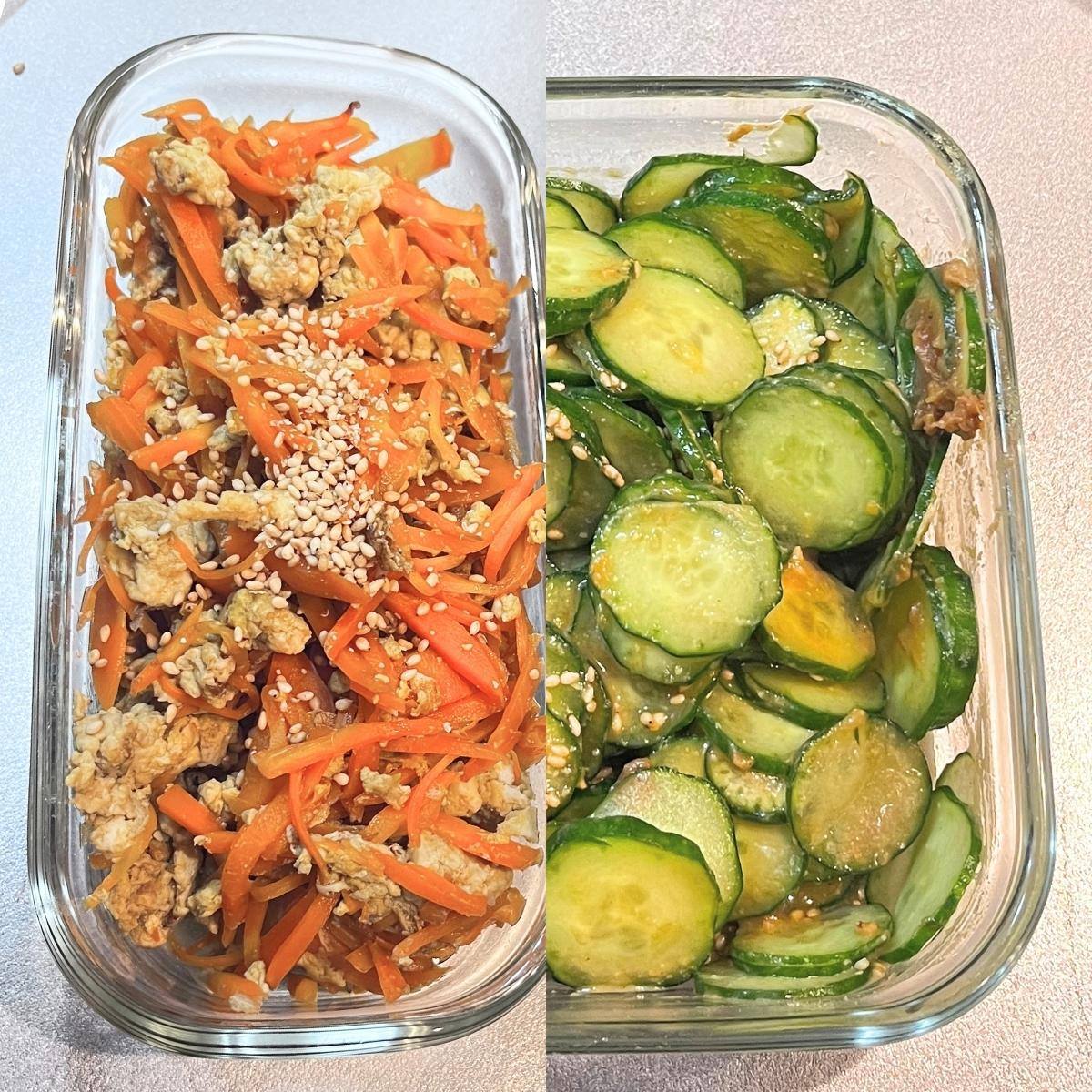
Carrot stir-fried with egg, and cucumber mixed with sesame and miso. These are two of the side dishes I make in my everyday cooking, and both take few ingredients and little effort.
This is another meal from my kitchen in Japan that doesn’t ask for much effort. (If you’d like to see the first one in this series, here’s a weekday lunch at home.)
This post contains affiliate links (see my disclosure for details). As an Amazon Associate I earn from qualifying purchases.
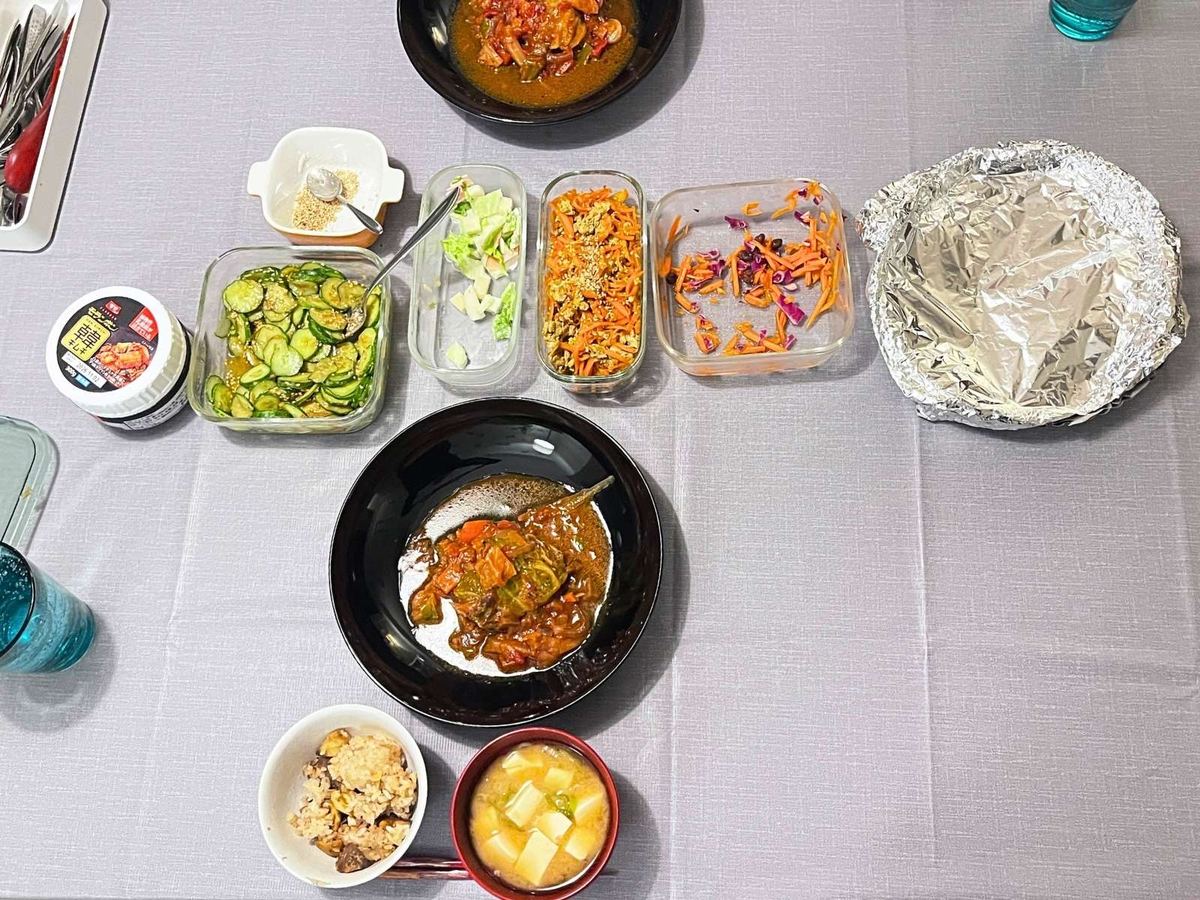
What was on the table
Both side dishes are in glass containers on the table. The carrot dish is in the long one, and the cucumber dish is in the square one. I serve straight from the container, so nothing has to be moved into a second dish. I also made miso soup, and there’s chestnut rice (the one I wrote about in my chestnut rice post), cabbage rolls I’d made and frozen earlier, and a few other make-ahead dishes. This post is about the two side dishes.
Carrot shirishiri
Ninjin shirishiri (ninjin means carrot) is a simple dish from Okinawa, the southernmost prefecture of Japan, made by stir-frying thinly cut carrots and egg. The name is said to come from shredding the carrot with a special tool called a shirishiri grater.
What I used
- 1½ carrots
- 2 eggs
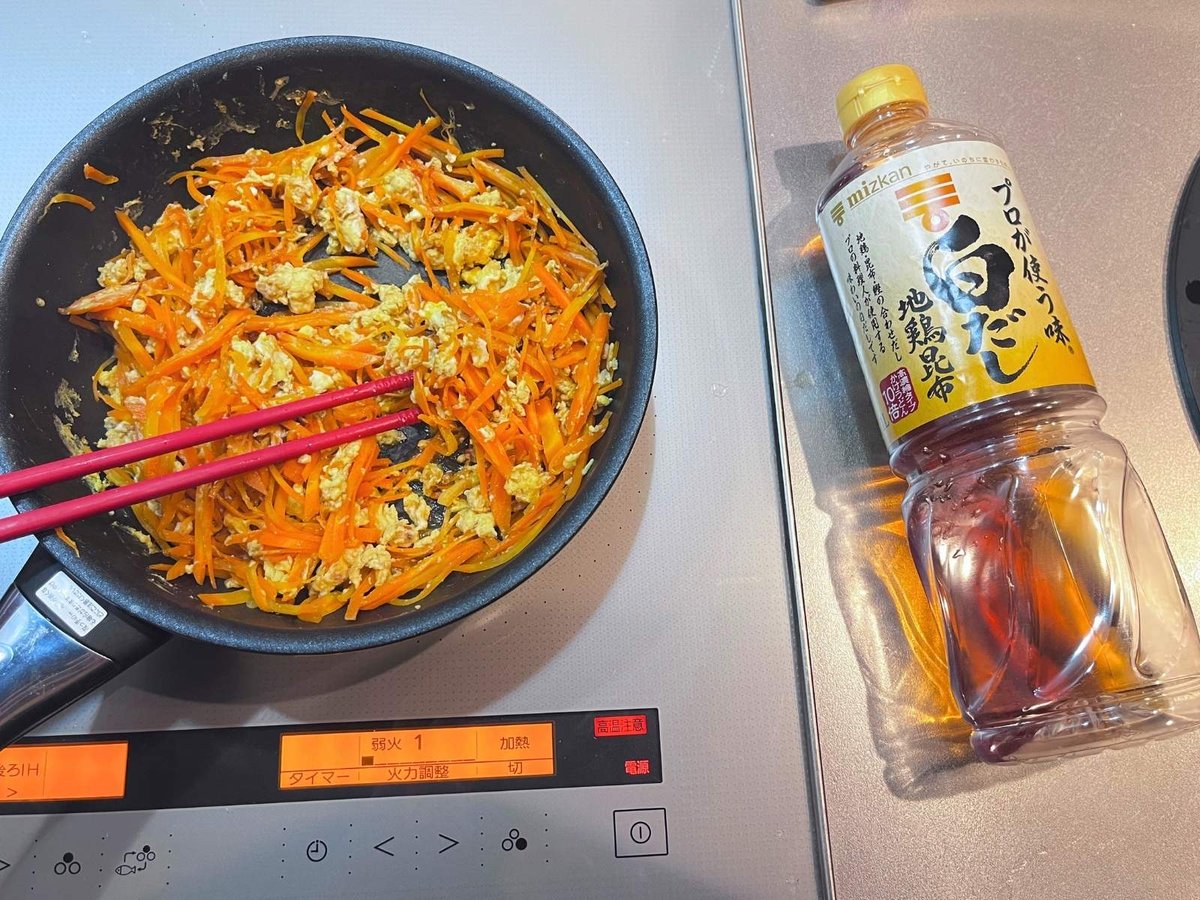
- 1½ tbsp shiro dashi
- ½ tbsp sesame oil
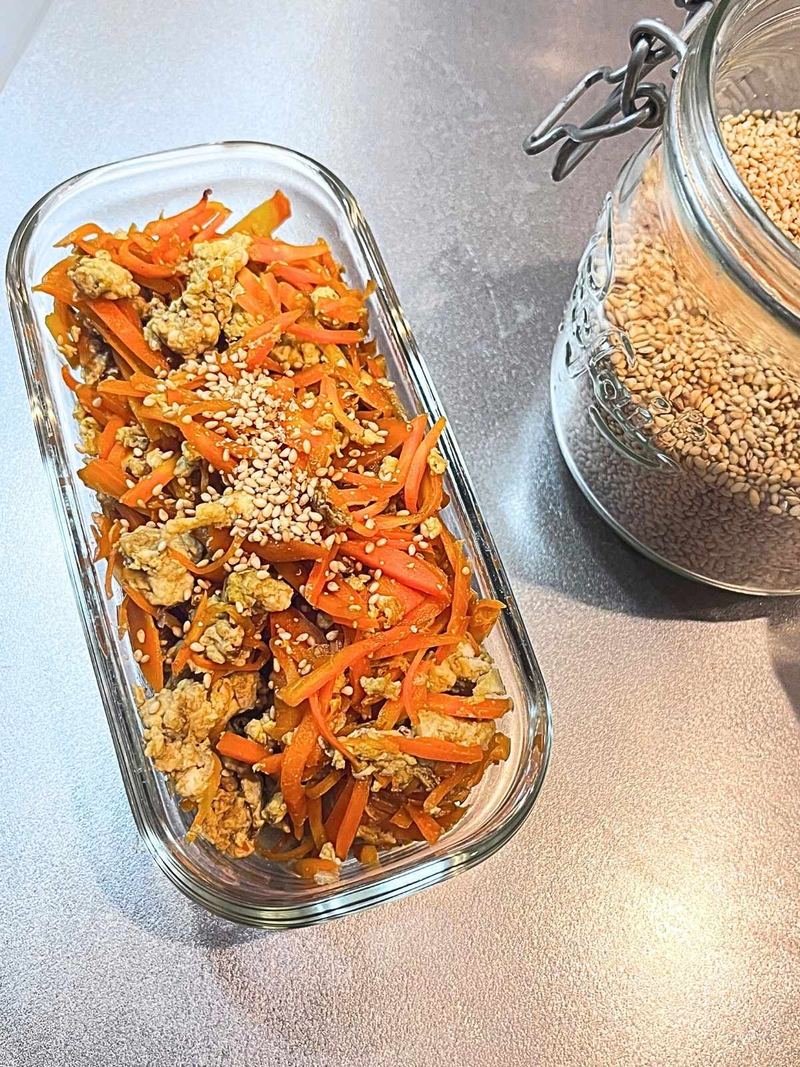
- Toasted white sesame seeds, if you like, to sprinkle on top
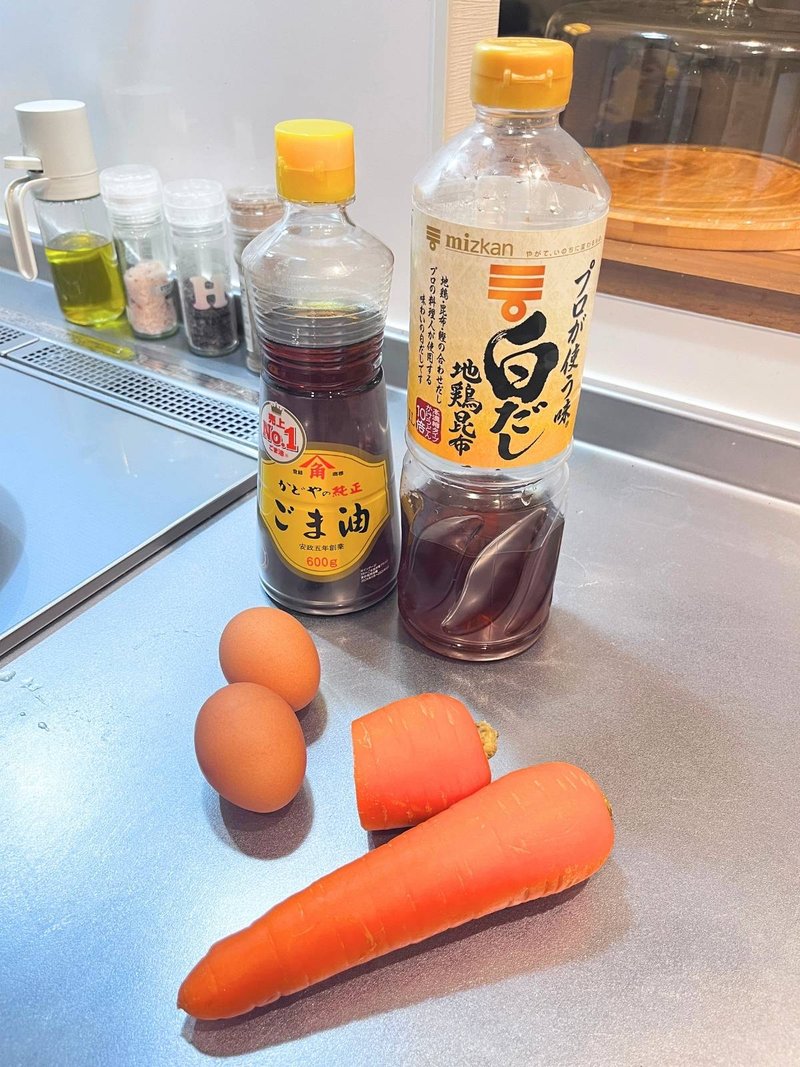
Shiro dashi is a light-colored, concentrated soup base made from dashi (a Japanese stock made with kombu, a type of kelp, and dried bonito flakes), seasoned with soy sauce and salt. Mine is Mizkan’s, but I couldn’t find the same one on Amazon.com, so I’m linking Ninben’s instead. Both are major brands in Japan. If you can’t find either, another brand of shiro dashi works too (the strength can differ by brand, so taste as you go). You can find Ninben’s on Amazon.com.
Ninben Shiro Dashi
How I made it
- I cut the carrots into thin strips with a knife, so they’re easy to pick up with chopsticks. I think thin rounds would work too, as long as they’re thin enough to cook through quickly. If you have a slicer, feel free to use it instead.
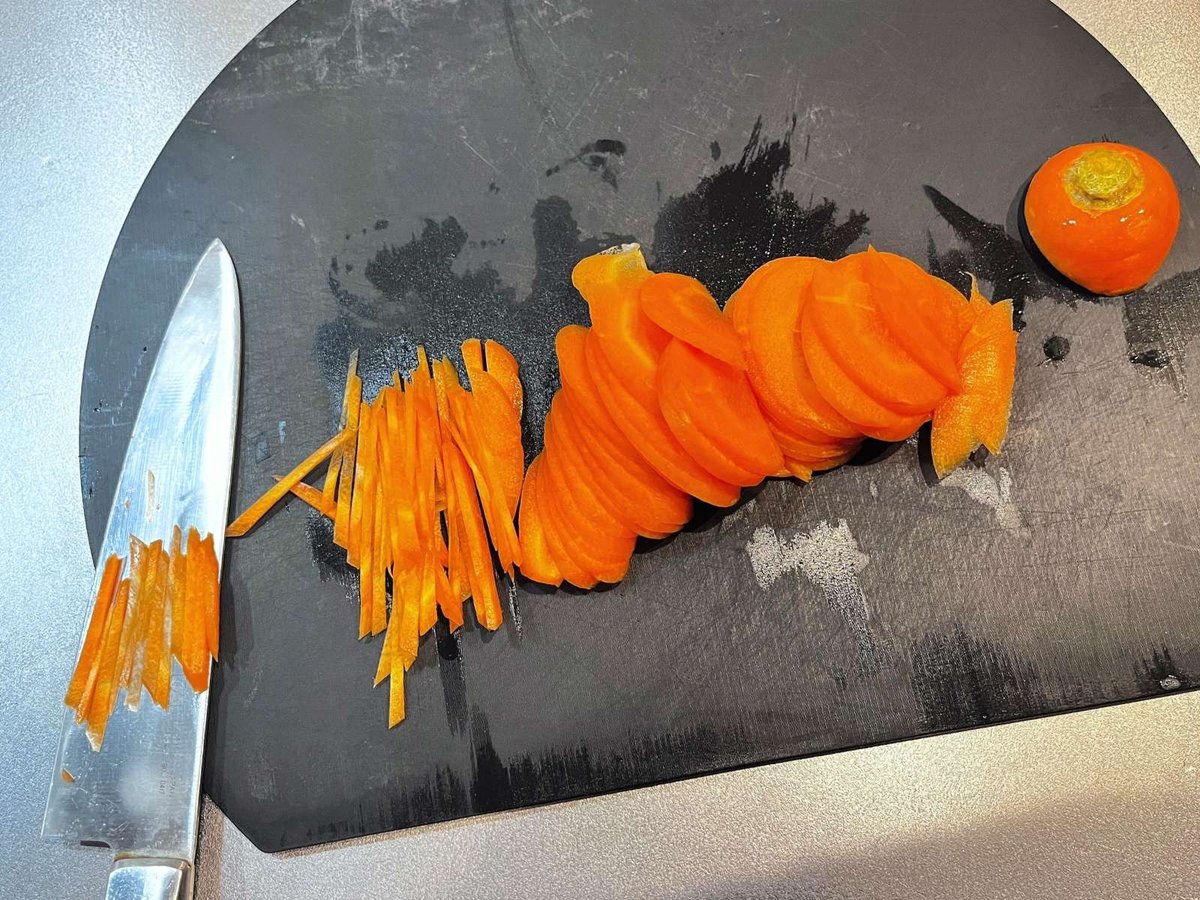
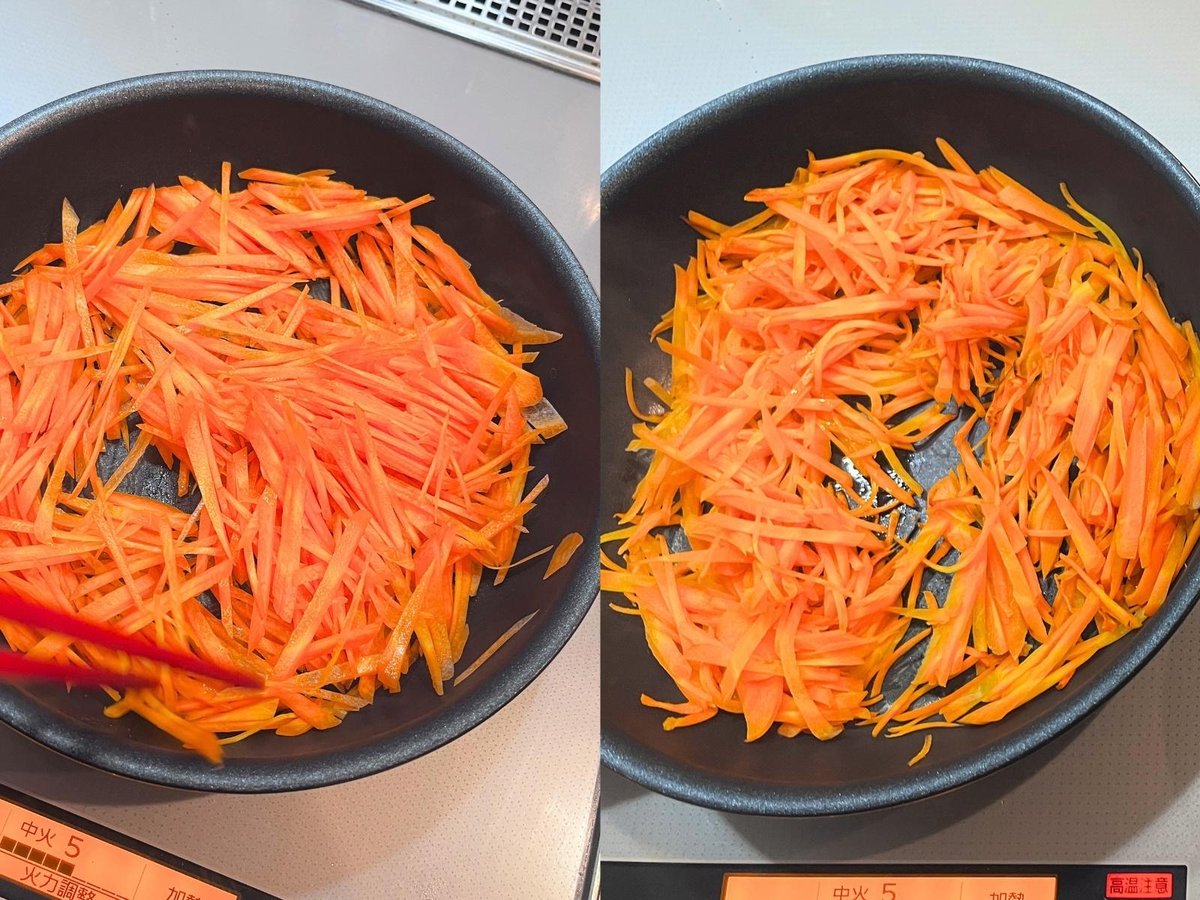
- I heated the sesame oil in a frying pan over medium heat and cooked the carrot until it softened, with no lid and no water.
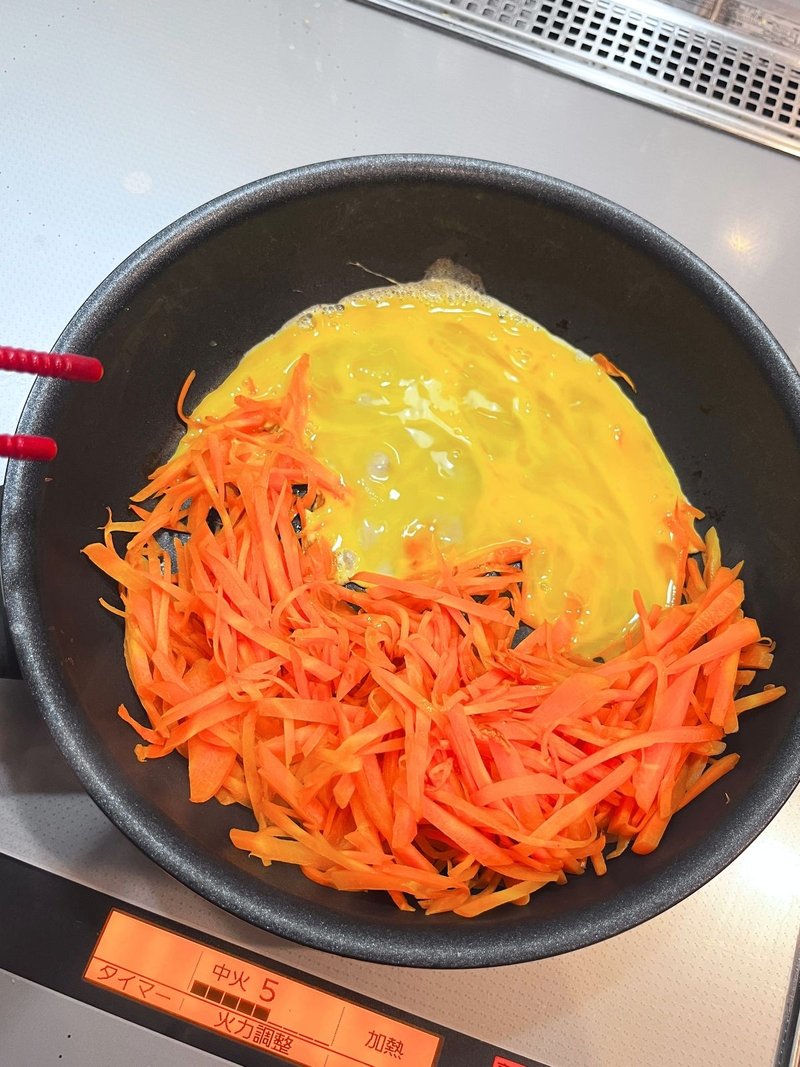
- I pushed the carrot to the bottom half of the pan, poured the beaten eggs into the top half, and scrambled them.
- Then I stirred everything together in the pan.
- I added the shiro dashi at the end and kept stirring until the liquid was gone, still over medium heat.
- Sesame seeds on top are up to you. It’s good without them too.
How I eat it
It goes well with rice, and it’s also good on toast. I keep the rest in the fridge in the long iwaki container.
Sesame miso cucumber
Cucumber dressed with sesame is a common side dish in Japan. I keep mine simple: I slice the cucumber thin, then mix it with miso, sugar and sesame seeds right in the container.
What I used
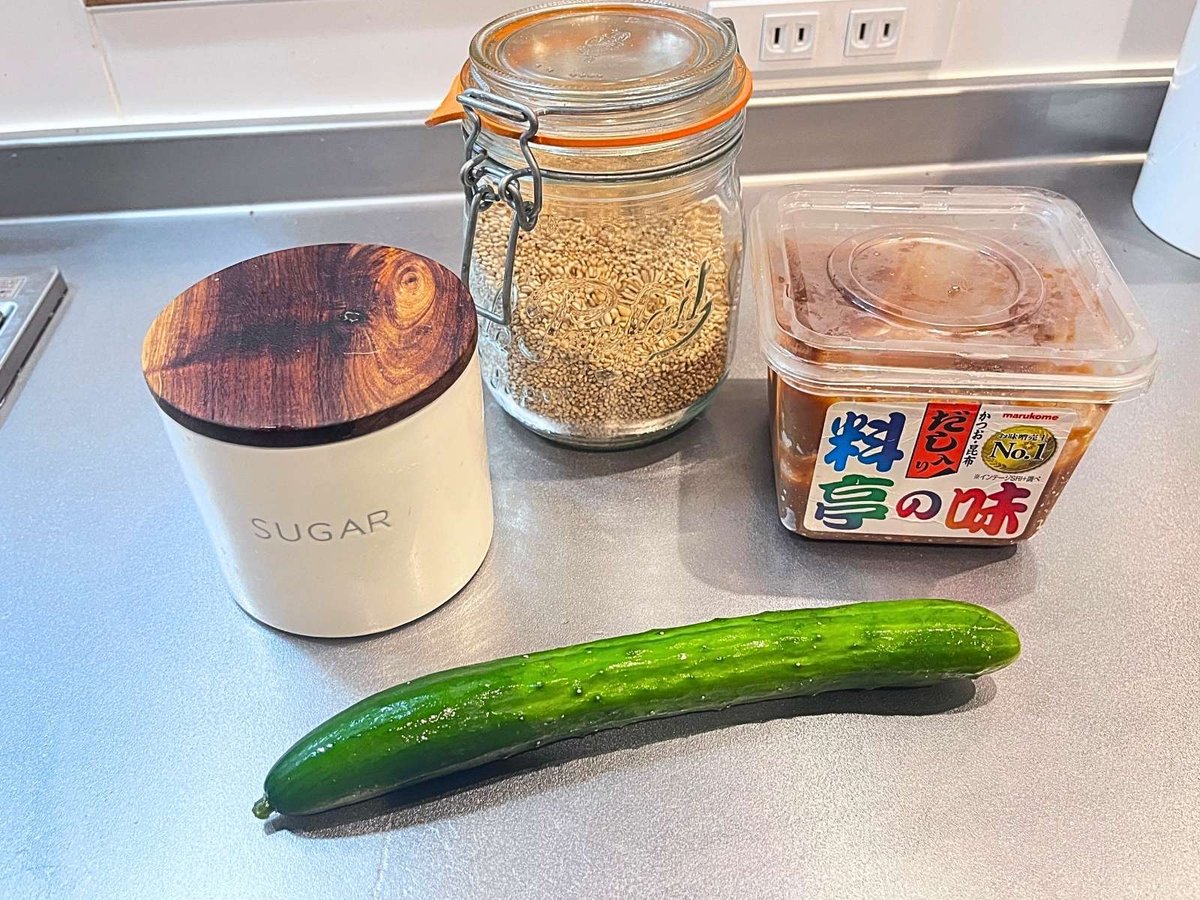
- 2 cucumbers
- 1 tbsp miso (a fermented soybean paste)
- 1 tbsp sugar
- 2 tbsp toasted white sesame seeds
How I made it
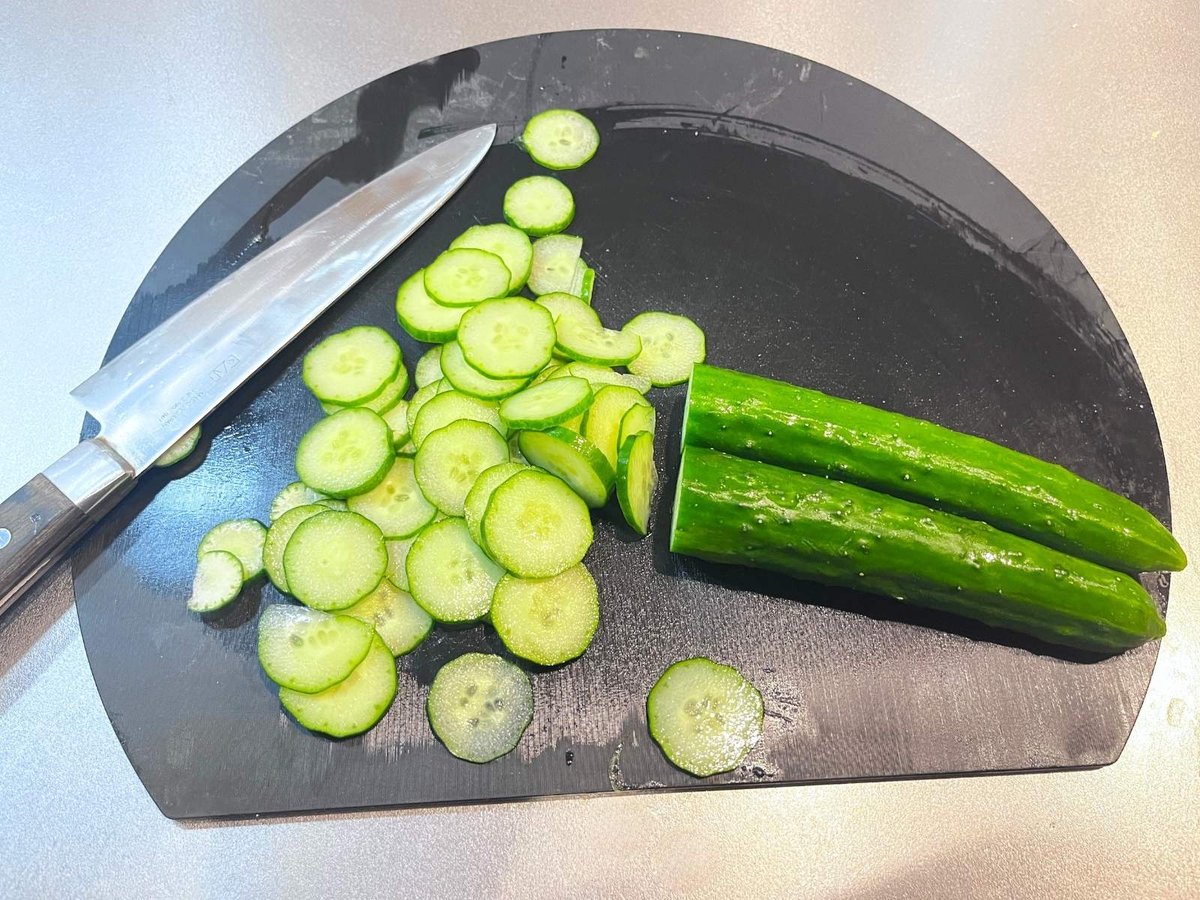
- I sliced the 2 cucumbers into thin rounds.
- I put them in the container, added the miso, sugar and sesame seeds, and mixed.
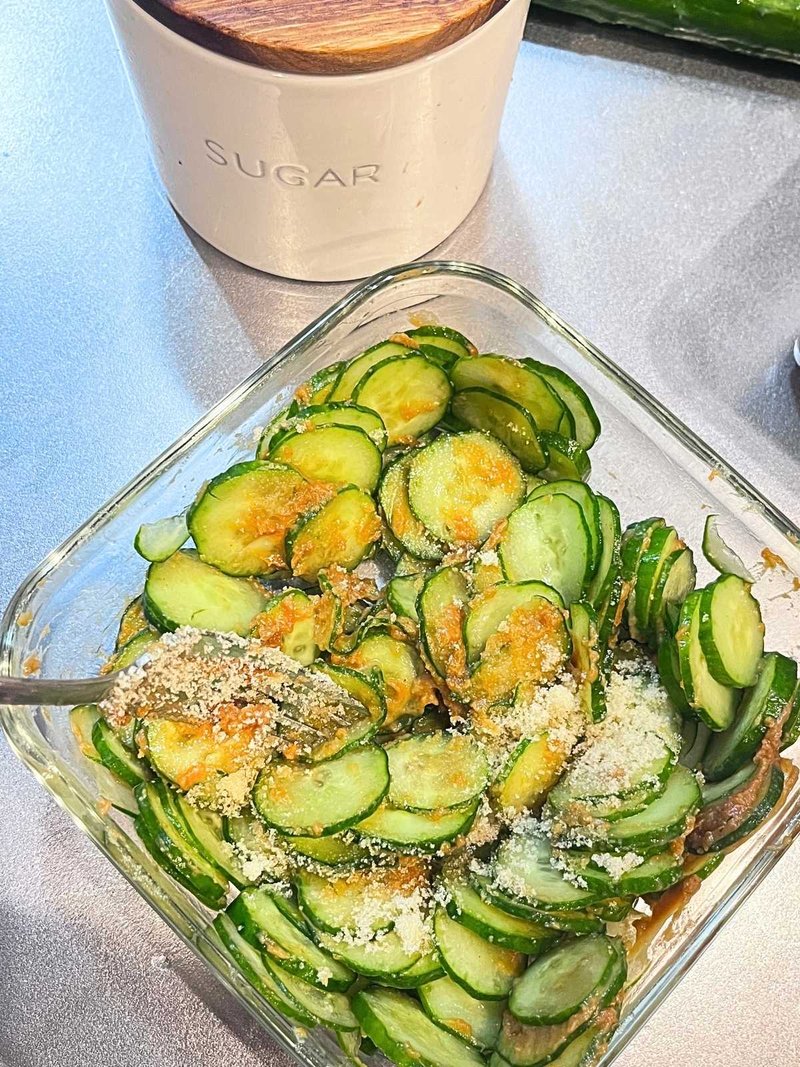
- I brought it to the table in the same container.
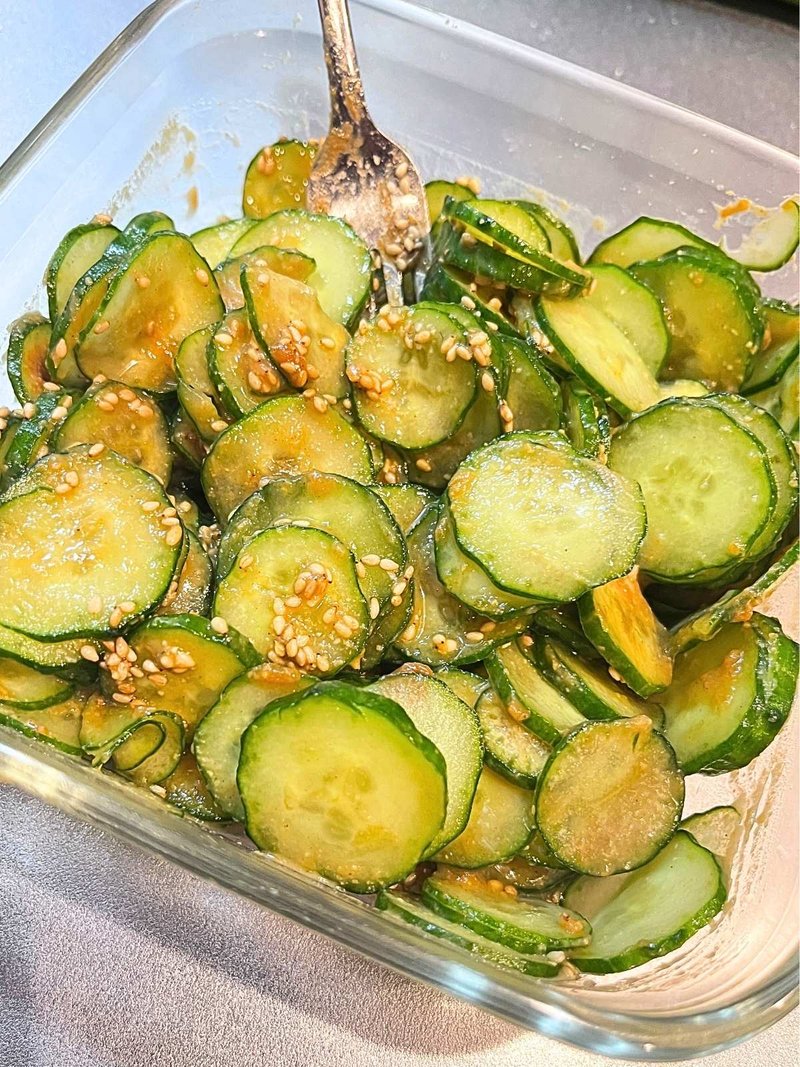
By the next day, the cucumber can let out water and the flavor can get weaker. When that happens, you can pour off just the liquid and, if it tastes too light, stir in a little more miso and sugar to taste.
My glass containers
Both side dishes are in iwaki glass containers. The carrot dish is in a long 0.5L (about 17 fl oz) one that measures 18.6 × 9.3 × 5.5cm (7.5 × 3.5 × 2in), and the cucumber dish is in a square 0.8L (about 27 fl oz) one that measures 15.6 × 15.6 × 5.5cm (6 × 6 × 2in). The other glass containers on the table are iwaki too. iwaki is a Japanese brand of heat-resistant glass kitchenware, and its containers are very popular and often talked about on social media. I like them because they go in the microwave and the oven (with the lid off for the oven), and the simple design looks nice going straight from the fridge to the table. They probably show up in every one of my meal posts. I wrote about how I’ve been using them for eight years in my iwaki post.
iwaki Pack & Range 7-Piece Set (Green)
iwaki Pack & Range Square 800ml (Green)
My easy recipe
Carrot shirishiri
- 1½ carrots, cut thin enough to cook through quickly
- 2 eggs, beaten
- 1½ tbsp shiro dashi
- ½ tbsp sesame oil
- Cook the carrot in the sesame oil over medium heat until softened, with no lid and no water.
- Push the carrot to one half of the pan and scramble the eggs in the other half.
- Stir them together, add the shiro dashi, and cook over medium heat until the liquid is gone.
- Sprinkle on sesame seeds if you like.
Sesame miso cucumber
- 2 cucumbers, sliced into thin rounds
- 1 tbsp miso
- 1 tbsp sugar
- 2 tbsp toasted white sesame seeds
- Put everything in a container and mix.
If you want it to feel more filling, canned tuna goes well in either dish.
Where to find them
The long 0.5L container is in the seven-piece set (mine is green). The square 0.8L one is sold on its own, and it also comes in a set of three with a 0.2L (about 7 fl oz) and a 0.45L (about 15 fl oz) container. You can find all of them on Amazon.com. The single one is the simplest if you only want this size, and the set of three is a good fit if you’d like a few sizes. The single one ships from Japan, so check the delivery date on the page before you order.
iwaki Pack & Range 7-Piece Set (Green)
iwaki Pack & Range Square 800ml (Green)
iwaki Pack & Range Set of 3 (Green)
Ninben Shiro Dashi
In the end
That’s dinner from my kitchen in Japan: two side dishes made with a few ingredients, with cabbage rolls I made and froze earlier and some leftovers on the table too.
If you have a side dish you make with only a few ingredients, or something you’d like to see from my kitchen, I’d love to hear about it at hello@minimalfromjapan.com.